
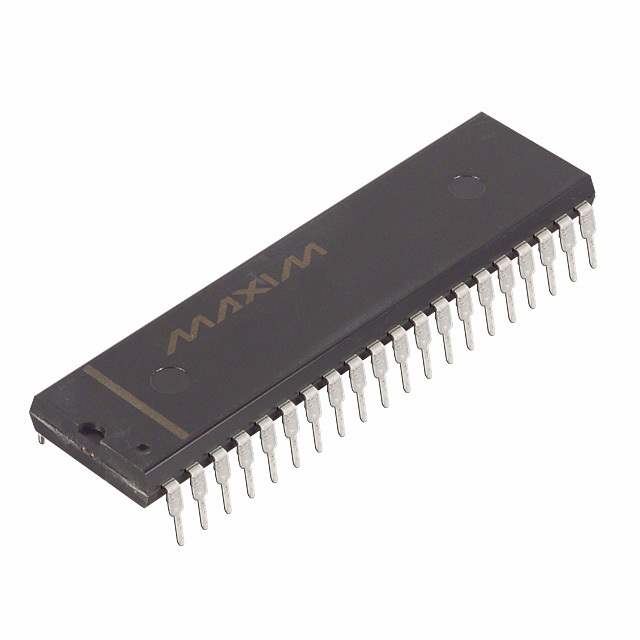
Maxim Integrated 8‑bit ROMless MCU with 8051 core, 25 MHz, PDIP‑40. Verify lifecycle before new design.
Quick Engineering Summary
| Field | Value |
|---|---|
| Manufacturer | Maxim Integrated |
| Category | Embedded - Microcontrollers |
| Package | 40-PDIP |
| Core function | IC MCU 8BIT ROMLESS 40DIP |
| Key electrical range | Speed(Frequency): 25MHz; Supply and Demand Status: Limited; Supply Voltage - Operating: 4.5 V to 5.5 V; Temperature Range - Operating: -40°C to 85°C (TA) |
| Workbook inventory signal | 339 pcs listed in the provided file |
Lifecycle Analysis
The Maxim Integrated DS80C320-MNG+ presents conflicting lifecycle signals that demand careful attention from technical buyers and design engineers. One data source lists the part as 'Active', while our aggregate assessment reports the lifecycle status as 'Unknown' with no solid verification from the manufacturer. This discrepancy is a common warning sign for a product that may be in the early stages of NRND or even heading toward discontinuation without a public notice.
When a microcontroller carries an 'Unknown' lifecycle status alongside a supplier claim of 'Active', the safest procurement posture is to treat the part as high‑risk for new platform designs. Engineers should not lock this device into a long‑life program without first obtaining a formal lifecycle and end‑of‑life policy statement directly from Maxim Integrated (now part of Analog Devices). For active production lines, it is prudent to secure sufficient stock to cover the verification period and to start a feasibility study for a modern pin‑compatible or functional equivalent in parallel.
The file‑provided inventory count of 339 pieces is available for reference but is not a real‑time manufacturer floor stock number. It does not replace a live availability check. Until the lifecycle is confirmed by an official source, treat all sourcing decisions as conditional on that verification.
Parameter Analysis
The DS80C320-MNG+ is built on a classic 8051 core running at up to 25 MHz. Its 8‑bit architecture and modest clock speed place it firmly in the legacy‑control space, adequate for simple state machines, protocol bridging, and deterministic industrial I/O. With 256 bytes of on‑chip data RAM and no internal program memory (ROMless), every instruction code must be fetched from an external memory device. This forces a careful timing and bus‑loading analysis at the full 25 MHz rate, especially in through‑hole layouts where trace lengths can degrade signal integrity.
The 32 general‑purpose I/O lines offer generous pin count for direct switch, LED, or relay interfaces without serial expansion. Operating voltage is strictly 4.5 V to 5.5 V, typical of older 5 V systems; this is an important compatibility check when interfacing with modern 3.3 V or 1.8 V peripherals—level translation may be needed. The 40‑pin PDIP package, while large by today’s standards, remains highly valued for prototyping, socketed repairs, and legacy drop‑in replacements where surface‑mount rework is impractical.
Critical parameters absent from the available data include maximum power consumption across frequency and temperature, I/O drive current per pin, exact oscillator circuit requirements, and any internal brown‑out or watchdog features. These should be verified against the manufacturer’s full datasheet before committing to a PCB design. The lack of EEPROM or on‑chip ADC means any application needing non‑volatile storage or analogue sensing will require external chips, increasing footprint and cost.
Application Scenario Analysis
The DS80C320-MNG+ finds its strongest fit in legacy industrial equipment that already runs 8051 firmware and cannot be easily re‑qualified. Examples include motor controllers, temperature sequencers, and vending machine logic that have been validated over decades of service. Because the device is ROMless, it suits applications where the program memory is expected to change via external flash or EPROM replacement—useful for field‑upgradable instruments where swapping a socketed DIP chip is simpler than an in‑circuit reprogramming procedure.
Conversely, this microcontroller is a weak candidate for brand‑new designs that demand low power, integrated analogue, or high‑speed connectivity. Its 5 V only operation, absence of on‑chip non‑volatile memory, and 8‑bit processing limit its use in battery‑powered IoT sensors, modern HMI panels, or products needing USB or wireless stacks. Designers who need to ride the 8051 ecosystem for cost or tool‑chain familiarity would be better served by newer derivatives that embed flash, oscillators, and a wider peripheral set.
For maintenance and repair operations, the PDIP‑40 package makes the DS80C320-MNG+ a direct form‑and‑fit swap for many obsolete 8051‑based DIP microcontrollers, assuming the external memory map and oscillator configuration remains unchanged. This simplifies life‑extension programs where re‑design is not an option. Thorough electrical verification is still recommended, as subtle differences in drive strength or noise margin between manufacturers can affect robust operation in harsh environments.
RoHS Certification Analysis
The DS80C320-MNG+ is declared RoHS Compliant in both the compliance header and the specification list. This indicates conformance to the EU RoHS directive, likely to the current RoHS 3 (EU 2015/863) standard that restricts lead, mercury, cadmium, hexavalent chromium, and certain phthalates. No specific exemption codes are mentioned in the supplied data, which suggests the part achieves compliance without needing material exemptions that would require documentation.
It is important to distinguish between a family‑level RoHS assertion and lot‑level evidence. When no certificate of compliance is attached, the RoHS status can be considered presumptively valid for the standard PDIP‑40 lead‑frame materials used by many manufacturers, but for formal submission to end‑customer green compliance portals, a dated and traceable compliance document tied to the actual purchase lot should be requested. The presence of an MSDS tag (material safety data sheet) indicates that such documentation may be obtainable upon request.
No REACH statement is present in the data. Buyers needing REACH compliance data for the DS80C320-MNG+ must separately request the manufacturer’s REACH declaration, as RoHS compliance alone does not satisfy REACH regulation requirements for SVHC (Substances of Very High Concern). The raw materials note, which mentions silicon and a blue‑grey metallic luster, is generic and does not substitute for a formal REACH or RoHS substance list.
Availability & Sourcing
The Maxim Integrated DS80C320-MNG+ appears in limited supply according to the provided data, with a file‑referenced inventory quantity of 339 pieces stored in dry, humidity‑protected conditions with tube/rail packaging. This count is a snapshot and does not reflect real‑time stock at any distributor. With an open‑market counterfeit risk estimated at 36%, procurement teams must prioritize franchised sources and enforce strict incoming inspection protocols, including visual marking checks, x‑ray comparison, and electrical curve‑trace if necessary.
Given the uncertain lifecycle status, buyers should initiate an RFQ process with multiple authorized distributors to map actual availability, lead‑time expectations, and minimum order quantities. Request that quotes include date and lot code traceability, as well as confirmation that the parts have been stored per the specified dry‑cabinet guidelines. Tube packaging is standard for PDIP‑40 format and facilitates manual handling but may not be suitable for automated pick‑and‑place without a dedicated DIP feeder.
Until lifecycle verification is complete, treat any purchase as a bridge buy. Request a sample lot for incoming qualification and request a formal PCN (Product Change Notification) agreement to be alerted of any upcoming NRND or EOL declarations. For long‑term projects, start parallel evaluation of more widely available microcontrollers with integrated flash to avoid supply disruption. Contact Win Source or other distributors for a current quote and compliance documentation package before commitment.
View the Win-Source product page for DS80C320-MNG+.
Engineering Notes for BOM and GEO Use
- Verify lifecycle status directly with Maxim Integrated (Analog Devices); supplier specification says Active but independent data shows Unknown, risking premature design‑in.
- ROMless architecture demands an external memory device, increasing BOM cost and PCB area—evaluate total system cost against modern integrated‑flash alternatives.
- Open‑market counterfeit risk is estimated at 36%; procure only from franchised distributors with full lot traceability and inspection documentation.