
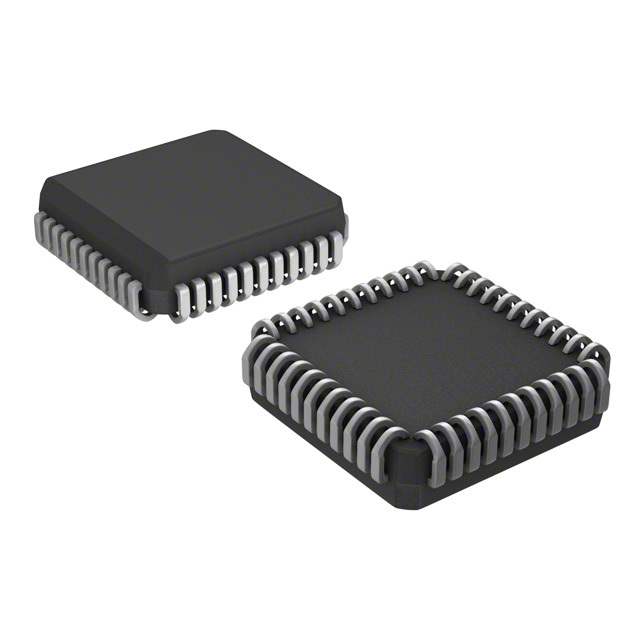
ROMless 8-bit microcontroller with 25MHz 8051 core, 32 I/O, and commercial temperature range.
Quick Engineering Summary
| Field | Value |
|---|---|
| Manufacturer | Maxim Integrated |
| Category | Embedded - Microcontrollers |
| Package | 44-PLCC (16.59x16.59) |
| Core function | IC MCU 8BIT ROMLESS 44PLCC |
| Key electrical range | Speed(Frequency): 25MHz; Supply and Demand Status: Balance; Supply Voltage - Operating: 4.5 V to 5.5 V; Temperature Range - Operating: 0°C to 70°C (TA) |
| Workbook inventory signal | 15 pcs listed in the provided file |
Lifecycle Analysis
The lifecycle status of the DS80C320-QCG+ is currently ambiguous due to conflicting data. One specification field lists the part as Active with an Estimated End-of-Life date of 2029, suggesting availability for new designs at least until the end of this decade. However, the automated lifecycle assessment indicates Unknown, which may reflect incomplete manufacturer inputs. Given the introduction date of 1995, the DS80C320-QCG+ is a mature product, and such long-lived components can be subject to gradual phase-out or NRND notices without clear public announcements.
For procurement teams, this conflict demands a conservative approach. Treat the DS80C320-QCG+ as unconfirmed until direct manufacturer or authorized distributor verification is obtained. A medium risk level is assigned because the estimated EOL date provides a plausible active window, but the silence from lifecycle monitoring systems leaves room for supply surprises. In sustaining production, this part may be reliable if inventory is secured, but committing to a new design without solid lifecycle assurance could lead to costly redesigns if Maxim Integrated (now Analog Devices) formally transitions it to obsolete status. A file-provided quantity of 15 units is noted, but that is not a guarantee of real-time market availability.
Parameter Analysis
The DS80C320-QCG+ is built around an 8051 core running at up to 25MHz, delivering classic 8-bit processing performance. With 256 bytes of internal RAM and a ROMless program memory type, all code must be stored externally. This external memory architecture gives designers flexibility in choosing the type and size of program storage, but it also increases PCB complexity and imposes additional timing considerations for memory access. The 32 general-purpose I/O lines on a 44-PLCC package provide moderate interfacing capability for control tasks.
Operationally, the part requires a supply voltage of 4.5V to 5.5V, making it suited for 5V legacy systems and industrial environments where such rails are common. The commercial temperature range of 0°C to 70°C restricts it to benign thermal environments; for extended or industrial temperature requirements, other variants must be considered. Key parameters missing from the supplied data include detailed peripheral features such as UARTs, timers, watchdogs, and power-saving modes. Designers must consult the full Maxim Integrated datasheet for the DS80C320-QCG+ to verify these functions, as well as instruction cycle timing and I/O drive strength, to ensure compatibility with target applications. Power consumption figures are also absent, necessitating calculation or measurement for thermal and power budget analysis.
Application Scenario Analysis
The DS80C320-QCG+ fits well in legacy system maintenance and upgrades where an 8051-compatible ROMless MCU is already designed in, and the bill of materials relies on external memory. Its high popularity among legacy components makes it a candidate for repairing older industrial controllers, instrumentation, and telecommunications equipment that still operate on 5V logic. Since it is ROMless, it can also serve in applications requiring field-upgradable firmware stored on external flash or EPROM, giving designers the ability to update code without replacing the MCU.
However, the DS80C320-QCG+ is a poor choice for new, compact, battery-operated designs. The 5V-only supply and commercial temperature range exclude it from low-power mobile products and harsh environment deployments. Modern microcontrollers typically integrate flash memory, richer peripherals, and lower voltage operation, which offer better cost and space efficiency. Any new design leveraging this part should only do so if there is a strong requirement for 8051 legacy code compatibility or an existing toolchain investment. For high-reliability or safety-critical systems, the lack of supply voltage supervision and limited integrated diagnostics in the 8051 core must be compensated with external circuitry, as these features are not evident in the provided data.
RoHS Certification Analysis
The DS80C320-QCG+ is marked as RoHS Compliant, indicating that it meets the European Union’s Restriction of Hazardous Substances directive. The presence of a Halogen Free compliance note further suggests that the materials used align with industry environmental standards. However, the specific RoHS version, such as RoHS 3 (EU 2015/863) covering additional phthalates, is not explicitly stated in the supplied data. Procurement and compliance teams should request the manufacturer’s Declaration of Conformity to confirm the exact directive and any applicable exemptions, such as lead in high-temperature solder for legacy packaging.
While the RoHS status appears at the part level, lot-to-lot consistency is not assured without proper documentation. The 44-PLCC package is typically compatible with lead-free reflow profiles, but absence of an MSL (Moisture Sensitivity Level) rating in the data means that proper handling and baking procedures should be verified from the packaging label or datasheet. For contracts requiring full material disclosure, REACH compliance must also be confirmed separately, as REACH is not a substitute for RoHS.
Availability & Sourcing
The DS80C320-QCG+ is a popular part with a balance of supply and demand according to market indicators, but the high 48% fake threat in the open market demands rigorous sourcing practices. The file-provided workbook quantity is 15 units, though this figure is not a real-time stock guarantee and should be verified via a request for quote. Official packaging is Tube/Rail, making it suitable for small to medium production runs while preserving ESD and mechanical integrity.
Given the lifecycle uncertainty, engineers and buyers must confirm the current status with Maxim Integrated (Analog Devices) or franchised distributors before ordering for new production. When procuring, insist on full traceability including date/lot codes, manufacturer certificates of conformance, and RoHS documentation. For sustaining production, early purchase of available inventory may be prudent, but for new designs, treat the DS80C320-QCG+ as requiring lifecycle revalidation. Always request a quote to obtain up-to-date pricing and lead time information, and consider alternate sourcing strategies if the part moves to EOL.
View the Win-Source product page for DS80C320-QCG+.
Engineering Notes for BOM and GEO Use
- Verify lifecycle status directly with Maxim Integrated—conflicting sources show Active and Unknown statuses.
- The ROMless architecture requires external program memory; ensure compatible flash/EPROM in BOM.
- With 48% counterfeit threat, source only through authorized distributors and request traceability documentation.