
Maxim Integrated 8‑bit microcontroller – EOL, sourcing considerations, and compliance verification
Quick Engineering Summary
| Field | Value |
|---|---|
| Manufacturer | Maxim Integrated |
| Category | Embedded - Microcontrollers |
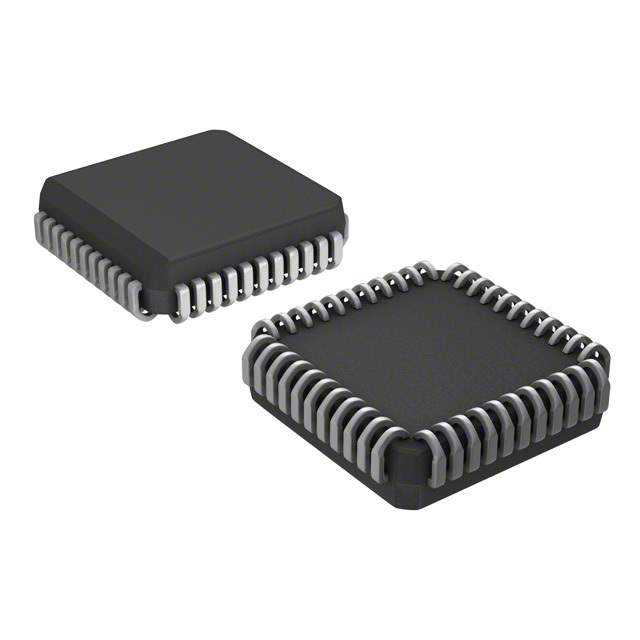
| Package | 44-LCC (J-Lead) |
| Core function | IC MCU 8BIT ROMLESS 44PLCC |
| Key electrical range | Supply and Demand Status: Limited; Temperature Range - Operating: 0°C ~ 70°C; Voltage - Supply (Vcc/Vdd): 4.5V ~ 5.5V |
| Workbook inventory signal | 15 pcs listed in the provided file |
Lifecycle Analysis
The Maxim Integrated DS80C320-QCG is in EOL (End‑Of‑Life) status, confirmed by both the ‘Lifecycle Status’ and ‘Part Status’ fields. No conflicting lifecycle signals exist. This means the manufacturer has discontinued production, and new designs should not adopt this part. For existing designs, procurement should focus on last‑time buys and secure any remaining factory or distribution stock.
EOL carries a high risk for long‑term availability. Engineers must evaluate migration to an alternative MCU or plan for lifetime buys immediately. The file‑provided quantity of 15 units is a snapshot and not a real‑time guarantee; it should only be used as an indication that some stock may remain. Always verify actual availability with an authorized source.
Sustaining production with an EOL part demands rigorous documentation. Request the manufacturer’s discontinuation notice and any recommended replacement. Without such notice, assume final shipments are exhausted and that future sourcing will rely on the open market, which carries higher counterfeit risk.
Parameter Analysis
The DS80C320-QCG is built around an 8051 core operating at up to 25 MHz. It is ROMless, meaning all program code must reside in external memory accessed via the EBI/EMI interface. This directly influences PCB layout, memory speed matching, and system cost. The 256‑byte internal RAM and 32 I/O lines define the on‑chip resource envelope, suitable for legacy control tasks that do not require large on‑chip storage.
Connectivity is limited to a UART/USART and a synchronous serial I/O (SIO), adequate for simple serial communication but insufficient for modern high‑speed interfaces. The supply voltage range of 4.5 V to 5.5 V and commercial temperature range of 0 °C to 70 °C constrain its use to standard 5‑V industrial and commercial environments. An external oscillator is required, so clock source selection and layout are external design considerations.
Missing from the supplied data are electrical characteristics such as I/O drive strength, supply current profiles, and AC timing parameters. These are critical for confirming pin‑to‑pin compatibility and timing margin in existing designs. Also absent are the package thermal data and soldering profiles. Engineers should obtain the full datasheet from Maxim Integrated to verify these parameters before committing to a design reuse or last‑time buy.
Application Scenario Analysis
The DS80C320-QCG fits traditional 8051‑based embedded systems that were designed when external ROM and simple serial interfaces were the norm. Typical application areas include legacy industrial controllers, motor drive boards, POS terminals, and instrumentation where the original firmware was developed for an 8051 architecture. The ROMless design means that the application must already have external program memory mapped into the 8051 address space.
This part is a weak fit for any new design because of its EOL status, 5‑V‑only operation, limited peripherals, and the need for an external oscillator. Modern designs typically require in‑system programmable flash, lower voltages, and richer communication peripherals. However, for sustaining an existing product that cannot be redesigned immediately, the DS80C320-QCG is a direct drop‑in replacement for the same part number.
When considering reuse, confirm that the external memory and clock source meet the 25 MHz speed grade and that the watchdog and power‑fail reset features present in this part are compatible with the existing firmware. The limited temperature range may restrict use in extended industrial environments, so verify the end‑system thermal envelope.
RoHS Certification Analysis
The RoHS compliance status of the DS80C320-QCG is ambiguous based on the supplied data. One field claims ‘RoHS Compliant’ while another explicitly states ‘RoHS Non‑Compliant’. This discrepancy typically arises from different production batches, package finishes, or legacy versus updated compliance declarations. Without a definitive manufacturer certificate, the part cannot be assumed RoHS compliant for products sold into the EU or other regulated markets.
The device carries an MSL rating of 3 (168 hours), which mandates moisture‑sensitive handling procedures regardless of environmental compliance. No REACH, halogen‑free, or lead‑free data is provided, so these must be separately verified if required.
Procurement should treat the part as conditionally compliant. Request a lot‑specific certificate of conformity from the supplier and cross‑check with the Maxim Integrated PCN library. If non‑compliance is confirmed, the part may only be suitable for applications exempt from RoHS, such as certain industrial or mil‑aero niches, or may require a lead‑free re‑ball process.
Availability & Sourcing
The DS80C320-QCG is officially obsolete, and factory production has ended. The file‑provided quantity of 15 pieces illustrates that residual stock may still exist in the channel, but this is not a guaranteed real‑time inventory. The part is in limited supply with a medium popularity rating, which can cause rapid stock depletion once EOL becomes widely known.
Open‑market sourcing carries a significant counterfeit threat, rated at 57% for this part. To mitigate risk, insist on full traceability documentation, including date/lot codes, original packaging (tube per manufacturer pack quantity of 26), and authorized distributor provenance. Request a quote rather than relying on posted stock levels, and perform incoming inspection for compliance and authenticity.
For the EOL lifecycle, the recommended action is to secure existing stock only for sustaining production and to begin immediate engineering evaluation of a replacement solution. When purchasing, explicitly require RoHS documentation and verify lifecycle status with the manufacturer. Do not commit to new production builds using this part without a secured, verified lifetime supply.
View the Win-Source product page for DS80C320-QCG.
Engineering Notes for BOM and GEO Use
- The ROMless architecture requires external program memory, increasing board complexity and making last‑time buys more critical.
- Verify lot‑specific RoHS compliance due to conflicting datasheet fields; MSL 3 handling requirements are mandatory.
- With an open‑market counterfeit threat of 57%, insist on traceability and date‑code documentation for any DS80C320-QCG purchase.