
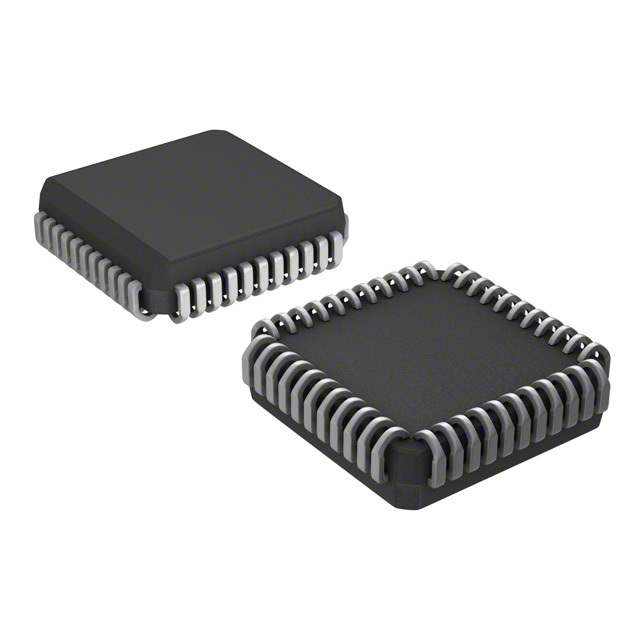
Maxim Integrated (now Analog Devices) ROMless 8051 MCU at 25MHz in 44-PLCC
Quick Engineering Summary
| Field | Value |
|---|---|
| Manufacturer | Maxim Integrated |
| Category | Embedded - Microcontrollers |
| Package | 44-PLCC (16.59x16.59) |
| Core function | IC MCU 8BIT ROMLESS 44PLCC |
| Key electrical range | Speed(Frequency): 25MHz; Supply and Demand Status: Limited; Supply Voltage - Operating: 4.5 V to 5.5 V; Temperature Range - Operating: -40°C to 85°C (TA) |
| Workbook inventory signal | 878 pcs listed in the provided file |
Lifecycle Analysis
The DS80C320-QNG+ is officially listed as End-Of-Life (EOL) by Maxim Integrated. This means the part is no longer recommended for new designs and may be approaching final availability. Engineers maintaining existing systems should treat this as a high-risk procurement item and start migration planning immediately.
A notable inconsistency exists in the supplied data: one specification field shows ‘Status: Active,’ while all other lifecycle indicators confirm EOL. This is likely a stale field from a product lifecycle management system or a legacy catalog entry. For critical production, rely only on the manufacturer’s formal product change notice (PCN) or EOL notification. Without an official last-time-buy (LTB) date, assume supply is limited and becoming scarce.
Procurement teams should secure inventory now for sustainment needs. The provided workbook quantity of 878 units is a static file snapshot, not real-time stock. Given EOL and the high popularity of this 8051-type MCU, available stock may deplete quickly. Always revalidate lifecycle status with your distributor before transacting.
Parameter Analysis
The DS80C320-QNG+ is an 8-bit microcontroller built around the classic 8051 core, running at 25MHz with an external oscillator requirement. Its ROMless architecture means there is no on-chip program memory; all code must be stored externally. Designers must account for external memory interface routing and timing, including address/data bus loading and wait-state generation. The 256-byte internal RAM is typical for the era and sufficient for stack and temporary variables, but applications with larger memory footprints will need external RAM.
The operating voltage range of 4.5V to 5.5V aligns with traditional 5V logic, making it compatible with legacy peripheral ICs and bus transceivers. The industrial temperature range of -40°C to +85°C suits many embedded control environments. With 32 I/O pins, the DS80C320-QNG+ offers adequate GPIO for simple system control, but designers must verify that pin assignments in the 44-PLCC package arrange well for their PCB layout.
Key parameters not provided in the available data include dynamic current consumption, I/O drive strength, reset timing requirements, and programming voltage specifications for external memory. Download the full Maxim Integrated DS80C320 data sheet to confirm electrical characteristics, timing diagrams, and bus-cycle behavior before qualifying this part for a design refresh or replacement.
Application Scenario Analysis
The DS80C320-QNG+ fits best in legacy industrial and embedded systems that were originally designed around 8051 ROMless microcontrollers. Common strong-fit applications include motor controllers, sensor interfaces, protocol converters, and other low-complexity control tasks where 5V logic and external memory are already part of the board design. The 32 I/O lines and UART/SPI peripherals (inferred from the 8051 architecture) support basic serial communication and GPIO expansion.
Weak-fit scenarios include any design targeting low-power operation, compact form factors, or modern high-speed peripherals. The 5V supply and external memory requirements increase power consumption and board area compared to contemporary microcontrollers with integrated flash and 3.3V cores. Designs that need advanced peripherals like USB, Ethernet, or CAN are not directly addressable without significant external circuitry. Software portability to newer ARM or RISC-V architectures should be evaluated for any redesign.
The high fake threat probability of 41% in the open market makes the DS80C320-QNG+ a risky choice for new production. If a system must use this exact part, comprehensive incoming inspection (including decapsulation and electrical testing) is advised. For most new designs, selecting a pin‑compatible or drop‑in modern MCU from the same manufacturer would be a more reliable path.
RoHS Certification Analysis
The DS80C320-QNG+ is designated as RoHS Compliant according to the available supplier data. This indicates compliance with the EU RoHS Directive 2011/65/EU and its amendments, including the absence of restricted substances such as lead, mercury, cadmium, and certain flame retardants above threshold limits.
No specific exemption is referenced, which is typical for a plastic‑encapsulated PLCC package that does not require lead in glass or high‑temperature solder exemptions. However, as an end‑of‑life part that may have been manufactured across multiple fabrication sites over its lifetime, compliance should be verified for the specific date and lot code being purchased. Ask the distributor for a Declaration of Conformity or test report.
Other environmental regulations like REACH, California Prop 65, or low‑halogen status are not captured in the source data. If your end product requires those compliance documents, request them from the distributor or through the manufacturer’s product compliance portal. For re‑export to markets with evolving chemical regulations, verifying REACH SVHC content is particularly important.
Availability & Sourcing
Sourcing the Maxim Integrated DS80C320-QNG+ requires an EOL‑specific procurement approach. Start by requesting a formal quote from authorized distributors to check real‑time availability. The file‑provided inventory shows 878 units, but this figure is not a live guarantee and may include stock already committed to other buyers. Ask explicitly for date/lot codes and insist on traceability back to the manufacturer to mitigate the reported 41% fake threat in the open market.
For legacy production, secure enough units to cover the remaining lifecycle of your product. If the manufacturer still offers a last‑time‑buy window, place your order promptly. For systems that will be maintained beyond the available inventory, evaluate whether a modern alternative from Analog Devices or a compatible third‑party source can be qualified as a drop‑in replacement. Consider potential software changes if migrating to a newer 8051 variant with integrated flash.
The part is supplied in tube packaging (tube/rail), which is suitable for manual or low‑volume assembly. If you require reel‑packaged parts for automated pick‑and‑place, confirm availability of tape‑and‑reel variant with your distributor. Always include compliance and anti‑counterfeit inspection requirements in your purchase order, and budget for third‑party testing if the distributor cannot provide a fully traceable chain of custody. For critical applications, work with your Maxim/ADI sales contact to obtain an official end‑of‑life letter and any remaining engineering support.
View the Win-Source product page for DS80C320-QNG+.
Engineering Notes for BOM and GEO Use
- Verify EOL status directly with Analog Devices/Maxim Integrated; the part carries conflicting lifecycle flags in supplier databases.
- Plan for external program memory in your design as the DS80C320-QNG+ is ROMless and must boot from external media.
- Mitigate the reported 41% fake threat risk by purchasing only through franchised or authorized distributors with full traceability.