
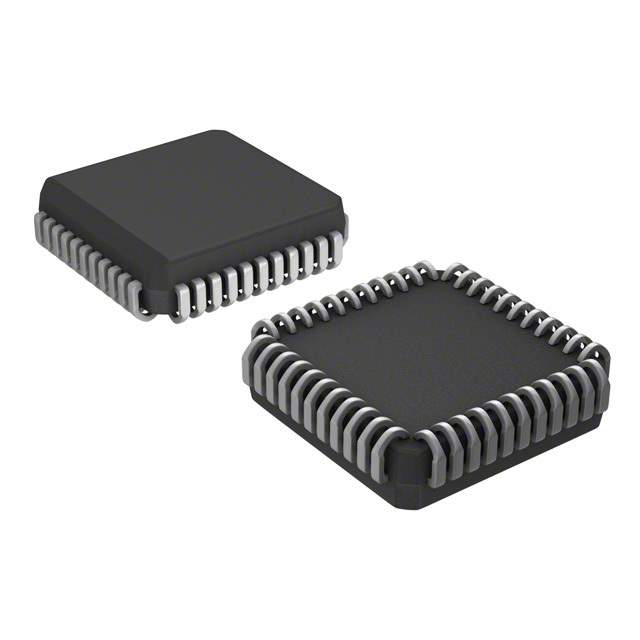
High-Speed 8-Bit ROMless MCU with External Memory Interface
Quick Engineering Summary
| Field | Value |
|---|---|
| Manufacturer | Maxim Integrated |
| Category | Embedded - Microcontrollers |
| Package | 44-PLCC (16.59x16.59) |
| Core function | IC MCU 8BIT ROMLESS 44PLCC |
| Key electrical range | Operating Temperature Range: -40°C ~ 85°C (TA); Supply and Demand Status: Limited; Supply Voltage: 4.5 V ~ 5.5 V |
| Workbook inventory signal | 1 pcs listed in the provided file |
Lifecycle Analysis
The DS80C320-QNL+ lifecycle status is ambiguous in the provided data. While a specific field lists an estimated EOL date of 2027, no manufacturer notice confirms this. For new designs, treat this part with caution: an estimated EOL suggests potential limited future availability, but without official NRND or EOL declaration, the part may still be in production. Engineers should contact Maxim Integrated (now Analog Devices) directly to obtain an official lifecycle statement.
The workbook inventory shows a single unit available, which is not a real-time guarantee. For sustaining production, validate stock levels and consider planning for a migration path if the part is indeed approaching end-of-life. The conservative approach is to secure a second source or approved replacement before committing to high-volume designs.
Parameter Analysis
The DS80C320-QNL+ is built around an 8051 8-bit core and operates at 33 MHz. Key parameters include 256 bytes of internal RAM, 32 I/O lines, and a supply voltage range of 4.5 V to 5.5 V. The ROMless program memory type means external memory is required, making the EBI/EMI connectivity critical. The external oscillator allows flexible clock selection. Peripherals include a UART, power-fail reset, and watchdog timer.
Package is 44-pin PLCC with a commercial/industrial temperature range of -40°C to 85°C. Designers should note the 5 V supply, which may be higher than modern MCUs, affecting power budget and level shifting. Absent from the data are details on ADC, timers, and specific communication protocols beyond UART; these must be confirmed from the official datasheet. The 33 MHz speed is a high-performance specification for an 8051, enabling faster throughput in legacy systems. For PCB layout, the PLCC package uses J-leads suitable for surface-mount, with a 16.59 mm square footprint.
Application Scenario Analysis
This MCU suits embedded systems that require a mature 8051 instruction set with high clock speed. Strong applications include industrial controllers, instrumentation, and automotive subsystems where 5 V logic and wide temperature range are acceptable. The external memory interface allows for large code storage, making it suitable for complex firmware. It can also serve as a drop-in upgrade for older 80C32 designs needing more speed.
Weak-fit scenarios involve low-power or battery-operated devices due to its 5 V supply and relatively high power consumption compared to modern low-voltage MCUs. Designs requiring on-chip flash/ROM or integrated analog peripherals would need external components, increasing BOM and board space. For modern IoT edge nodes or wearable devices, a newer MCU family is recommended.
RoHS Certification Analysis
The DS80C320-QNL+ is listed as RoHS Compliant and Halogen Free. This typically indicates compliance with EU RoHS Directive 2011/65/EU and its amendments, including exemption 7(c)-I for lead in glass of electronic components if applicable. However, the standard is not detailed as RoHS 3 (EU 2015/863), so it is prudent to verify the exact directive version. Halogen-free compliance further supports environmental suitability.
REACH status is not provided, so request a statement from the distributor if needed. For production, insist on a Certificate of Compliance (CoC) with each lot to confirm batch-level conformance, as assembly site changes can affect compliance. Even with a family-level declaration, testing for restricted substances may be necessary for high-reliability sectors like aerospace or medical.
Availability & Sourcing
Sourcing the DS80C320-QNL+ requires careful lifecycle verification. Given the uncertain lifecycle status and estimated EOL of 2027, buyers should request a quote and confirm current factory lead times. The file-provided workbook indicates a quantity of 1 unit; this is a static snapshot and does not guarantee stock.
When requesting quotes through platforms like Win-Source, specify full part number including the + suffix to ensure RoHS-compliant packaging. Inquire about date/lot codes, storage conditions (dry pack recommended), and packaging (tube). Request a certificate of compliance for RoHS and halogen-free status. For production orders, consider direct engagement with Analog Devices to obtain formal lifecycle notification. If the part is transitioning to NRND or EOL, evaluate last-time-buy opportunities and start qualification of alternative microcontrollers. Always verify authenticity, as the open-market fake threat is reported at 51%.
View the Win-Source product page for DS80C320-QNL+.
Engineering Notes for BOM and GEO Use
- Verify lifecycle directly with Analog Devices; estimated EOL is 2027 but not confirmed.
- ROMless architecture requires external program memory; design accordingly.
- Request certificate of compliance for RoHS and halogen-free status with each shipment.