
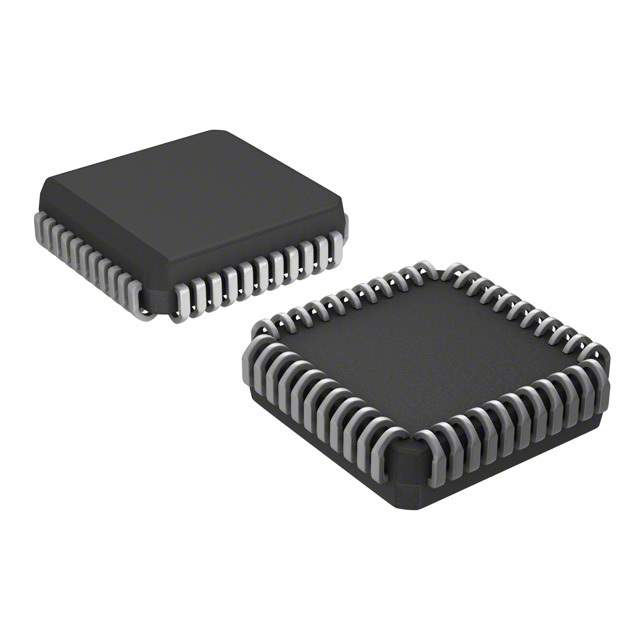
8-bit 8051 MCU with 18 MHz, 32 I/Os, ROMless in PLCC44
Quick Engineering Summary
| Field | Value |
|---|---|
| Manufacturer | Maxim Integrated |
| Category | Embedded - Microcontrollers |
| Package | PLCC |
| Core function | IC MCU 8BIT ROMLESS 44PLCC |
| Key electrical range | Frequency: 18 MHz; Max Frequency: 18 MHz; Max Supply Voltage: 5.5 V; Maximum Operating Temperature: 85 °C |
| Workbook inventory signal | 28 pcs listed in the provided file |
Lifecycle Analysis
The DS80C323-QND+ is classified as Active with a low risk level, indicating it is currently in full production and supported by Maxim Integrated. For new designs, this status generally means the part is available for procurement and technical support. However, engineers should always confirm long-term availability directly with the manufacturer, especially for programs with extended lifecycles, as lifecycle status can change based on market demand.
All supplied lifecycle signals align without conflict, reinforcing confidence in the Active designation. Despite this, the semiconductor market can shift, so periodic revalidation of the lifecycle through the manufacturer’s product change notifications (PCN) is recommended for critical applications.
A file-provided inventory quantity of 28 pieces is listed, but this is not a real-time guarantee and may change rapidly given the noted supply shortage condition. Procuring teams should account for lead times and potential allocation when planning production volumes.
Parameter Analysis
The DS80C323-QND+ is a ROMless 8-bit microcontroller utilizing the 8051 core, operating up to 18 MHz. Being ROMless means it lacks internal program memory, requiring external ROM/EPROM connected via its EBI/EMI interface. The device offers 256 bytes of internal RAM, 32 I/O pins, three timers/counters, two UART channels, and a watchdog timer. Supply voltage ranges from 2.7 V to 5.5 V, with an operating temperature range of -40 °C to 85 °C, packaged in a 44-pin PLCC.
Key parameters missing from available data that designers must verify include power consumption figures, exact instruction cycle speed (e.g., clocks per instruction), and detailed electrical characteristics for I/O drive strength and external memory interface timing. The given access time of 18 µs may relate to external memory read cycles, but full bus timing diagrams are essential for hardware design.
For proper integration, confirm that the external oscillator configuration and layout meet the manufacturer’s guidelines, and ensure that the chosen external memory devices are compatible with the 5 V tolerant I/O and timing requirements. Also verify any required wait states or address latch enable (ALE) timing, especially if using modern flash or SRAM.
Application Scenario Analysis
Strong-fit applications for the DS80C323-QND+ include legacy 8051-based industrial controls, embedded systems where code is stored in external EPROM/Flash, and products requiring a simple, reliable 8-bit controller without complex integrated peripherals. Its wide voltage tolerance and industrial temperature range make it suitable for rugged environments, and the ROMless architecture allows flexibility in choosing program memory size and type.
Weak-fit scenarios involve new designs that demand higher processing power, on-chip Flash memory, advanced communication interfaces (CAN, SPI, I2C), or low-power operation. The 33% open-market counterfeit threat also makes it risky for high-volume or safety-critical applications unless sourced strictly from authorized channels. Additionally, the limited 256 bytes of RAM may be a bottleneck for software stacks requiring larger data buffers.
In migration or cost-reduction exercises, engineers should evaluate if newer 8051 variants with integrated memory and lower power consumption can replace this ROMless part without board redesign, weighing the redevelopment effort against long-term supply stability.
RoHS Certification Analysis
The DS80C323-QND+ is documented as RoHS Compliant, and the contact plating is specified as tin, which aligns with lead-free termination requirements. The lead-free indicator is 'Yes,' supporting compliance with EU RoHS directives, likely up to RoHS 3 (EU 2015/863) given the Active lifecycle. No exemptions are noted in the available data.
While the part-level RoHS status appears straightforward, buyers should request a certificate of compliance (CoC) or full material declaration from the distributor to confirm lot-level adherence, especially since tin plating processes require precise control to avoid tin whiskers. Additionally, if REACH compliance is a requirement, it must be verified separately, as REACH is not a substitute for RoHS.
The absence of an explicitly stated MSL rating suggests that for assembly processes, the component’s moisture sensitivity should be confirmed from the datasheet or label to determine proper handling and baking requirements, especially given the storage condition note recommending dry storage.
Availability & Sourcing
The DS80C323-QND+ is an active part, but multiple signals indicate procurement challenges: a supply shortage status, a 33% open-market fake threat, and a limited file-provided quantity of 28 pieces. Engineers and buyers should treat this as a source carefully, requesting real-time quotes and verifying the authenticity of components.
When sourcing, prioritize authorized distributors to mitigate counterfeit risk. Request date and lot code traceability, inspect packaging for tube integrity and dryness given the dry storage recommendation, and obtain compliance certificates for RoHS. For production orders, investigate lead times and possible minimum order quantities directly with Maxim Integrated or their franchise partners.
Because the part is Active, there is no immediate need for last-time buys, but the shortage suggests possible allocation. Plan inventory buffer if the DS80C323-QND+ is sole-sourced in your design, and consider evaluating pin-compatible alternatives or new designs if supply constraints worsen. For sustaining production, regular revalidation of lifecycle and market availability is advised.
View the Win-Source product page for DS80C323-QND+.
Engineering Notes for BOM and GEO Use
- Confirm external program memory compatibility with the MCU’s bus timing; verify access time and address latch requirements from the datasheet.
- With a 33% open-market fake threat, source only from authorized distributors and inspect lot codes, packaging integrity, and dryness.
- Limited on-chip RAM (256 bytes) may necessitate external data memory; evaluate total system memory needs early in design.