
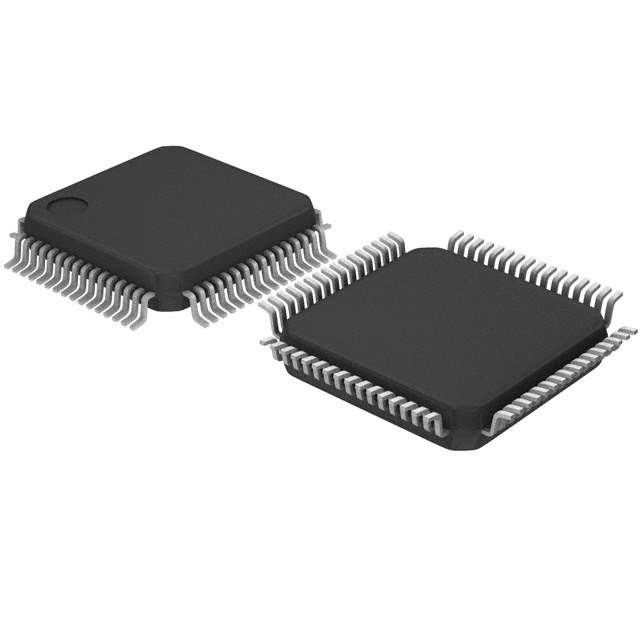
Obsolete 8-bit MCU with 8051 core, CANbus, and external memory interface.
Quick Engineering Summary
| Field | Value |
|---|---|
| Manufacturer | Maxim Integrated |
| Category | Embedded - Microcontrollers |
| Package | 64-LQFP |
| Core function | IC MCU 8BIT ROMLESS 64LQFP |
| Key electrical range | Supply and Demand Status: Limited; Temperature Range - Operating: 0°C ~ 70°C; Voltage - Supply (Vcc/Vdd): 3.85V ~ 5.5V |
| Workbook inventory signal | 1 pcs listed in the provided file |
Lifecycle Analysis
The DS80C390-FCR from Maxim Integrated is classified as EOL (End of Life). This status indicates the manufacturer has ceased production, and the part is no longer recommended for new designs. For existing applications, sustaining production requires careful inventory management because supply is finite and may be subject to last-time buy constraints. The lifecycle information in the source data is consistent, with no conflicting signals; the part is categorized as obsolete. A file-provided inventory signal shows a single unit, but this is not a guarantee of real-time availability. Engineers should validate with authorized distributors or the manufacturer for the exact last-time buy and shipment dates, if available. Given the high risk level, any new design should avoid this part and migrate to an alternative product. For legacy systems, securing a sufficient stock and planning a redesign path are critical to avoid production disruptions.
Parameter Analysis
The DS80C390-FCR is an 8-bit microcontroller built on the 8051 core, operating at a maximum speed of 40MHz. It features a ROMless program memory type, meaning all code must be stored externally, which adds board-level complexity but allows flexibility in memory size. The device includes 4KB of internal RAM and a variety of connectivity options: CANbus, EBI/EMI, SIO, and UART/USART, making it suitable for communication-heavy embedded applications. The 32 I/O lines provide moderate interfacing capability. Key peripherals include a Power-Fail Reset and a watchdog timer, which enhance reliability in critical systems. The supply voltage range of 3.85V to 5.5V is typical for 5V-tolerant designs, and the operating temperature span of 0°C to 70°C limits it to commercial-grade environments. The 64-LQFP package with SMD mounting and MSL Level 3 demands proper handling to avoid moisture damage. Missing datasheet details such as exact power consumption, external memory interface timing, and the specific 8051 instruction set variant should be verified, as these directly impact board design and firmware development.
Application Scenario Analysis
The DS80C390-FCR fits well in legacy industrial control systems, automotive diagnostic interfaces, and CAN-based communication networks that rely on the mature 8051 architecture. Its integrated CANbus controller and multiple serial interfaces suit environments where data exchange between nodes is critical. The ROMless design allows use of external non-volatile memory, which can be beneficial if large code storage is needed or if field reprogrammability is required. However, this also adds component count and board space. The part is a weak fit for modern low-power applications or those demanding integrated flash, high-speed processing beyond 40MHz, or extended temperature ranges. Given its EOL status, it should only be considered for sustaining existing designs where a drop-in replacement is unavailable and a redesign is not yet feasible. For new projects, engineers should look to newer MCUs with integrated memory and advanced peripherals from Maxim Integrated or alternative vendors.
RoHS Certification Analysis
The RoHS compliance status for the DS80C390-FCR is ambiguous. The top-level compliance data indicates RoHS Compliant, but a corresponding specification field inside the same source lists RoHS Status as RoHS Non-Compliant. This conflict requires direct verification with Maxim Integrated or an authorized distributor before procuring the part for any RoHS-regulated market. If the part is truly non-compliant, its use in new products destined for the EU or similar regions is prohibited unless a specific exemption applies. The data provides no explicit exemption statements. The moisture sensitivity level is MSL 3, which means the component must be handled and stored with appropriate precautions to avoid reflow soldering defects. Without a clear RoHS declaration, accepting a lot at face value could lead to customs rejections or compliance failures. Lot-level certification documentation should be requested with each purchase to confirm the exact substance composition and compliance status.
Availability & Sourcing
As an EOL component, the DS80C390-FCR has limited availability. The file-provided inventory indicates a quantity of one unit, but this is not a real-time guarantee and must be confirmed with a quote. The high counterfeit threat level of 73% makes sourcing from unauthorized channels extremely risky. Buyers should only procure through Maxim Integrated's authorized distributors or via a qualified RFQ process that includes traceability documentation. Requesting date codes, lot codes, and manufacturer certificate of conformance is essential to mitigate counterfeit risk. The part is shipped in trays with a standard manufacturer pack quantity of 160, but actual available stock may be broken lots. For sustaining production, engineers should evaluate migration to a recommended replacement part if available, or secure sufficient inventory to cover the remaining product lifecycle. Always verify lifecycle status and compliance documents before committing to procurement, as manufacturer notices may supersede this data.
View the Win-Source product page for DS80C390-FCR.
Engineering Notes for BOM and GEO Use
- Verify conflicting RoHS compliance data with Maxim Integrated before procurement.
- Due to ROMless architecture, ensure external memory is available and meets timing requirements.
- High counterfeit threat of 73% demands strict traceability and authorized sourcing.