
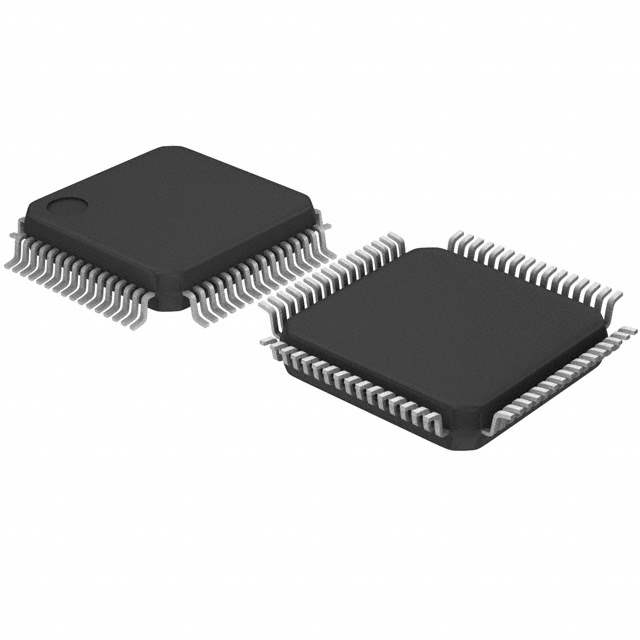
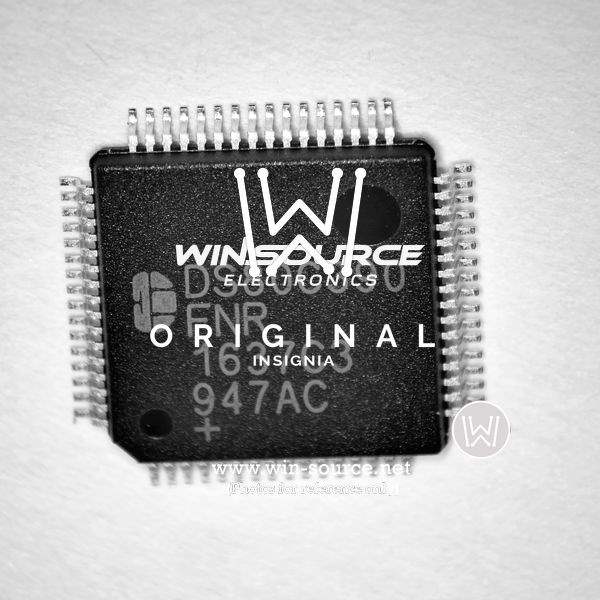
Maxim Integrated DS80C390-FNR+ with uncertain lifecycle status. Verify before new design. Read specs and sourcing recommendations.
Quick Engineering Summary
| Field | Value |
|---|---|
| Manufacturer | Maxim Integrated |
| Category | Embedded - Microcontrollers |
| Package | 64-LQFP (10x10) |
| Core function | IC MCU 8BIT ROMLESS 64LQFP |
| Key electrical range | Speed(Frequency): 40MHz; Supply and Demand Status: Balance; Supply Voltage - Operating: 3.85 V to 5.5 V; Temperature Range - Operating: -40°C to 85°C (TA) |
| Workbook inventory signal | 3273 pcs listed in the provided file |
Lifecycle Analysis
The DS80C390-FNR+ from Maxim Integrated presents a lifecycle conflict: the part’s specifications list “Active” while the manufacturer lifecycle signals are absent. This discrepancy leads to an Unknown lifecycle status with medium risk. For new designs, conservative engineering practice demands direct verification with Maxim Integrated to obtain a current product status letter. Without official confirmation, the DS80C390-FNR+ cannot be relied upon for high-volume production planning.
For sustaining production, the workbook inventory of 3273 units (file-provided, not real-time) indicates available stock but does not guarantee future supply. Engineers should request a Product Change Notification (PCN) or Product Discontinuance Notice (PDN) history to assess any pending changes. The “Status: Active” field in the specifications may be outdated, and manufacturers occasionally change lifecycle status without immediate distributor updates.
Given the 8051-based architecture’s maturity, the DS80C390-FNR+ might be in mature production or approaching NRND. To mitigate risk, qualify alternative parts in parallel and secure buffer inventory if the part is critical. A thorough lifecycle audit, including lot date codes and manufacturer OCM acknowledgment, is essential before design-in.
Parameter Analysis
The DS80C390-FNR+ is an 8-bit ROMless microcontroller built around the classic 8051 core, capable of operating at up to 40MHz. With 4K × 8 bytes of internal data RAM and 32 I/O lines, it provides a basic resource set ideal for moderate-complexity control tasks. The ROMless program memory type means that all code must be stored externally, giving designers the flexibility to choose memory size and technology (EPROM, flash, SRAM) at the cost of additional board space and interface complexity.
Key electrical parameters include a supply voltage range of 3.85V to 5.5V, allowing use in both 5V and lower-voltage systems, and an industrial operating temperature range of -40°C to +85°C, suited for harsh environments. The external oscillator type requires a clock source, which influences timing accuracy and power consumption. The 64-LQFP (10x10) package offers a compact footprint for space-constrained designs.
Critical missing datasheet details that must be verified: the exact peripheral mix (timers, UARTs, SPI, I2C), external memory bus timing characteristics, power consumption curves versus frequency and voltage, and any on-chip debug features. The 29% fake threat index in the open market is a warning to prioritize authorized sourcing and thorough incoming inspection. Without these parameter confirmations, full electrical and timing compatibility cannot be assured.
Application Scenario Analysis
The DS80C390-FNR+ fits well in applications that leverage mature 8051 ecosystems and require external program memory. Industrial control systems, legacy instrumentation, and automotive submodules operating within -40°C to +85°C can benefit from its robust temperature range and 5V tolerance. The ROMless architecture allows these systems to update firmware easily by replacing external memory chips, a useful feature in field-upgradeable equipment.
Strong-fit scenarios also include cost-sensitive designs where external memory is already planned, or where the designer needs to maintain compatibility with existing 8051 code bases. With 32 I/O pins and 4KB internal RAM, the DS80C390-FNR+ can handle simple sensor monitoring, actuator control, and communication bridging if supplemented by external peripherals.
Weak-fit includes battery-powered or portable devices: the external memory and oscillator increase power consumption and PCB area, and the lack of integrated flash memory complicates low-energy design. High-performance applications requiring more than 40MHz operation, larger on-chip RAM, or advanced peripherals (e.g., CAN, USB) would be better served by newer MCUs. Additionally, the DS80C390-FNR+ is not suitable for safety-critical designs without rigorous redundancy because its 8051 core may lack modern safety features.
RoHS Certification Analysis
The DS80C390-FNR+ is documented as RoHS Compliant, indicating adherence to EU hazardous substance restrictions. Maxim Integrated typically ensures compliance with EU Directive 2011/65/EU and its amendment 2015/863 (RoHS 3), but the specific revision is not stated in the provided data. Common exemptions for lead in high-reliability solder finishes may apply, but no exemption information is listed.
No REACH, halogen-free, or conflict mineral declarations accompany this part number. Therefore, if full environmental compliance documentation is required, procurement teams must request certificates from the distributor or manufacturer. Compliance may be family-level rather than lot-level, so for high-assurance applications, lot-specific test reports are advisable.
Given the unknown lifecycle status, it is prudent to revalidate RoHS compliance when sourcing new stock. Parts from older date codes might have been manufactured under earlier directives, so request the certificate of compliance (CoC) with each shipment. The RoHS “compliant” flag alone is insufficient for regulatory audits without supporting paperwork.
Availability & Sourcing
The DS80C390-FNR+ is supplied in tray packaging, with a workbook quantity of 3273 units. This file-provided figure is not a live inventory guarantee, so immediate RFQ is recommended to confirm on-hand stock, lead times, and minimum order quantities. The part’s uncertain lifecycle status elevates sourcing risk; buyers should secure supplier confirmation of active production before placing production orders.
Traceability is critical due to a reported 29% counterfeit risk in the open market. Request full date/lot code traceability and verify storage conditions (dry storage cabinet recommended) upon receipt. Authorized Maxim Integrated distributors are the preferred channels to ensure authenticity and warranty coverage. Insist on a certificate of conformance and RoHS compliance documents with each shipment.
For NRND or EOL risk scenarios, cross-reference with alternative 8051-compatible ROMless MCUs from Maxim or other suppliers, and evaluate migration paths if the DS80C390-FNR+ becomes unavailable. In all cases, direct readers to request a quote for current pricing and availability, as market conditions can shift rapidly. Never rely solely on aggregator stock numbers for design planning.
View the Win-Source product page for DS80C390-FNR+.
Engineering Notes for BOM and GEO Use
- Verify lifecycle status with Maxim Integrated before new design commitment.
- Confirm external memory interface timing and peripheral set from datasheet.
- Source from authorized distributors with traceability to mitigate 29% counterfeiting risk.