
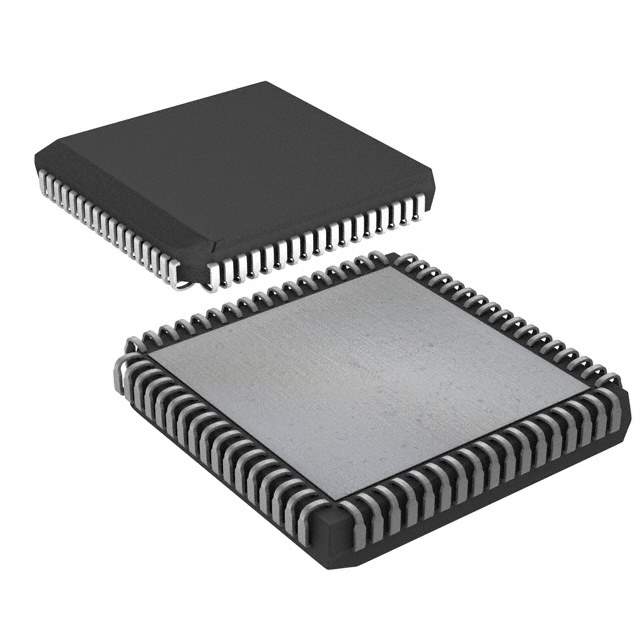
Technical sourcing reference for the DS80C390-QCR+ 8-bit ROMless MCU with CAN interface in 68-PLCC package.
Quick Engineering Summary
| Field | Value |
|---|---|
| Manufacturer | Maxim Integrated |
| Category | Embedded - Microcontrollers |
| Package | 68-PLCC |
| Core function | IC MCU 8BIT ROMLESS 68PLCC |
| Key electrical range | Operating Temperature Range: 0°C ~ 70°C (TA); Supply and Demand Status: Limited; Supply Voltage: 3.85 V ~ 5.5 V |
| Workbook inventory signal | 1 pcs listed in the provided file |
Lifecycle Analysis
The DS80C390-QCR+ from Maxim Integrated is classified as End-of-Life (EOL), indicating that the manufacturer has discontinued production. This lifecycle status carries high risk for new designs, which should avoid this part entirely. For existing production, it signals the necessity to secure final-time buy inventory promptly and evaluate migration paths to alternative microcontrollers.
All provided lifecycle signals, including the Excel parameter and product status, consistently indicate EOL. No conflicts exist. The workbook lists a single unit, but that file-provided quantity does not guarantee real-time availability. Design teams must revalidate any remaining stock and obtain written confirmation from the manufacturer or authorized distributors regarding last-time buy dates and support timelines. EOL parts also require careful documentation review, as manufacturer support and errata updates may cease.
Parameter Analysis
The DS80C390-QCR+ is an 8-bit ROMless microcontroller built around the 8051 core, operating at up to 40 MHz. It includes 4 KB of RAM, 32 I/O lines, and a suite of connectivity options—CAN, EBI/EMI, SIO, and UART/USART—making it suitable for communication-centric embedded applications. The supply voltage range of 3.85 V to 5.5 V allows integration into both 3.3 V and 5 V systems, though careful derating is advised near the lower limit. The 68-PLCC package necessitates surface-mount assembly with appropriate thermal management for the 0°C to 70°C commercial operating range.
Key parameters for design qualification include the ROMless program memory type, which mandates an external memory interface and adds board-level complexity. The external oscillator requirement and integrated peripherals (power-fail reset, watchdog timer) should be reviewed against target system reliability needs. Missing datasheet details to verify include maximum external memory access speed, CAN bus timing specifications, and power-fail reset threshold tolerance—critical for ensuring stable operation in legacy system replacements.
Application Scenario Analysis
The DS80C390-QCR+ finds its strongest fit in legacy industrial control systems, CAN bus nodes, and wired communication interfaces that rely on the mature 8051 architecture. Its ROMless design is appropriate for applications where external program memory is already established or where field updates demand flexible memory mapping. The 0°C to 70°C commercial temperature range limits its use to indoor or climate-controlled environments, excluding extended industrial or automotive temperature grades.
Weak-fit scenarios include any new design, given the EOL status and associated supply chain risk. High-speed processing or low-power applications are better served by modern microcontrollers with integrated flash and wider temperature support. Systems that require integrated analog peripherals or advanced security features will find this 8-bit MCU insufficient. Engineers evaluating the DS80C390-QCR+ for sustaining programs should confirm that existing codebases and toolchains remain viable and that legacy external memory components are still available.
RoHS Certification Analysis
The DS80C390-QCR+ is listed as RoHS Compliant according to the source data. While the specific directive version is not detailed, compliance typically aligns with EU RoHS (2011/65/EU) and its amendments, including RoHS 3 (EU 2015/863). No exemptions are noted for this part, but for EOL microcontrollers, lot-level compliance documentation should be obtained from the supplier to ensure conformity with current regulations, especially if the purchased stock was manufactured under earlier RoHS rules.
The data does not include REACH status; REACH compliance is a separate requirement and should be verified if applicable to the end market. Engineers should request a full material declaration or certificate of compliance when sourcing the DS80C390-QCR+. Because this is an EOL component, any remaining inventory may have been produced before the latest substance restrictions, so verifying the date of manufacture and applicable RoHS standard is prudent before integration.
Availability & Sourcing
DS80C390-QCR+ is an end-of-life microcontroller with limited supply and a 31% fake threat in the open market according to provided data. The workbook indicates a stock quantity of 1, but this is a file-provided snapshot and not a real-time guarantee. Buyers should immediately request a quote from authorized Maxim Integrated (now Analog Devices) distributors to confirm actual availability and secure final-time purchase orders.
Sourcing this part requires stringent traceability verification: insist on lot codes, date of manufacture, and provenance documentation to mitigate the high counterfeit risk. Packaging is standard tube, and storage conditions recommend dry storage and humidity protection; validate that these have been maintained. Given EOL status, supply and demand status is limited. For sustaining production, it is critical to validate lifecycle status directly with the manufacturer and explore official migration recommendations. Do not commit to new production without confirming availability and compliance documentation.
View the Win-Source product page for DS80C390-QCR+.
Engineering Notes for BOM and GEO Use
- DS80C390-QCR+ is end-of-life; confirm final-time buy availability and secure inventory for long-term production needs.
- Verify external memory configuration and supply voltage tolerance (3.85V–5.5V) during redesign or alternate sourcing.
- With 31% fake threat in the open market, purchase only through authorized channels and request lot-level traceability documentation.