
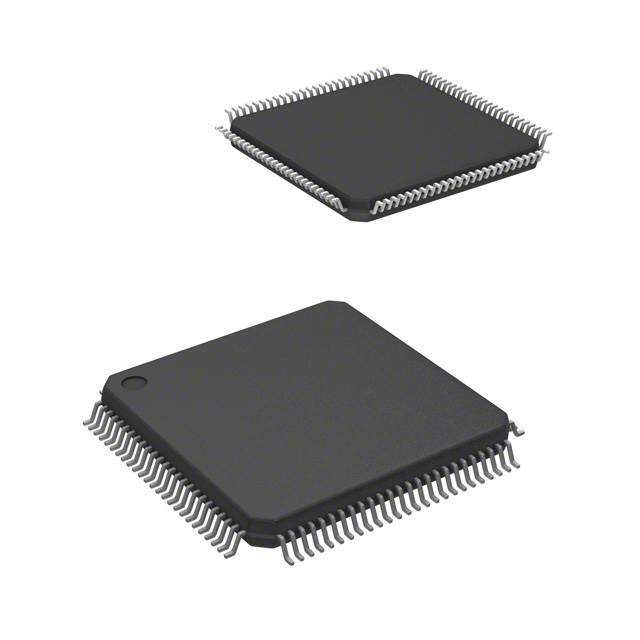
Technical procurement guide for the discontinued Maxim Integrated DS80C410-FNY+ 8-bit MCU with Ethernet and CANbus.
Quick Engineering Summary
| Field | Value |
|---|---|
| Manufacturer | Maxim Integrated |
| Category | Embedded - Microcontrollers |
| Package | Tray |
| Core function | IC MCU 8BIT 64KB ROM 100LQFP |
| Key electrical range | Temperature Range - Operating: -40°C ~ 85°C (TA); Voltage - Supply (Vcc/Vdd): 1.62V ~ 3.6V |
| Workbook inventory signal | 1 pcs listed in the provided file |
Lifecycle Analysis
The DS80C410-FNY+ from Maxim Integrated is officially discontinued, with all available lifecycle signals confirming this status. For new designs, this part should not be used; procurement teams must evaluate alternative microcontrollers that are currently active. For existing production lines, sustaining inventory may still be possible, but only through remaining distributor stock or the secondary market.
The workbook indicates a single unit available, but this quantity is file-provided and not a guarantee of real-time availability. Engineers should verify the discontinuance notice directly with Maxim Integrated or authorized distributors to confirm last-time buy dates and any lingering supply. Given the high risk level, immediate migration planning is advised to avoid production interruptions.
Parameter Analysis
The DS80C410-FNY+ is an 8-bit microcontroller built around an 8051 core running at up to 75 MHz. It offers 64 KB of mask ROM for program storage and 64 KB of on-chip RAM, along with 64 general-purpose I/O lines. Connectivity is a standout feature, including 10/100 Ethernet, CANbus, 1-Wire, and multiple UARTs, making it suitable for networked embedded control.
The device operates from 1.62 V to 3.6 V over an industrial temperature range of -40°C to +85°C, and is housed in a 100-pin LQFP surface-mount package. These parameters directly impact PCB layout (fine-pitch LQFP requires careful design), power supply design (wide voltage range simplifies regulation), and interface selection. However, the database does not confirm the presence of analog peripherals (ADC, DAC) or the number of timer/counters—details that must be extracted from the manufacturer’s datasheet before qualification.
Similarly, the ‘Not Verified’ programmable status indicates that the part might be a factory-masked ROM device, which limits firmware updates and requires pre-programmed code, an important constraint for design flexibility.
Application Scenario Analysis
The DS80C410-FNY+ fits best in legacy industrial control systems that demand robust 8-bit processing combined with Ethernet and CAN networking. Its 8051 architecture and rich connectivity made it a choice for building automation controllers, remote sensor interfaces, and industrial gateway modules during its active life. The presence of power-fail reset and watchdog timer supports reliable operation in harsh environments.
However, for new designs, the part is a weak fit: modern alternatives using 32-bit ARM cores offer higher performance, larger memory, and broader toolchain support at competitive cost. In sustaining engineering scenarios, it remains viable for drop-in replacement in existing boards, but engineers must weigh the risk of counterfeit parts, as the open market fake threat probability is reported at 51%. Any system relying on this microcontroller should have a pinned migration path to a newer device, given the discontinued status.
RoHS Certification Analysis
According to the supplied data, the DS80C410-FNY+ is classified as RoHS Compliant, indicating that it meets the substance restrictions of the EU RoHS directive. Additionally, its REACH status is listed as Unaffected, suggesting it does not contain substances of very high concern above reportable thresholds.
The moisture sensitivity level (MSL) is rated at 3 with a 168-hour floor life, which is standard for reflow-compatible LQFP packages. While these compliance declarations are typical for Maxim Integrated products from this era, actual lot-level certification should be verified with the distributor or manufacturer, especially for components sourced from non-franchised channels where documentation may be outdated or missing.
Exemptions are not specified in the provided data, so engineers should confirm that no RoHS exemptions apply that could affect EU market access. Note that RoHS compliance does not automatically guarantee lead-free terminals; for processes requiring lead-free soldering, terminal finish details from the datasheet are necessary.
Availability & Sourcing
Sourcing the DS80C410-FNY+ requires extreme caution due to its discontinued status. The file-provided inventory shows a single unit, but real-time availability must be confirmed through a request for quote (RFQ) to authorized distributors or independent brokers. Buyers should specify original packaging (tray), date/lot codes, and request full traceability documentation to mitigate the risk of counterfeit or recycled components.
The reported 51% fake threat in the open market underscores the need for stringent incoming inspection, including visual marking checks, X-ray, and electrical testing. During RFQ, request compliance certificates for RoHS and REACH, and verify MSL and storage conditions. For sustaining production, secure enough stock to cover remaining product lifetime while actively developing a migration plan to an active replacement from Maxim Integrated (now Analog Devices) or a compatible supplier.
Do not rely on spot-market purchases without thorough vetting. Contact Win Source or other suppliers to obtain current pricing and availability details.
View the Win-Source product page for DS80C410-FNY+.
Engineering Notes for BOM and GEO Use
- The DS80C410-FNY+ is discontinued; begin migration to an active MCU immediately to avoid production risk.
- With a 51% fake threat probability, insist on full traceability and lot code verification when sourcing.
- Verify datasheet details on peripherals and programming method (mask ROM) before committing to a design.