
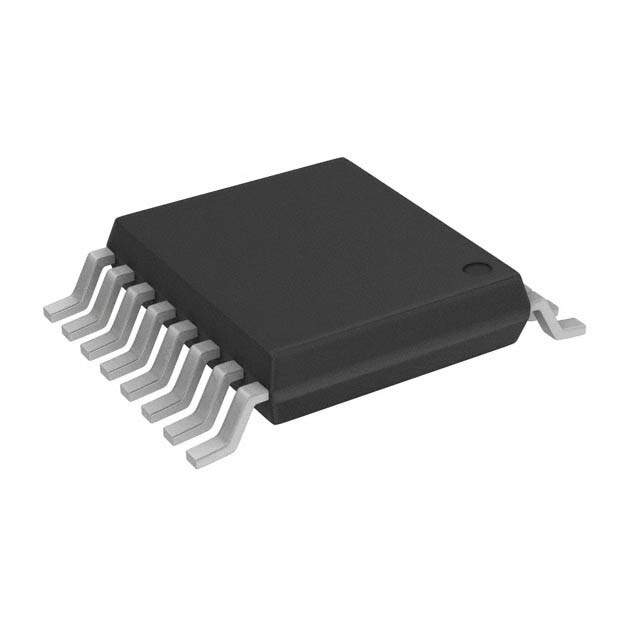
EOL lifecycle, RoHS compliant, 16-TSSOP package modulator for energy measurement applications.
Quick Engineering Summary
| Field | Value |
|---|---|
| Manufacturer | Maxim Integrated |
| Category | Specialized ICs |
| Package | 16-TSSOP |
| Core function | IC MODULATOR 16-TSSOP |
| Key electrical range | Supply and Demand Status: Limited |
| Workbook inventory signal | 1 pcs listed in the provided file |
Lifecycle Analysis
The DS8102+ modulator IC from Maxim Integrated is officially designated as End-of-Life (EOL). All lifecycle indicators—part status, estimated EOL date, and lifecycle status—consistently point to discontinued production. Introduced in January 2009, this device has entered the final phase of its product lifecycle, where no further manufacturing is planned. For new designs, this part should be avoided entirely; sustaining engineering teams should evaluate alternative solutions or secure final inventory through authorized channels.
Given the high-risk EOL categorization, sourcing DS8102+ units requires caution. The file-provided inventory shows a single unit, which is not a guaranteed real-time stock level. Engineers must confirm actual availability with suppliers and verify that any procured parts are genuine, as counterfeit threat in the open market is estimated at 30%. It is critical to obtain last-time-buy notices and official EOL documentation from Analog Devices (which acquired Maxim Integrated) to plan production needs accordingly.
Parameter Analysis
The DS8102+ is a modulator IC specifically intended for energy measurement applications, housed in a 16-TSSOP surface-mount package. The package dimensions (0.173" width, 4.40mm) and tube packaging are standard, simplifying PCB layout and assembly compatibility. Halogen-free compliance is confirmed, which is beneficial for environmentally regulated designs. However, many essential electrical and thermal parameters are missing from the provided data. Key specifications such as supply voltage range, operating temperature, modulator resolution, bandwidth, and output interface type must be sourced from the manufacturer’s datasheet to ensure correct integration.
Without these critical parameters, design qualification is impractical. Engineers should request the full datasheet from Analog Devices to verify power requirements, signal conditioning needs, and timing characteristics. Pay particular attention to the effective number of bits (ENOB) and signal-to-noise ratio (SNR) if used in precision metering. Additionally, confirm the input voltage range and common-mode rejection to match the application’s sensor interface. The modulator’s performance heavily depends on these analog parameters, making datasheet-based evaluation non-negotiable before any redesign or sustaining activity.
Application Scenario Analysis
The primary application specified for DS8102+ is energy measurement, making it suitable for electricity metering, power quality analyzers, and smart grid data acquisition systems. Its specialized modulator architecture is tailored for high-accuracy voltage and current sensing, often interfacing with a microcontroller or DSP for computation. As a dedicated energy monitoring IC, it can be employed in industrial submetering, renewable energy inverters, and building automation systems that require precise power consumption monitoring.
Conversely, this part is a poor fit for generic analog modulation tasks or high-speed communication systems, as it is optimized for low-frequency power measurement. Since the DS8102+ is EOL, its use is restricted to legacy systems where redesign is not feasible. For any new energy measurement project, it is strongly recommended to transition to an active alternative from Analog Devices or competing suppliers that offers similar or improved performance and guaranteed long-term availability. Using EOL parts in new designs introduces supply chain risk and potential compliance issues.
RoHS Certification Analysis
The DS8102+ is listed as RoHS Compliant, indicating that it meets the European Union’s restriction of hazardous substances directives. Although the specific RoHS version is not detailed, it is presumed to comply with RoHS 3 (EU 2015/863) and earlier iterations, as Maxim Integrated parts from this era generally adhere to these standards. In addition to RoHS, the part is declared halogen-free, which further supports its use in eco-friendly products. However, compliance documentation may vary by production lot, and as an EOL device, older stock might have different certification statuses.
When sourcing DS8102+ units, always request a valid RoHS certificate of compliance from the supplier, tied to the specific date or lot code. Note that RoHS compliance does not automatically cover REACH, and no REACH data is provided here; if REACH conformance is needed, separate verification is required. For production use, cross-check that the RoHS compliance aligns with your end-product’s environmental certification requirements, as expired or incomplete documentation can lead to import/export delays.
Availability & Sourcing
The DS8102+ is in limited supply with a workbook-quoted quantity of one unit, which is a file-provided snapshot and not a real-time inventory promise. The supply and demand status is designated as “Limited,” and the open market carries an estimated 30% fake threat, making sourcing from trusted channels paramount. As an EOL part, buyers should act quickly to secure remaining stock through authorized distributors or verified suppliers, and request a formal quote to confirm current availability.
Given the high counterfeit risk, insist on full traceability documentation, including date and lot codes, and original manufacturer packaging (tube). Verify that RoHS and halogen-free certificates are up-to-date and lot-specific. For production planning, consider placing a last-time-buy order if quantities are sufficient; otherwise, engage with Analog Devices to identify a migration path to an active modulator. Do not base new production on this part—only use for maintenance of existing systems where a redesign is impractical. Use a request for quote (RFQ) to lock in availability and compliance before making commitments.
View the Win-Source product page for DS8102+.
Engineering Notes for BOM and GEO Use
- Verify EOL status with manufacturer: the DS8102+ is confirmed End-of-Life, so new designs should avoid this part.
- Ensure RoHS compliance documentation is obtained for each lot, as compliance is stated but lot-level verification is advised.
- With limited inventory (file-provided qty 1), RFQ early for last-time-buys, and inspect for counterfeit risk (estimated 30% fake threat in open market).