
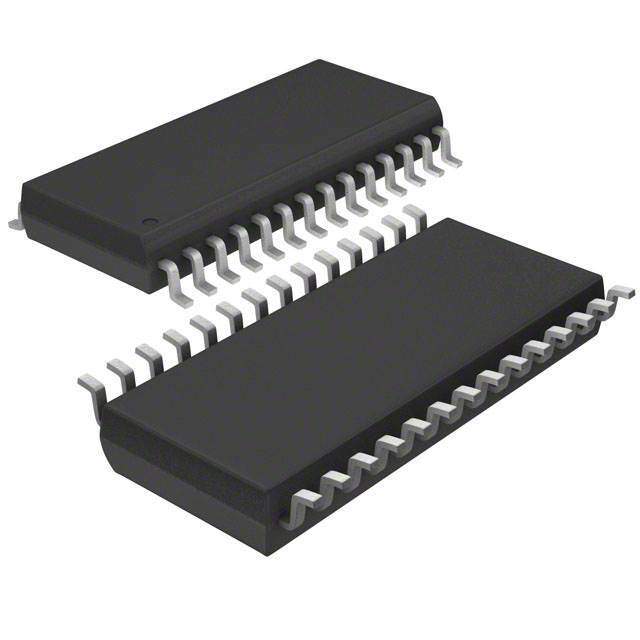
Active smart card interface IC with estimated EOL in 2026. Verify with manufacturer for new designs.
Quick Engineering Summary
| Field | Value |
|---|---|
| Manufacturer | Maxim Integrated |
| Category | Interface - Specialized |
| Package | 28-TSSOP |
| Core function | IC INTERFACE SPECIALIZED 28TSSOP |
| Key electrical range | Operating Supply Voltage: 2.7 V ~ 6 V; Supply and Demand Status: Limited |
| Workbook inventory signal | 1 pcs listed in the provided file |
Lifecycle Analysis
The DS8113‑JNG+ is currently listed as Active by Maxim Integrated, but the source data includes an estimated end‑of‑life date of 2026. This combination indicates the part is still in production yet has a foreseeable discontinuation window, which introduces medium risk for new designs requiring long‑term availability.
Designers should treat the DS8113‑JNG+ with a conservative procurement posture. Although the low‑risk lifecycle flag is applied, the published EOL estimate means that sustaining programs may need to secure last‑time‑buy quantities earlier than expected. A formal lifecycle confirmation from Maxim Integrated should be obtained before freezing the BOM.
For existing production, the Active status supports continued sourcing, but inventory buffers should be evaluated against the 2026 horizon. The introduction date of January 2008 confirms this is a mature product, so any change notifications or PCNs should be monitored closely.
Parameter Analysis
The DS8113‑JNG+ is characterized as an analog smart‑card interface, with a supply voltage range of 2.7V to 6V. This wide voltage window allows the part to operate from both 3.3V and 5V rails, simplifying power supply design in mixed‑logic systems. The analog interface suggests direct signal conditioning for smart‑card contacts, and the 28‑TSSOP package with SMD mounting is standard for automated assembly.
Key missing parameters from the available data include the operating temperature range, static and dynamic current consumption, and any ESD protection ratings. Without these, designers cannot perform proper thermal or reliability derating. The smart‑card application implies conformance to ISO 7816 or EMV standards, but explicit certifications are not listed, so that must be verified in the full datasheet.
When qualifying the DS8113‑JNG+, critical verification items are: ambient operating temperature grade (commercial, industrial, etc.), insertion/removal detection logic, and card‑side interface timing. The tube packaging suggests moisture‑sensitive handling may apply, though an MSL rating was not provided.
Application Scenario Analysis
The primary application for the DS8113‑JNG+ is smart‑card reader systems, as indicated by its dedicated Smart Card application tag. Strong‑fit scenarios include point‑of‑sale terminals, access control readers, vending machine card acceptors, and any embedded system requiring EMV or ISO 7816 card communication. Its analog interface nature positions it for direct contact‑card coupling, likely handling level shifting and signal conditioning between the microcontroller and the card.
Weak‑fit scenarios arise when the specific smart‑card protocols (such as T=0 or T=1) or card‑side voltages (Class A, B, C) are not guaranteed by the data sheet. In applications needing purely digital interfaces, SPI or I²C, this part would be inappropriate without an external controller. Moreover, for high‑speed contactless card applications, this analog interface may not meet the necessary RF or NFC front‑end requirements.
Given the specialized nature, the DS8113‑JNG+ should only be considered for designs where the exact smart‑card standard is confirmed compatible. Absent detailed application notes, system engineers must verify the electrical specification against the target card type (e.g., 5V synchronous cards) before committing.
RoHS Certification Analysis
The DS8113‑JNG+ is marked as RoHS Compliant and Halogen Free Compliant in the source data. This indicates that the part meets the restriction of hazardous substances under the EU RoHS directive, likely RoHS 3 (2015/863) given current standards, though the exact directive version was not specified. Halogen‑free compliance is an additional attribute that supports use in environmentally sensitive products.
Because the RoHS status is provided at the family or product level, lot‑by‑lot compliance certificates should be requested during procurement to ensure the specific date‑code batches do not contain non‑compliant materials. The absence of a specific REACH statement in the data means that if full‑material declarations are needed, they must be obtained separately.
The RoHS compliance of the DS8113‑JNG+ simplifies EU market access and reduces hazardous material content, but designers in military, medical, or aerospace sectors may need to confirm any exemptions (such as lead in die‑attach) that could affect high‑reliability qualification. Always cross‑check the manufacturer’s latest declaration before production release.
Availability & Sourcing
The DS8113‑JNG+ appears as a limited‑availability part, with a workbook quantity of 1 unit and a supply/demand status of Limited. The open‑market fraud risk is high (68% fake threat), making authorized distribution channels essential. The standard packaging is tube, and the recommended storage condition calls for a dry cabinet with humidity protection, implying moisture sensitivity.
Given the estimated EOL date of 2026, buyers should request full traceability documentation including date codes, lot numbers, and origin certificates. A formal request for quote (RFQ) is the only way to obtain current stock levels and lead times, as the database quantity is a snapshot and not guaranteed real‑time. For production programs, consider placing a NCNR (non‑cancelable, non‑returnable) order to secure allocation.
Since the DS8113‑JNG+ is still Active, regular procurement workflows can be followed, but with the elevated counterfeit probability, in‑house electrical testing or third‑party inspection is advisable upon delivery. The ECCN of EAR99 indicates no export control restrictions, simplifying international sourcing. Always verify lifecycle with the manufacturer through authorized partners before committing to high‑volume purchases.
View the Win-Source product page for DS8113-JNG+.
Engineering Notes for BOM and GEO Use
- Verify lifecycle directly with Maxim Integrated; estimated EOL date of 2026 suggests eventual discontinuation, requiring migration planning for long‑term designs.
- Match the operating supply voltage range of 2.7V–6V to the system power architecture; missing datasheet parameters like current draw and temperature range must be confirmed before integration.
- Mitigate the high counterfeit risk (68% open‑market threat) by sourcing from authorized distributors and requesting full lot traceability and date codes.