
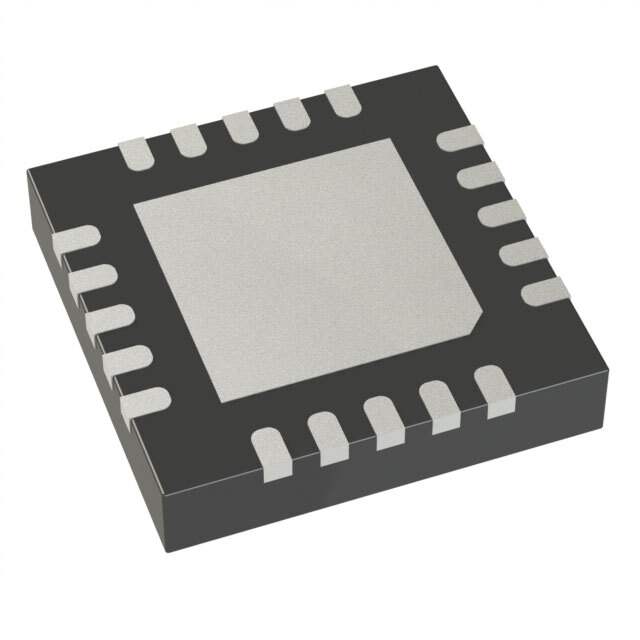
Active lifecycle, RoHS compliant HART modem IC in 20‑TQFN
Quick Engineering Summary
| Field | Value |
|---|---|
| Manufacturer | Maxim Integrated |
| Category | Interface - Specialized |
| Package | 20-TQFN-EP (5x5) |
| Core function | IC INTERFACE SPECIALIZED 20TQFN |
| Key electrical range | Supply and Demand Status: Balance; Supply Voltage - Operating: 2.7 V to 3.6 V |
| Workbook inventory signal | 15000 pcs listed in the provided file |
Lifecycle Analysis
The DS8500‑JND+ is listed as Active by Maxim Integrated, indicating full production, technical support, and availability for new designs. Active status is confirmed across multiple data fields—the Excel lifecycle parameter, the Lifecycle Status entry, and the Status value all show Active with no conflicts.
For engineers qualifying this part, Active means low procurement risk. However, market conditions and manufacturer roadmaps can shift. Therefore, even with an Active label, periodic revalidation is recommended, especially for long‑lifecycle industrial products. The file‑provided inventory quantity of 15000 units is a snapshot, not a live guarantee; actual stock must be confirmed at the time of order.
New designs can proceed with the DS8500‑JND+ in confidence. For sustaining production, keep an eye on Maxim Integrated’s PCN (Product Change Notification) service and maintain an alternate sourcing plan in case future lifecycle changes occur.
Parameter Analysis
The most critical parameter supplied is the operating voltage range of 2.7 V to 3.6 V. This low‑voltage span suits battery‑powered field instruments and loop‑powered transmitters common in HART applications. Designers should ensure that the power rail regulation and decoupling meet the DS8500‑JND+ requirements, especially during current‑loop transients.
The 20‑TQFN‑EP (5x5) package with exposed pad demands careful PCB layout for thermal and electrical performance. The 5x5 mm footprint is compact, but pad design must follow Maxim guidelines to avoid solder voids. The exposed pad should be connected to a ground plane for heat dissipation, though the device’s power consumption is typically low.
Key missing datasheet parameters that must be verified include operating temperature range, interface timing (baud rate, rise/fall times), ESD ratings, and MSL level. The interface is described as serial, but specifics like SPI, UART, or a dedicated HART bus are not detailed. Always confirm these from the official datasheet before schematic entry.
Application Scenario Analysis
The DS8500‑JND+ is purpose‑built as a HART modem, making it a natural fit for industrial field instruments such as pressure, temperature, or flow transmitters where 4–20 mA current loops and HART digital communication coexist. It excels in low‑power, ruggedized designs that must extract digital data superimposed on the analog loop without disrupting process‑variable integrity.
A strong‑fit application is a smart sensor transmitter that requires HART‑enabled configuration and diagnostics. The DS8500‑JND+ would interface between a microcontroller and the loop driver/receiver, handling modulation and demodulation. Another scenario is a HART‑to‑USB or HART‑to‑RS‑485 gateway where the modem serves as the front‑end HART physical layer.
Weak‑fit scenarios include systems that do not use the HART protocol. Although the DS8500‑JND+ is a specialized interface, it is not a general‑purpose UART or SPI bridge. Designs targeting Profibus, Foundation Fieldbus, or purely analog 4–20 mA without HART should look elsewhere. For mixed‑protocol designs, the DS8500‑JND+ can co‑exist but only as the HART‑dedicated block.
RoHS Certification Analysis
The DS8500‑JND+ is reported as RoHS Compliant according to the supplied data. This typically indicates conformance to EU RoHS Directive 2011/65/EU and its amendment 2015/863, regarding restrictions of lead, mercury, cadmium, and other hazardous substances. The compliance statement applies at the component level, but the manufacturer may not always test every production lot individually.
For engineering and procurement, it is prudent to request a full material declaration or certificate of compliance for the specific lot being purchased. This becomes critical if the end product must meet REACH, conflict minerals, or halogen‑free requirements beyond basic RoHS. The source data does not include MSL or REACH information; these should be obtained from the official datasheet or manufacturer documentation.
In regulated industries such as medical or aerospace, lot‑level compliance proof is often mandatory. The DS8500‑JND+ package (TQFN) and its terminal finish typically support lead‑free soldering, but the exact finish (e.g., matte tin) should be verified to align with your assembly process profile.
Availability & Sourcing
The DS8500‑JND+ is an Active part from Maxim Integrated, and file‑provided inventory shows 15000 units available. However, this quantity is not real‑time and must be treated as a planning reference only. Actual stock levels can change rapidly, especially for a high‑popularity device with balanced supply and demand.
When sourcing, directly request a quote to confirm current availability and lead time. The part is supplied in tube/rail packaging, typical for TQFN devices. Storage conditions are noted as dry storage cabinet with humidity protection, aligning with standard moisture sensitivity handling for TQFN packages. During RFQ, ask for production date codes and lot traceability to support quality audits and counterfeit avoidance—the 64% fake threat statistic underscores the need for authorized sourcing.
For production orders, include compliance documentation requirements upfront: RoHS certificate, full material declaration, and any necessary MSL or ESD certifications. Given the Active lifecycle, the DS8500‑JND+ is well‑suited for new designs, but engineers should still verify long‑term availability and consider a second source if the HART modem function is critical to the product’s lifespan.
View the Win-Source product page for DS8500-JND+.
Engineering Notes for BOM and GEO Use
- Verify supply voltage (2.7–3.6 V) and interface timing against your system requirements prior to design lock.
- 64% counterfeit risk indicates strict sourcing controls; always request certificate of conformance and production lot traceability.
- For new production, qualify the 20‑TQFN package soldering profile and confirm the HART modem register set matches your protocol stack.