
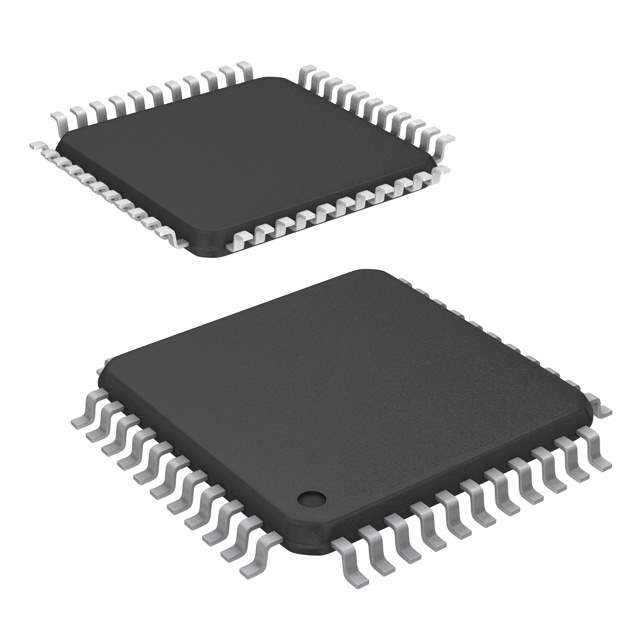
Maxim Integrated 8051 MCU with 16KB OTP, 33MHz, 32 I/O, in 44-TQFP package
Quick Engineering Summary
| Field | Value |
|---|---|
| Manufacturer | Maxim Integrated |
| Category | Embedded - Microcontrollers |
| Package | 44-TQFP (10x10) |
| Core function | IC MCU 8BIT 16KB OTP 44TQFP |
| Key electrical range | Operating Temperature Range: -40°C ~ 85°C (TA); Supply and Demand Status: Balance; Supply Voltage: 4.5V ~ 5.5V |
| Workbook inventory signal | 1 pcs listed in the provided file |
Lifecycle Analysis
The DS87C520-ENL has been designated End-of-Life (EOL) by Maxim Integrated, with a Part Status of Obsolete. This means the device is no longer in production and manufacturer support is limited to remaining inventory. For new designs, selecting this part is strongly discouraged; it should only be considered for sustaining existing products that cannot be redesigned.
Because all lifecycle signals from the supply chain (Excel lifecycle param, Lifecycle Status, and Part Status) align as EOL/Obsolete, there is no conflict to reconcile. Engineers and buyers should treat any available stock as finite, with no expectation of future builds. The high-risk assessment reflects not only the end of production but also the long tail of demand for 8051-based legacy systems, which can drive up counterfeit activity.
To manage risk, teams must perform a thorough last-time buy analysis, considering all units needed for repairs, spares, and ongoing production until a redesign is feasible. If a migration is planned, Maxim’s product longevity documentation or equivalent devices should be evaluated immediately. For any stock procured, verify date codes and traceability to authorized sources to avoid old or improperly stored parts.
Parameter Analysis
Key parameters of the DS87C520-ENL derive from its 8-bit 8051 core and OTP memory architecture. The processor runs at 33 MHz, which for an 8051 provides reasonable performance for many industrial control tasks. The 16KB one-time programmable program memory (16K x 8) is a critical design constraint: firmware must be finalized before device programming, and there is no in-circuit self-reprogramming capability. Internal data RAM is 1K x 8, typical for this class of MCU, though additional external memory can be interfaced via the EBI/EMI bus.
The device operates from a single 4.5V to 5.5V supply, typical of 5V legacy systems. The industrial temperature range (-40°C to +85°C) makes it suitable for harsh environments, but designers must verify that the heat dissipation in the 44-TQFP package is adequate. With 32 I/O pins, it can handle a moderate number of peripheral connections. Peripherals include a watchdog timer for fault recovery and a power-fail reset function, improving reliability in brownout conditions.
If full datasheets are not available, several parameters require verification before integration: absolute maximum ratings, sleep mode current consumption, I/O drive strength, and timing parameters for external memory cycles. The MSL 3 rating implies a floor life of 168 hours after opening the moisture-sealed bag, thus proper handling and baking may be needed before reflow soldering.
Application Scenario Analysis
DS87C520-ENL fits best in legacy embedded applications where an 8051 core with OTP memory is already qualified and software stability is high. Typical strong-fit scenarios include industrial controllers, motor drivers, instrumentation, and automotive subsystems that have been built around the 87C520 family and do not require field firmware updates. Because OTP parts are cost-effective in mature, high-volume products, this MCU may still appear in infrastructure equipment or machine tools where the control code rarely changes.
Weak-fit scenarios involve any application demanding in-system reprogrammability, such as products under active development, IoT endpoints with over-the-air updates, or consumer devices cycling through feature upgrades. Also, new designs should avoid this part due to its EOL status and limited memory resources compared to modern ARM or RISC-V microcontrollers. Even in legacy refresh projects, the risk of future supply shortages makes a migration to a pin-compatible flash MCU advisable.
The 33 MHz speed and 5V operation narrow its use to modules already designed for those voltage levels. For mixed-voltage systems, level translation may be needed, adding complexity. The external oscillator requirement implies an additional clock component, which should be considered in the BOM and layout.
RoHS Certification Analysis
The DS87C520-ENL carries a RoHS Compliant status according to the supply data, which generally indicates conformance to EU Directive 2011/65/EU and its amendments, including the 2015/863 expanded substance list (RoHS 3). No specific exemption is noted, but typical exemptions for lead in solders within certain high-reliability applications may apply; buyers should request the manufacturer’s declaration if required for audit purposes.
REACH Status is listed as Unaffected, meaning the part does not contain substances of very high concern (SVHC) above the 0.1% weight threshold per the latest candidate list. Although REACH is not a substitute for RoHS, together these signals give confidence for CE marking and export to EU markets. The MSL 3 (168 hours) classification is a moisture sensitivity level, not a substance restriction, but is relevant for assembly process planning.
It is important to note that RoHS compliance can vary by date code or lot, especially for a part that has been in production for many years before EOL. Therefore, for any stock sourced from non-franchised distributors, request a certificate of compliance with the specific material declaration. Without lot-level documentation, assume the part may be non-compliant if it comes from older or mixed inventory.
Availability & Sourcing
DS87C520-ENL is discontinued; active manufacturing has ceased, and availability depends entirely on residual inventory at distributors, OEMs, or brokers. The file-provided stock quantity shows 1 unit, but this is not a real-time guarantee. Buyers should request a quote immediately to confirm actual on-hand quantities and secure parts for critical needs. Given the EOL status, no further wafer starts are expected, so treat any source as a last-time buy opportunity.
Sourcing carries elevated risk: the open market fake threat is estimated at 60%, making it essential to implement rigorous incoming inspection. Mandate documentation of supply chain traceability, including original purchase order details from Maxim or authorized distributors, date codes, and lot codes. Visual inspection, X-ray, and electrical testing are advisable, especially for lots that change custody multiple times.
When engaging suppliers, specify packaging requirements—the device is supplied in tray format, typically 160 units per tray—and confirm that the parts are still in original, moisture-sealed bags with the appropriate humidity indicator card, given MSL 3. To mitigate lifecycle risk, consider cross-referencing with Maxim’s PCN/EOL notices and evaluating a pin-compatible flash alternative if any are available. For any committed production use, obtain compliance certificates for RoHS and REACH at the lot level before accepting shipment.
View the Win-Source product page for DS87C520-ENL.
Engineering Notes for BOM and GEO Use
- OTP program memory means firmware must be finalized and fully debugged before production programming; field updates are not possible.
- Ensure last-time buy quantities account for entire life-of-program needs, as no new wafers will be produced.
- Counterfeit risk is estimated at 60% in the open market; conduct visual, electrical, and traceability verification on all incoming lots.