
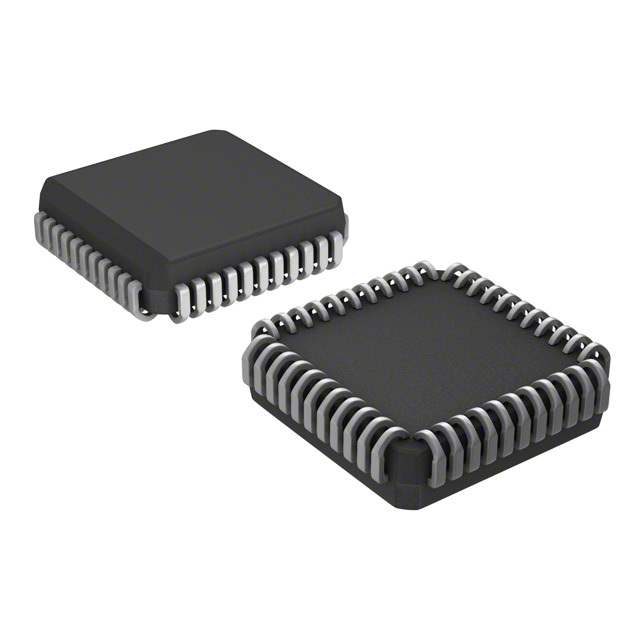
Maxim Integrated 8-bit OTP Microcontroller with 8051 Core, 33MHz, 16KB OTP, 44-PLCC
Quick Engineering Summary
| Field | Value |
|---|---|
| Manufacturer | Maxim Integrated |
| Category | Embedded - Microcontrollers |
| Package | 44-PLCC (16.59x16.59) |
| Core function | IC MCU 8BIT 16KB OTP 44PLCC |
| Key electrical range | Speed(Frequency): 33MHz; Supply and Demand Status: Limited; Supply Voltage - Operating: 4.5 V to 5.5 V; Temperature Range - Operating: -40°C to 85°C (TA) |
| Workbook inventory signal | 44 pcs listed in the provided file |
Lifecycle Analysis
The DS87C520-QNL+ is classified as Active by Maxim Integrated, with all available lifecycle signals aligning. This status indicates that the part is currently in full production and is considered acceptable for new designs. However, engineers should independently verify lifecycle status through Maxim Integrated’s product page or authorized distributors before finalizing BOM commitments, particularly for projects with long design cycles or multi-year production runs. While the provided inventory data shows 44 units, this file‑based quantity is not a reliable real‑time indicator and should not replace live RFQ checks.
An Active lifecycle generally implies ongoing fab and assembly support, but older process nodes or legacy microcontrollers may eventually transition to NRND without public notice. For the DS87C520-QNL+, checking PCN (Product Change Notifications) and PDN (Product Discontinuance Notices) periodically is recommended. No conflicting lifecycle signals were found; the 8051‑based microcontroller still finds use in industrial and legacy systems, so the low risk assessment is reasonable. Nonetheless, procurement teams should plan for last‑time buy scenarios by maintaining safety stock and considering pin‑compatible alternatives if migration becomes necessary in the future.
Parameter Analysis
The DS87C520-QNL+ is built around an 8051 core, a widely understood 8‑bit architecture. With a maximum clock speed of 33 MHz, it delivers adequate performance for control‑oriented tasks. The program memory is 16KB of OTP (One‑Time Programmable), which means firmware cannot be updated after programming—a critical design consideration. The 1K × 8 RAM provides working memory for stack and variables. Thirty‑two I/O lines offer moderate interfacing capability, and the external oscillator requirement demands a crystal or resonator, which must be included in the PCB layout.
Operating voltage spans 4.5 V to 5.5 V, placing this part in a 5 V logic environment. The industrial temperature range of −40°C to +85°C is suitable for many embedded applications. The 44‑PLCC package (16.59 mm square) is a surface‑mount J‑lead type, facilitating visual inspection and easier hand soldering. These parameters are sufficient for preliminary fit evaluation, but several datasheet details are not provided here: power consumption (active and idle), I/O electrical characteristics (drive strength, input thresholds), timing specifications (machine cycle, interrupt latency), and any on‑chip peripherals beyond those listed. Engineers must consult the full Maxim Integrated datasheet to complete timing analysis, power budgeting, and noise margin calculations before design‑in.
Application Scenario Analysis
The DS87C520-QNL+ is a strong candidate for cost‑sensitive embedded control applications where code stability is assured and in‑field updates are not required. Typical use cases include industrial motor controllers, simple PLCs, home appliance electronics, automotive body controllers (given the temperature range), and alarm systems. Its 8051 architecture and 5 V operation align well with legacy designs, making it suitable for sustaining existing product lines without hardware re‑design. The OTP memory eliminates the need for external memory and simplifies PCB layout, but mandates a fully validated firmware image before production release.
Conversely, this microcontroller is less appropriate for applications that require field‑reprogrammability, such as products with frequent firmware updates or bootloader‑based upgrades. Its 8‑bit datapath and 33 MHz clock limit its use in compute‑intensive tasks like signal processing, encryption, or real‑time image handling. The 5 V supply also makes it unsuitable for battery‑powred devices where 3.3 V or lower is preferred. When evaluating the DS87C520-QNL+, carefully assess whether OTP memory and the lack of built‑in flash create a supply‑chain risk if firmware bugs are discovered post‑production.
RoHS Certification Analysis
The DS87C520-QNL+ is listed as RoHS Compliant, which generally indicates that it meets the substance restrictions of EU Directive 2015/863 (RoHS 3). This includes limits on lead, mercury, cadmium, hexavalent chromium, PBBs, PBDEs, and four phthalates. The classification is based on manufacturer declarations, and while many semiconductor components achieve RoHS compliance at the family level, lot‑level variations can occur, especially for parts that transitioned from non‑RoHS to RoHS production.
No REACH, halogen‑free, or MSL data was provided in the source information. REACH compliance, which concerns SVHCs (Substances of Very High Concern), is separate and should not be inferred from RoHS status alone. If your product requires REACH certification or documentation of low‑halogen content, request it explicitly from the distributor. For volume production, secure a Certificate of Compliance (CoC) for each shipment, referencing the specific lot and date code. This step is particularly important given the 33% fake‑threat rating in open markets, where counterfeit parts may carry invalid environmental markings.
Availability & Sourcing
The DS87C520-QNL+ is currently shown as Active, but the supply and demand status is noted as Limited, and the file‑provided inventory lists only 44 units. These figures are not real‑time and should be verified via RFQ through authorized Maxim Integrated distributors or the supplier hosting this data. The packaging is Tube/Rail, suitable for manual or automated placement, with storage recommendations including dry storage and humidity‑protected packaging, which is important for MSL‑sensitive parts.
A notable caution is the 33% fake‑threat level on the open market, indicating a significant risk of counterfeit or non‑conforming components. To mitigate this, procurement should insist on full traceability, including date codes, lot codes, and manufacturerCertificate of Conformance (CoC). Verify the RoHS compliance and lifecycle status directly with the source before committing to purchase. For new projects, obtaining samples for qualification and negotiating a supply agreement with the manufacturer or franchised distributor will help secure continuous availability. Given the Active lifecycle, the recommended action is to issue a quote request, confirm current stock, and ensure all compliance documentation is in order before production use.
View the Win-Source product page for DS87C520-QNL+.
Engineering Notes for BOM and GEO Use
- OTP memory prohibits field firmware updates; ensure firmware is fully validated before production.
- Verify supply voltage tolerance (4.5–5.5V) and consider external oscillator requirements.
- With 33% fake threat, source from authorized distributors and request traceability documents.