
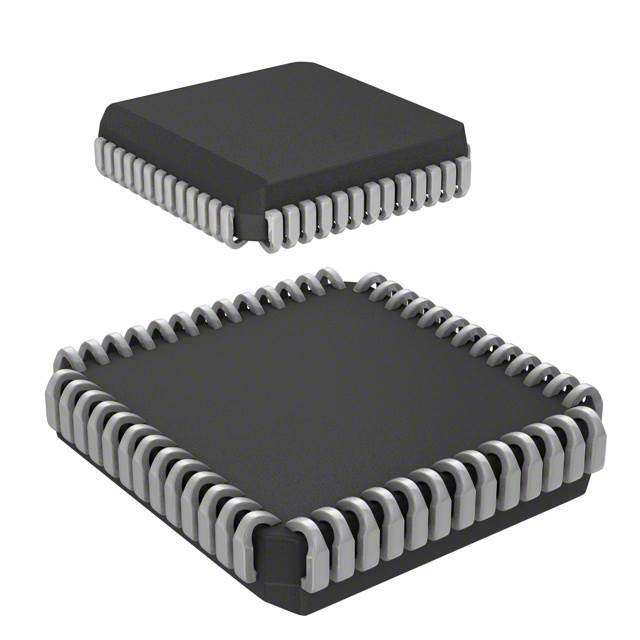
End-of-Life 8051 MCU with 16KB OTP, 33MHz, 32 I/O, 52-PLCC package – sourcing guide.
Quick Engineering Summary
| Field | Value |
|---|---|
| Manufacturer | Maxim Integrated |
| Category | Embedded - Microcontrollers |
| Package | 52-PLCC (19.13x19.13) |
| Core function | IC MCU 8BIT 16KB OTP 52PLCC |
| Key electrical range | Speed(Frequency): 33MHz; Supply and Demand Status: Limited; Supply Voltage - Operating: 4.5 V to 5.5 V; Temperature Range - Operating: 0°C to 70°C (TA) |
| Workbook inventory signal | 1 pcs listed in the provided file |
Lifecycle Analysis
The DS87C530-QCL+ is confirmed as End-of-Life (EOL) by Maxim Integrated. All available lifecycle signals align, leaving no ambiguity. This status means the manufacturer has discontinued production, and no further factory output is planned.
For new designs, this part is categorically not recommended. Engineers must select an alternative MCU that is in active production. For sustaining production of existing systems, the priority is to secure sufficient inventory to cover the product’s remaining service life. Buyers should immediately contact Maxim Integrated or authorized distributors to confirm final last-time buy (LTB) dates and any residual stock.
The file-provided inventory quantity of 1 unit is indicative only and does not guarantee real-time availability. Given the EOL status, open-market inventory may become increasingly scarce and prone to counterfeiting. All sourcing decisions should be preceded by direct verification of manufacturer lifecycle documentation.
Parameter Analysis
Key parameters of the DS87C530-QCL+ directly influence its fit in an embedded system. The 8051 core and 8-bit architecture define its instruction set compatibility and software ecosystem. The 16KB of OTP program memory is one-time programmable; once written, firmware cannot be altered, which demands rigorous validation before production programming. The 1KB of RAM limits stack depth and dynamic data, so developers must carefully manage memory usage.
The part operates at up to 33 MHz, requiring an external oscillator. This clock rate determines processing throughput and instruction cycle time. Supply voltage is specified at 4.5 V to 5.5 V, typical of legacy 5 V logic, and must be considered when interfacing with modern low-voltage devices. The operating temperature range of 0°C to 70°C restricts the MCU to commercial environments; industrial or extended temperature applications are not supported.
Important missing datasheet items include detailed peripheral characteristics (e.g., UART baud rate limits, timer resolution), electrical specifications (e.g., I/O drive current, power consumption), and packaging thermal resistance. Engineers should obtain the full datasheet to verify these parameters before integration.
Application Scenario Analysis
The DS87C530-QCL+ fits best in legacy embedded systems that rely on the 8051 instruction set and do not require firmware updates. Industrial controllers, automotive aftermarket modules, and older consumer electronics that originally used this MCU are strong candidates. The OTP memory suits cost-sensitive applications where code is frozen after development and field reprogramming is unnecessary.
Conversely, this part is a poor fit for any new design that demands in-system reprogrammability, low power consumption, or operation beyond commercial temperature range. Modern applications requiring high-speed connectivity (USB, CAN, Ethernet) or security features would be better served by newer, active MCUs with flash memory and richer peripherals. The 52-PLCC package, while surface-mountable, may also be unsuitable for space-constrained designs.
When evaluating reuse, consider the 34% reported counterfeit rate in open markets. For critical applications, sourcing must prioritize traceability and testing to ensure functional and electrical authenticity.
RoHS Certification Analysis
The DS87C530-QCL+ is declared RoHS Compliant. This typically indicates conformance to the EU Restriction of Hazardous Substances directive, likely RoHS 3 (2015/863) for lead-free and other restricted substances. However, the exact directive version is not provided in the source data.
Given the part’s EOL status and age, the original compliance certification may date back several years. Buyers should verify that the actual stock being purchased has not degraded or been mislabeled. Lot-level compliance documentation, such as a certificate of conformance, should be requested from the supplier. RoHS compliance alone does not cover REACH SVHC obligations; if REACH compliance is needed, a separate declaration must be obtained.
No exemptions are noted for this part. For products exported to the EU, ensuring correct RoHS documentation is critical to avoid customs delays or regulatory penalties.
Availability & Sourcing
As an EOL component, availability of the DS87C530-QCL+ is limited and declining. The file-provided quantity of 1 unit is not a real-time stock level and must be confirmed through a request for quote. The part was originally packaged in tube/rail format (52-PLCC), which may affect minimum order quantities and handling.
Sourcing strategies must prioritize verification of manufacturer EOL notices, last-time buy dates, and any remaining factory inventory. Direct engagement with Maxim Integrated or authorized distributors is strongly recommended to secure authentic components. The reported 34% fake threat rate in the open market heightens the need for rigorous inspection and traceability. Buyers should insist on full date/lot code tracking and compliance documentation, including RoHS certificates.
For long-term production, engineers should concurrently evaluate pin-compatible or functional replacement MCUs that are in active production. Request a quote today to check current availability and discuss compliance verification for this hard-to-find EOL microcontroller.
View the Win-Source product page for DS87C530-QCL+.
Engineering Notes for BOM and GEO Use
- Verify Maxim Integrated’s official EOL notice and last-time buy schedule before committing to production volumes.
- OTP program memory requires final firmware; plan for code validation and field updates, if any, via external means.
- Open-market counterfeit risk is 34%; insist on full traceability and authorized distribution sourcing to ensure authenticity.