
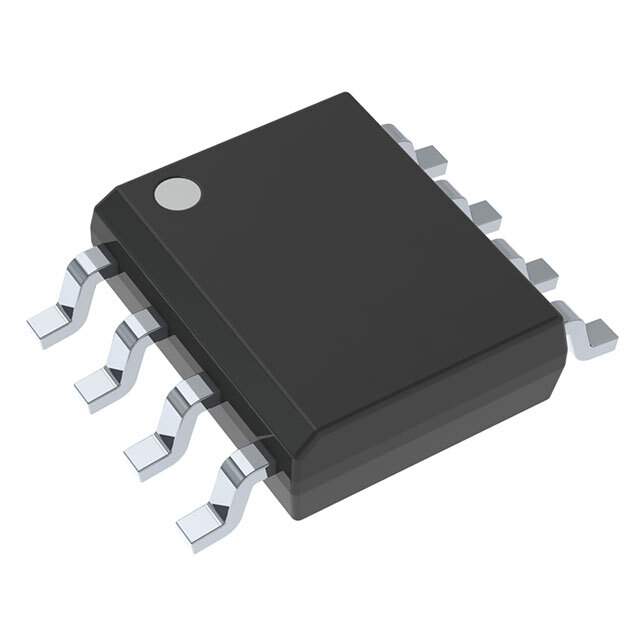
End-of-life RS-422/RS-485 full-duplex transceiver for 8-SOIC designs. Verify datasheet and inventory before procurement.
Quick Engineering Summary
| Field | Value |
|---|---|
| Manufacturer | Texas Instruments |
| Category | Interface - Drivers, Receivers, Transceivers |
| Package | 8-SOIC |
| Core function | IC TRANSCEIVER FULL 1/1 8SOIC |
| Key electrical range | Supply and Demand Status: Limited; Supply Voltage - Operating: 4.5 V to 5.5 V; Temperature Range - Operating: -40°C to 85°C |
| Workbook inventory signal | 10000 pcs listed in the provided file |
Lifecycle Analysis
The DS8921ATM is officially listed as End-of-Life (EOL) by Texas Instruments. This status means the part is no longer recommended for new designs and has entered the final phase of availability. Production may have ceased, and remaining stock is typically limited to existing inventory at distributors or last-time buy allocations. For sustaining production, engineers should immediately identify remaining authorized sources and evaluate migration to an active alternative to avoid shortages.
All lifecycle signals available for the DS8921ATM consistently indicate an EOL condition with no conflicts. The supplied workbook quantity of 10000 units suggests some inventory is still accessible through the channel, but this data is file-provided and not a real-time guarantee. Procurement teams should request live quotes and date-code verification rather than relying solely on stated availability.
The high-risk nature of an EOL part makes it unsuitable for new production programs. Designers should reference the manufacturer’s PDN (Product Discontinuance Notice) for exact last-time buy and ship dates. Without proper validation, there is a risk of purchasing unreliable or counterfeit stock, especially given the 71% counterfeit threat rating in the open market noted in the source data.
Parameter Analysis
The DS8921ATM is a single-channel full-duplex transceiver supporting both RS-422 and RS-485 differential signaling. The 1-driver/1-receiver configuration allows simultaneous bidirectional communication, often used in multi-point industrial networks. With a receiver hysteresis of 70mV, the device offers a degree of noise rejection that benefits integrity on long cable runs in electrically noisy environments.
The operating supply voltage range of 4.5V to 5.5V aligns with standard 5V logic systems, and the industrial temperature span of -40°C to 85°C covers most embedded and field applications. The 8-SOIC surface-mount package is widely adopted, simplifying PCB layout and replacement. However, critical parameters such as maximum data rate and common-mode voltage range are absent from the provided data. These directly affect bus speed and network topology design, so verification against the official Texas Instruments datasheet is essential.
Other missing parameters, like output drive strength and short-circuit protection, could influence reliability in harsh conditions. When integrating the DS8921ATM, engineers should cross-check these datasheet values, ensure proper termination resistors, and evaluate the part’s power dissipation against thermal margins in the target enclosure. The full-duplex nature may require separate differential pairs, so pinout confirmation in the datasheet is also necessary.
Application Scenario Analysis
The DS8921ATM is well-suited for industrial automation and process control systems requiring robust RS-422 or RS-485 communication. Strong-fit applications include PLCs, motor drives, building automation networks, and remote sensor nodes where the full-duplex feature allows simultaneous command and status transmission. The 70mV hysteresis improves noise rejection, making it reliable in environments with electromagnetic interference from inverters or contactors.
Moderate-fit scenarios exist in legacy equipment upgrades or repairs where the original design specifically used this transceiver. Its industrial temperature rating also supports outdoor and high-vibration installations, such as agricultural machinery or utility monitoring. However, for new designs, it is not recommended due to its EOL status. Designers working on modern low-voltage or high-speed interfaces should consider active alternatives with 3.3V operation and guaranteed data rates exceeding the DS8921ATM’s unverified specifications.
Weak-fit scenarios include space-constrained consumer electronics or portable devices where smaller packages (e.g., MSOP) and low standby power are required. Similarly, protocols requiring auto-direction control or integrated termination, not present in this basic transceiver, would rule out the DS8921ATM unless external circuitry is added.
RoHS Certification Analysis
Texas Instruments declares the DS8921ATM as RoHS Compliant, meaning it meets the requirements for restriction of hazardous substances in electronic components. The exact directive revision—such as RoHS 3 (EU 2015/863) that adds four phthalates—is not explicitly confirmed in the source data. Given the part’s EOL timeline, it may have been manufactured under earlier RoHS versions (e.g., RoHS 2), so buyers should verify the compliance date code against the applicable regulation in their region.
No specific exemptions are noted, such as lead in solders for high-reliability applications, but requests for a lot-level certificate of compliance from the distributor or manufacturer can confirm exemption-free status. The data lacks REACH, halogen-free, and Moisture Sensitivity Level (MSL) declarations, which are often required for complete environmental documentation in European or high-reliability projects. Designers working on assemblies needing IPC-1752 reporting should obtain these additional statements.
For EOL devices, a conservative approach is advisable: perform incoming inspection for RoHS indicators (e.g., lead finish) and ask the supplier for a signed Declaration of Conformity. If the application mandates exemption-free materials, cross-reference with Texas Instruments’ material composition database using the specific lot number.
Availability & Sourcing
Sourcing the DS8921ATM requires an urgent and careful approach due to its EOL classification. The file-provided workbook quantity of 10000 units suggests a reasonable remaining stock level, but this number is not a live indicator and must be confirmed through a request for quote (RFQ). Procurement specialists should immediately contact authorized Texas Instruments distributors or trusted independent sources to secure inventory and obtain the latest availability status.
Given the high counterfeit threat (71% in the open market), traceability is paramount. Require date codes, lot codes, and full chain-of-custody documentation for every order. Packaging is tube/rail; any deviation (e.g., cut tape, unknown repacking) should be treated as a red flag for inspection. Additionally, confirm storage conditions (dry pack or humidity protection) and verify MSL if soldering processes are sensitive to moisture uptake.
To sustain existing products, negotiate a last-time buy that covers anticipated production lifespan. For new designs, abandon qualification of this EOL part and select an active replacement from Texas Instruments’ current RS-422/RS-485 portfolio. Monitor manufacturer EOL notices regularly to catch any last-time buy window before it closes. All sourcing decisions should include compliance verification (RoHS, REACH) and contractual provisions for non-conforming parts.
View the Win-Source product page for DS8921ATM.
Engineering Notes for BOM and GEO Use
- Verify the maximum data rate and common-mode voltage range from the official Texas Instruments DS8921ATM datasheet before integration.
- As an EOL device, request manufacturer EOL notification and lot-level RoHS compliance certificate before sourcing.
- The 70mV receiver hysteresis enhances noise immunity in industrial RS-422/RS-485 interfaces, but confirm bus termination requirements for your topology.