
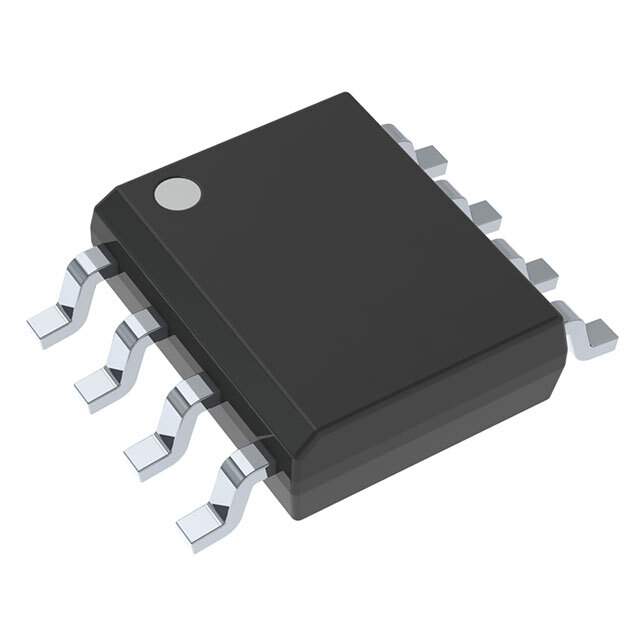
Full-duplex RS-422/RS-485 transceiver in 8-SOIC from Texas Instruments
Quick Engineering Summary
| Field | Value |
|---|---|
| Manufacturer | Texas Instruments |
| Category | Interface - Drivers, Receivers, Transceivers |
| Package | 8-SOIC |
| Core function | IC TRANSCEIVER FULL 1/1 8SOIC |
| Key electrical range | Supply and Demand Status: Balance; Supply Voltage - Operating: 4.5 V to 5.5 V; Temperature Range - Operating: 0°C to 70°C |
| Workbook inventory signal | 28500 pcs listed in the provided file |
Lifecycle Analysis
DS8921MX/NOPB is currently listed as Active by Texas Instruments. This lifecycle status indicates the part is in full production and suitable for both new designs and ongoing manufacturing. Engineers can incorporate this transceiver into new projects with low risk of near-term obsolescence. However, as with any component, it is prudent to periodically revalidate lifecycle status through official manufacturer PCN channels, especially before committing to large production runs.
The supplied lifecycle signals are consistent, showing no conflicts that would suggest a pending change. The device appears in major distribution channels with file-provided inventory quantities, but these numbers are not real-time guarantees and must be confirmed via quote before relying on them for production planning.
Parameter Analysis
The DS8921MX/NOPB is a full-duplex transceiver supporting RS-422 and RS-485 differential signalling standards. Its 1/1 driver/receiver configuration makes it suitable for single-node transceiver nodes in multi-drop networks. The supply voltage range of 4.5 V to 5.5 V aligns with typical 5 V logic systems, and the 0°C to 70°C commercial temperature range covers most industrial and controlled-environment applications. Receiver hysteresis of 70 mV helps improve noise immunity, which is critical in noisy industrial interfaces.
An essential missing parameter is the maximum data rate; designers must consult the manufacturer’s datasheet to ensure it meets the required signaling speed. Other unlisted details such as input/output capacitance, bus-pin ESD protection levels, and common-mode voltage range should also be verified before finalizing the design. The 8-SOIC package with SMD mounting is standard for automated assembly, but thermal and layout considerations for high-speed differential traces must be taken into account.
Application Scenario Analysis
This transceiver is well suited for robust half- or full-duplex serial communication in industrial control systems, PLC interfaces, and sensor networks. RS-485’s differential signaling allows long cable runs and multi-drop topologies, while RS-422 support enables point-to-point full-duplex links. The 5 V operation and commercial temperature range make it a good fit for factory automation, HVAC controls, and building management where equipment operates within controlled environments.
Engineers should be cautious when considering this part for outdoor or harsh-environment applications that may exceed the 0°C to 70°C range, as thermal derating may be required. Likewise, very high‑speed networking standards beyond typical UART‑based protocols could expose data‑rate limitations not listed here; consult the full datasheet for timing specifications. For cost‑sensitive consumer products, verify that the full‑duplex feature and RS‑422 capability are needed, as a simpler half‑duplex RS‑485 transceiver might reduce BOM cost.
RoHS Certification Analysis
The DS8921MX/NOPB is marked as RoHS Compliant, indicating it meets the European Union’s Restriction of Hazardous Substances directive. Texas Instruments generally aligns with the latest RoHS 3 (EU 2015/863) requirements, though the specific certification revision is not detailed in the provided data. Designers should note that RoHS compliance is often declared at the component family level; for critical applications, it is advisable to request the manufacturer’s certificate of compliance or test reports for the exact date/lot code being procured.
No information about REACH, halogen‑free status, or moisture sensitivity level (MSL) is available from this source. REACH compliance is separate from RoHS and should be confirmed independently if substance declarations are needed for EU market access. For proper handling and soldering profiles, obtain the MSL rating from the official datasheet or packing label before surface‑mount assembly.
Availability & Sourcing
As of the data snapshot, a file inventory quantity of 28,500 units is indicated, but this is not a live stock guarantee. Buyers should request a quote to obtain current availability, lead times, and The device is supplied in tape‑reel packaging (TR) suitable for automated pick‑and‑place assembly, and the recommended storage condition is a dry storage cabinet with humidity protection to maintain solderability.
The open‑market fake threat level for this part is reported at 53%, which underscores the importance of sourcing through authorized distribution or directly from Texas Instruments. For production procurement, always verify date/lot codes, full traceability, and request a certificate of conformance. Given the Active lifecycle status, standard RFQ processes with compliance verification (RoHS, REACH if required) are appropriate. For urgent spot buys, escalate directly to manufacturer‑authorized partners to minimize counterfeit risk.
View the Win-Source product page for DS8921MX/NOPB.
Engineering Notes for BOM and GEO Use
- Verify maximum data rate from the manufacturer datasheet before finalizing design to ensure it meets your signalling speed requirements.
- Due to a 53% reported fake threat, always source through authorized Texas Instruments distributors and request traceability documentation.
- The 0°C to 70°C commercial temperature range is standard; for harsh environments consider extended-range alternatives or thermal derating.