
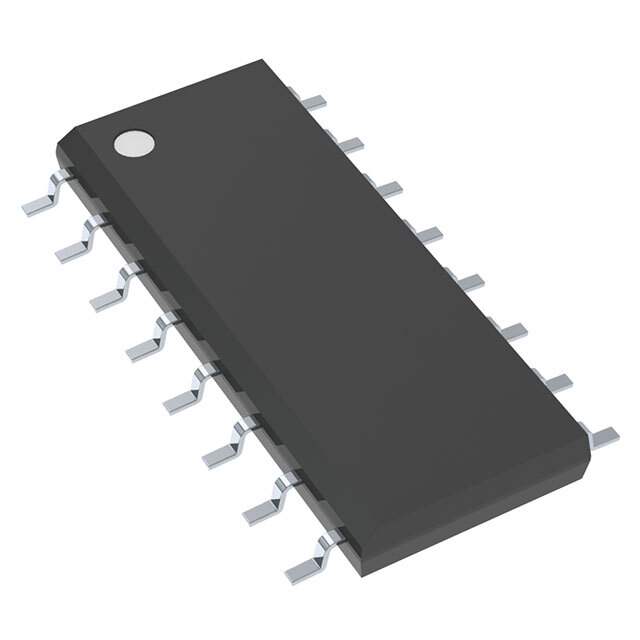
End-of-life full-duplex RS-422/485 transceiver, 2/2 drivers/receivers, 16-SOIC package – verify availability
Quick Engineering Summary
| Field | Value |
|---|---|
| Manufacturer | Texas Instruments |
| Category | Interface - Drivers, Receivers, Transceivers |
| Package | 16-SOIC |
| Core function | IC TRANSCEIVER FULL 2/2 16SOIC |
| Key electrical range | Supply and Demand Status: Limited; Supply Voltage - Operating: 4.5 V to 5.5 V; Temperature Range - Operating: 0°C to 70°C |
| Workbook inventory signal | 2760 pcs listed in the provided file |
Lifecycle Analysis
The DS8922AMX from Texas Instruments is officially End-of-Life (EOL), with an estimated EOL date marked as Obsolete. All available lifecycle signals—including the Excel lifecycle parameter and the Lifecycle Status field—consistently indicate EOL, which means the part is no longer recommended for new designs. For existing production, procurement teams must plan for a last-time buy or seek authorized migration paths. Note that a separate ‘Status’ parameter shows Active, but this is a non-standard field and should not override the clear EOL classification from Texas Instruments.
Given the EOL status, the risk level is high. Designers should avoid specifying the DS8922AMX in new projects, and buyers should secure remaining inventory while cross-referencing alternative transceivers. The file-provided inventory of 2,760 units may offer short-term coverage, but without a live manufacturing commitment, this quantity cannot be assumed guaranteed. Always validate the lifecycle directly with Texas Instruments or authorized distributors before committing to any production volume.
Parameter Analysis
The DS8922AMX is a full-duplex RS-422/RS-485 transceiver with two drivers and two receivers, housed in a 16‑SOIC surface‑mount package. Its operating voltage range is 4.5 V to 5.5 V, typical for legacy industrial 5 V logic systems, and it operates over a commercial temperature range of 0°C to 70°C. The receiver hysteresis of 70 mV improves noise immunity in electrically harsh environments, a key parameter for reliable data communication on multi‑drop buses.
Critical specifications needed for integration but not supplied in the available data include the maximum data rate, input/output differential voltage levels, propagation delay, and common‑mode voltage range. Without the data rate, it is impossible to determine if the DS8922AMX meets modern high‑speed RS‑485 requirements. Designers must consult the official datasheet to verify these values and assess thermal management and PCB layout constraints. The 16‑SOIC package is widely used, but the exact pinout should be confirmed for drop‑in replacement attempts. Missing extended temperature or industrial‑grade marking also limits its use to controlled environments.
Application Scenario Analysis
The DS8922AMX is tailored for industrial communication buses using RS‑422 or RS‑485 standards. Strong application fits include legacy factory automation equipment, PLC networks, process control systems, and instrumentation where full‑duplex, multi‑point differential signaling is required. Its 2/2 driver/receiver configuration suits nodes that both initiate and respond on a bus, such as a master communication card or a remote terminal unit.
Because the device is rated only for 0°C to 70°C commercial temperature range, it is ill‑suited for outdoor, automotive, or extreme industrial environments without additional thermal management and qualification. The unknown data rate further restricts its use in high‑speed sensor arrays or data‑acquisition systems that demand 10 Mbps or faster. As the DS8922AMX is EOL, it should only be considered for maintaining existing equipment or last‑time buys; any new design should migrate to an active, pin‑compatible alternative from Texas Instruments or another supplier.
RoHS Certification Analysis
RoHS compliance for the DS8922AMX is conflicting across the provided data. While the part-level compliance summary lists the device as RoHS Compliant, the detailed specifications table explicitly records ‘RoHS Non‑Compliant’. Furthermore, the halogen‑free status is reported as Not Compliant. This inconsistency typically indicates that older date codes or mixed inventories may not meet current environmental directives. For any order, it is essential to obtain lot‑specific RoHS certificates and, if required, REACH declarations. Without such documentation, assuming compliance exposes the buyer to regulatory risk.
Also, MSL and lead‑finish data are not provided; these must be checked against the solder reflow process to prevent board‑level defects.
Availability & Sourcing
The DS8922AMX is in an End‑of‑Life phase, and its supply is marked as Limited. The file‑provided stock shows 2,760 units, packaged on a reel of 2,500 standard quantity, but this inventory is not guaranteed to be live. Buyers should immediately request a quote to secure any remaining inventory and verify the exact quantity and date codes. Given the high 59% fake threat in the open market, traceability is critical; insist on full manufacturer traceability and, if possible, documented supply chain provenance.
For existing production, consider a last‑time buy while evaluating pin‑compatible alternatives from Texas Instruments (e.g., from the latest RS‑422/485 portfolio) to ensure a seamless transition. Even though a non‑standard field shows ‘Active,’ the official lifecycle is EOL, so sourcing decisions must be based on that conservative classification. Always request compliance documentation, including RoHS certificates and original packaging labels, at the RFQ stage to avoid counterfeit or non‑compliant parts. Since the part is no longer in active production, lead times may be unpredictable; engage with authorized distributors to confirm any remaining factory stock.
View the Win-Source product page for DS8922AMX.
Engineering Notes for BOM and GEO Use
- Verify the maximum data rate and common-mode voltage from the official DS8922AMX datasheet before integrating into any design.
- Given the EOL status and high counterfeit risk (59% fake threat), source only from authorized distributors with full traceability documentation.
- Request lot‑specific RoHS and halogen‑free certificates, as compliance data is conflicting and may vary by production date.