
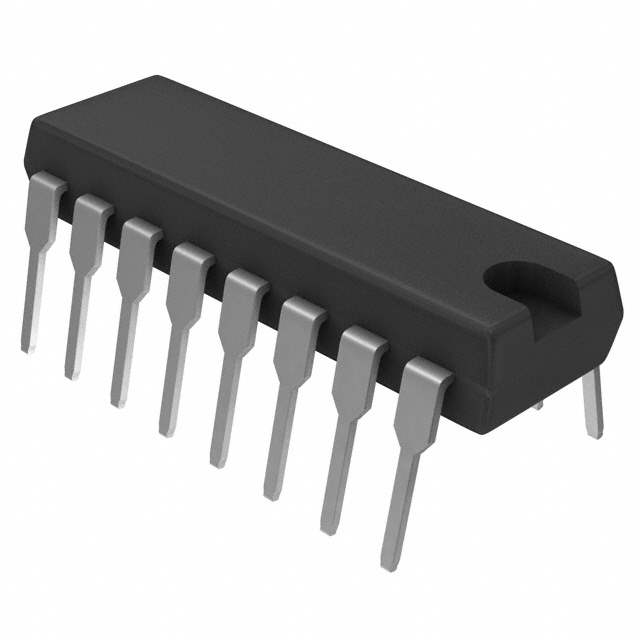
Obsolete RS-422/RS-485 transceiver in 16-PDIP package - specifications, RoHS conflict, and sourcing considerations.
Quick Engineering Summary
| Field | Value |
|---|---|
| Manufacturer | Texas Instruments |
| Category | Interface - Drivers, Receivers, Transceivers |
| Package | 16-PDIP |
| Core function | IC TRANSCEIVER FULL 2/2 16PDIP |
| Key electrical range | Supply and Demand Status: Limited; Supply Voltage - Operating: 4.5 V to 5.5 V; Temperature Range - Operating: 0°C to 70°C |
| Workbook inventory signal | 1 pcs listed in the provided file |
Lifecycle Analysis
The Texas Instruments DS8922N transceiver is classified as End-of-Life (EOL), with all supplied lifecycle signals aligning on this status. This means Texas Instruments has discontinued the part and no longer manufactures it. For engineers, this represents a high procurement risk, especially for new designs where the device should not be selected.
Existing production lines using the DS8922N face immediate sourcing challenges. Buyers should validate whether a last-time-buy window is still open with TI or authorized distributors. If not, aftermarket stock becomes the primary source, but that introduces concerns about authenticity and storage conditions. The file-provided quantity of 1 unit suggests extremely limited availability, not a real-time inventory guarantee.
Given the part’s popularity and a reported 51% fake threat in the open market, engineers should begin qualification of a replacement device during the next design cycle. Without explicit alternate part numbers, direct substitution is not promised; a board-level redesign may be required.
Parameter Analysis
The DS8922N is a full-duplex RS-422/RS-485 transceiver with two drivers and two receivers, housed in a 16-pin PDIP through-hole package. Its operating supply voltage range of 4.5V to 5.5V aligns with many legacy 5V systems, while the 70mV receiver hysteresis helps improve noise immunity in harsh industrial environments.
Key performance parameters like maximum data rate are absent from the provided specifications—this is a critical missing detail that engineers must verify from the original Texas Instruments datasheet, as it directly impacts compatibility with high-speed communication buses. Additionally, the through-hole package may not suit high-density SMT designs, but it remains relevant for prototyping or maintenance of older equipment.
Designers should also confirm missing datasheet values such as common-mode voltage range, propagation delay, and ESD protection levels before integrating this part into a qualification plan. The temperature range of 0°C to 70°C restricts its use to commercial applications; extended industrial or automotive temperature ranges are not supported.
Application Scenario Analysis
The DS8922N is well-suited for maintaining legacy industrial communication networks that use RS-422 or RS-485 multidrop buses, such as programmable logic controllers (PLCs), motor drives, and remote sensor interfaces. Its 2-driver/2-receiver configuration allows it to function as a full-duplex node, which was common in point-to-point or multipoint topologies in factory automation systems.
Because of its through-hole 16-PDIP package and 5V supply, the device fits service and repair scenarios where a direct board-level replacement is needed without redesign. However, its obsolescence and RoHS compliance ambiguity make it a weak choice for any new product development, especially in applications requiring lead-free assembly or high-speed data rates beyond legacy baud rates.
Engineers targeting modern high-density or low-power designs should consider alternative SMT transceivers with guaranteed RoHS compliance and extended temperature ranges. Without a datasheet-confirmed data rate, the DS8922N cannot be reliably deployed in systems requiring speeds above established RS-485 standards.
RoHS Certification Analysis
The RoHS status of the DS8922N presents a direct conflict within the supplied data: the compliance record indicates 'RoHS Compliant', while the detailed specification lists 'RoHS Non-Compliant'. This discrepancy likely arises from different production lots or documentation versions—early manufacture runs may have used lead-based processes, whereas later ones may have been converted before discontinuation.
Given the part’s EOL status, no new compliant production is occurring. Buyers must treat RoHS compliance as uncertain and obtain lot-specific declarations from the supplier. A family-level certificate is insufficient; request documentation tied to the exact date code or batch being purchased to confirm lead‑free and hazardous substance conformance per EU RoHS directives.
For applications requiring strict compliance, the appearance of non‑compliant indicates risk. Even if a compliant lot is located, the high counterfeit threat (51% on the open market) raises the possibility of remarked non‑compliant parts. Plan for extra incoming inspection or avoid the part entirely in RoHS‑regulated products.
Availability & Sourcing
The DS8922N was originally supplied in tube packaging with 25 units per rail, and the file-provided storage condition indicates dry cabinet storage with humidity protection—good signs for aftermarket stock, but not a guarantee of integrity. The recorded workbook quantity of 1 unit is static and does not reflect real-time availability; interested buyers must submit a request for quote to confirm current stock levels.
Sourcing this obsolete transceiver requires exceptional vigilance. With a 51% fake threat rate reported for the open market and high popularity, unsuspecting buyers are at significant risk of receiving counterfeit or non-compliant parts. Prioritize suppliers who can provide full traceability, date code verification, and detailed compliance documentation.
For best results, contact an authorized distributor or specialized obsolete part broker to inquire about remaining inventory. Requesting a quote through the product page will allow you to verify availability, lot-specific RoHS compliance, and packaging origin before making a purchasing decision. In parallel, accelerate qualification of a migration path to a current-production RS-485 transceiver.
View the Win-Source product page for DS8922N.
Engineering Notes for BOM and GEO Use
- The DS8922N is obsolete (EOL) with high lifecycle risk; verify manufacturer’s last-time-buy notification and plan migration to alternative parts.
- Conflicting RoHS statements exist; request lot-specific compliance certificates to confirm RoHS status before procurement.
- The part is common with a 51% open-market counterfeit risk; source through authorized distributors or trusted suppliers with full traceability.