
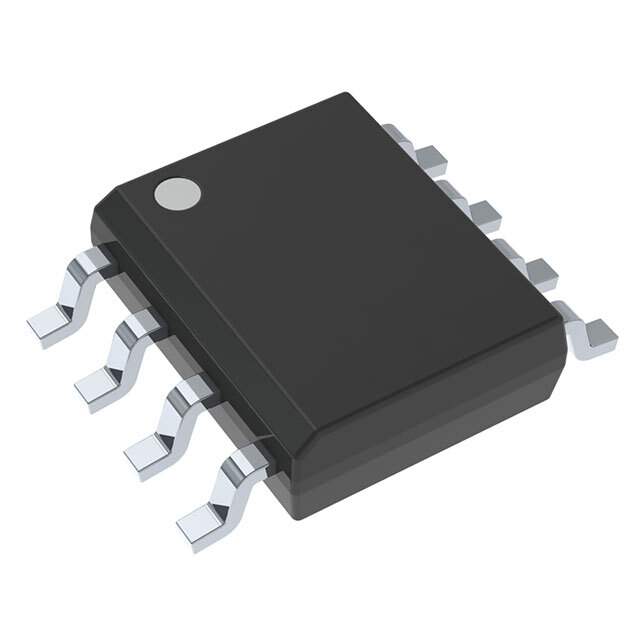
RS-422/RS-485 transceiver in 8-SOIC with 20 Mbps data rate.
Quick Engineering Summary
| Field | Value |
|---|---|
| Manufacturer | Texas Instruments |
| Category | Interface - Drivers, Receivers, Transceivers |
| Package | 8-SOIC |
| Core function | IC TRANSCEIVER FULL 1/1 8SOIC |
| Key electrical range | Supply and Demand Status: Limited; Supply Voltage - Operating: 4.5 V to 5.5 V; Temperature Range - Operating: -40°C to 85°C |
| Workbook inventory signal | 15720 pcs listed in the provided file |
Lifecycle Analysis
The Texas Instruments DS89C21TM/NOPB lifecycle is ambiguous in the provided data. The dedicated lifecycle field reports an Unknown status with no additional signals, yet the part specifications explicitly list the status as Active. This conflict requires immediate attention from sourcing teams. In practice, an Active designation suggests the device is suitable for new designs and in full production, but the lack of confirming signals such as a product change notification (PCN) or end-of-life (EOL) announcement introduces uncertainty.
For new designs, engineers should treat this part with caution until Texas Instruments confirms its production status. A direct inquiry to an authorized distributor or TI's product life cycle portal is the best path to resolution. For sustaining production, the part may still be safely procured if existing supply lines are stable, but the ambiguous status should be monitored.
If the Active status is verified, the DS89C21TM/NOPB can be used in long-life industrial systems without immediate migration pressure. However, if the Unknown status reflects a pending EOL, a redesign may be necessary. The medium risk level reflects this uncertainty, and conservative procurement practices are advised until clarity is obtained.
Parameter Analysis
The DS89C21TM/NOPB is a single-driver/single-receiver full-duplex transceiver supporting RS-422 and RS-485 protocols at data rates up to 20 Mbps. The 20 Mbps speed is sufficient for many industrial communication buses, but designers should verify timing margins for their specific cable lengths and node counts. The receiver hysteresis of 50 mV improves noise immunity in harsh environments, which is critical for long cable runs.
The operating voltage range of 4.5 V to 5.5 V makes this part compatible with standard 5 V logic systems, though it excludes 3.3 V-only designs. The -40°C to 85°C temperature range supports industrial-grade applications, but extreme environments may require verification of parametric derating at temperature extremes. The 8-SOIC SMD package allows compact PCB layouts, and the tube/rail packaging facilitates automated assembly.
Key missing parameters include supply current, ESD protection levels, propagation delay, and common-mode voltage range. These specifications are essential for qualifying the part in robust communication systems and should be obtained from the manufacturer's datasheet before final design integration.
Application Scenario Analysis
Given its RS-422/RS-485 protocol support, the DS89C21TM/NOPB is well-suited for industrial automation networks, building management systems, and motor control interfaces where differential signaling over long distances is required. The 20 Mbps data rate accommodates standard fieldbus protocols like Profibus or custom UART-based multidrop networks. Its full-duplex capability allows simultaneous transmit and receive, beneficial in point-to-point or repeater applications.
This part is a strong fit for factory floor equipment, HVAC controllers, and data acquisition systems operating within the 5 V supply range. However, it is a weak fit for low-power 3.3 V-only designs, high-speed interfaces exceeding 20 Mbps, or applications requiring more than one transceiver channel per package. Engineers designing for harsh EMI environments should evaluate the missing ESD and common-mode rejection specifications.
In applications where only half-duplex operation is needed, the full-duplex feature may represent an unused capability but does not hinder use. The device's industrial temperature grade and SMD packaging align with contemporary manufacturing requirements, making it a practical choice for many embedded systems.
RoHS Certification Analysis
The Texas Instruments DS89C21TM/NOPB is listed as RoHS Compliant according to the supplied data. This indicates that the device meets the restriction of hazardous substances as required for sale in the European Union. However, the specific RoHS version (such as RoHS 2 or RoHS 3) is not specified; procurement teams should verify compliance to EU RoHS Directive 2011/65/EU and its amendments, including EU 2015/863.
No exemptions are noted in the data, which typically means the standard six-substance restrictions (lead, mercury, cadmium, hexavalent chromium, PBBs, and PBDEs) are met, with phthalates also restricted under RoHS 3. Since RoHS compliance is declared at the family level, lot-level documentation may be required for high-accountability industries. REACH status is not provided; separate verification is needed if REACH compliance is a contractual requirement.
Engineers and buyers should request a certificate of compliance from the supplier to confirm that the specific production lot meets current environmental standards. The availability of MSDS upon request suggests proper documentation channels exist, but proactive confirmation is recommended before shipping to restricted markets.
Availability & Sourcing
The DS89C21TM/NOPB is offered in tube/rail packaging with a file-listed inventory of 15,720 units, indicating reasonable availability for mid-volume production. However, this quantity is not a real-time stock level; buyers must contact distributors for current lead times and inventory. The supply and demand status is noted as Limited, which may signal tightening market conditions.
Open-market counterfeit risk is reported at 67%, a high percentage that demands sourcing only from Texas Instruments authorized distributors or verified surplus channels. The part requires dry storage and humidity protection, so proper handling during shipment and storage is essential to preserve solderability.
Given the conflicting lifecycle signals, it is critical to request lifecycle confirmation and compliance certificates alongside an RFQ. For Active parts, standard procurement with shelf-life verification suffices. If the status shifts to NRND or EOL, long-term supply agreements or alternate sourcing strategies should be evaluated. Use the Win Source part number 080760-DS89C21TM/NOPB when requesting a quote, and always verify date codes and traceability to avoid counterfeit exposure.
View the Win-Source product page for DS89C21TM/NOPB.
Engineering Notes for BOM and GEO Use
- Verify lifecycle status with Texas Instruments due to conflicting Active/Unknown signals before finalizing BOM.
- 20 Mbps data rate and RS-422/RS-485 protocol support typical industrial serial communication requirements.
- High open-market counterfeit risk (67%) mandates sourcing from franchised or authorized distributors.