
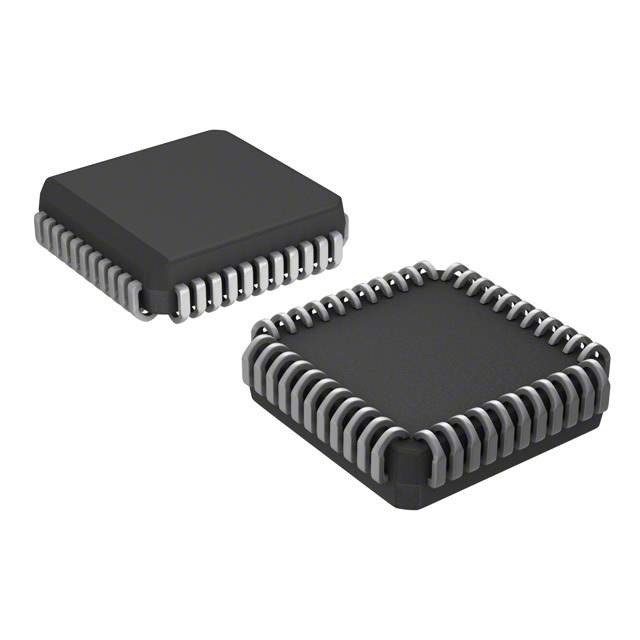
Maxim Integrated 8‑bit microcontroller sourcing and compliance overview
Quick Engineering Summary
| Field | Value |
|---|---|
| Manufacturer | Maxim Integrated |
| Category | Embedded - Microcontrollers |
| Package | 44-PLCC (16.59x16.59) |
| Core function | IC MCU 8BIT 16KB FLASH 44PLCC |
| Key electrical range | Operating Temperature Range: -40°C ~ 85°C (TA); Supply and Demand Status: Balance; Supply Voltage: 4.5 V ~ 5.5 V |
| Workbook inventory signal | 1 pcs listed in the provided file |
Lifecycle Analysis
The lifecycle status of the DS89C430-QNL+ is officially unknown from the supplied data. No lifecycle signal is provided except for an Estimated EOL Date of 2026, which introduces a conflict. An estimated end-of-life date suggests that the manufacturer may have internally planned obsolescence, but without formal confirmation, the part cannot be classified as Active, NRND, or EOL. This uncertainty demands a conservative procurement approach.
For engineers evaluating new designs, the risk is medium: committing to a component with an unverified lifecycle could lead to shortages or a forced redesign if EOL is announced. In sustaining production, the 2026 estimate gives a limited window to inventory or qualify a replacement. The file‑provided workbook quantity of 1 unit is not a live stock indicator and should not be relied upon.
Recommendation: contact Maxim Integrated’s representatives or an authorized distributor to obtain the official product life cycle status. If EOL is imminent, request a last‑time‑buy schedule. For any new design, consider an alternative 8051‑compatible MCU with a confirmed active lifecycle to avoid future discontinuity.
Parameter Analysis
The DS89C430-QNL+ is built on the classic 8051 core, operating at up to 33 MHz with a supply voltage of 4.5 V to 5.5 V. This 5V operation is critical for designs interfacing with legacy 5V logic or requiring higher noise margins. The 16KB of FLASH program memory and 1KB of RAM are modest by modern standards but sufficient for many control tasks. The 32 general‑purpose I/O lines provide ample connectivity for sensing and actuation in embedded systems.
From a derating and thermal perspective, the industrial temperature range of -40°C to 85°C allows deployment in harsh environments, though the PLCC‑44 package with J‑leads has limited power dissipation capability. The external oscillator requirement must be accounted for in PCB layout; clock stability depends on the chosen crystal. Missing parameters such as maximum I/O source/sink current, power consumption in active and idle modes, and programming voltage specifications must be obtained from the full datasheet before finalizing the design.
Critical verification items for new designs include supply current at 5V/33MHz, I/O drive strength, and the timing of the power‑fail reset circuit. The part’s 2003 introduction date suggests the datasheet may not include modern characterization like ESD ratings or detailed EMI compliance, so additional qualification may be necessary.
Application Scenario Analysis
The DS89C430-QNL+ is a strong fit for legacy 8051‑based industrial control systems, such as motor controllers, PLCs, and data acquisition modules, where the existing firmware base and 5V I/O compatibility are critical. Its power‑fail reset and watchdog timer peripherals enhance system reliability in harsh electrical environments. The external memory interface (EBI/EMI) allows connection to parallel SRAM or peripherals, useful in applications needing expanded data storage.
Weak‑fit scenarios include battery‑powered devices, high‑performance computing, or applications requiring advanced connectivity like USB, CAN, or low‑power wireless protocols. The 5V supply and older 8051 architecture are less energy‑efficient than modern Cortex‑M microcontrollers. For new smart‑sensor or IoT edge node designs, the limited 16KB FLASH and lack of integrated analog peripherals will likely be restrictive. This part is more suited to sustaining existing products than launching new designs.
If the target application involves tight timing or real‑time control, the 33 MHz clock and 8051’s deterministic instruction set remain adequate, but the processor’s maximum processing capability lags far behind current 32‑bit MCUs. Engineers should weigh the cost of redesign against the risk of sourcing an aging component.
RoHS Certification Analysis
The DS89C430-QNL+ is listed as RoHS Compliant and Halogen Free. This implies conformity with the European Union’s Restriction of Hazardous Substances directive, though the specific directive version (e.g., 2011/65/EU or 2015/863) is not provided. The halogen‑free statement further indicates that the component meets IEC 61249‑2‑21 requirements for low halogen content, a plus for environmentally conscious procurement.
RoHS compliance at the part‑number level is typically documented through a family‑level declaration from Maxim Integrated. However, end‑users should obtain a lot‑specific Certificate of Compliance (CoC) from the distributor with each shipment to guarantee that the batch does not contain non‑compliant materials. REACH status is not mentioned in the supplied data; a separate REACH declaration should be requested if required by the project’s environmental policy.
Given the part’s estimated EOL in 2026, buyers should confirm that any remaining inventory is still manufactured under the same RoHS‑compliant process. A change in assembly site or materials could affect compliance, so routine incoming inspection and documentation review are recommended.
Availability & Sourcing
The DS89C430-QNL+ has a medium popularity and a balanced supply‑and‑demand status according to the provided data, but the estimated EOL date of 2026 casts doubt on long‑term availability. The workbook quantity shows only 1 unit; this is a file‑provided figure and not a live inventory count, so real‑time stock must be confirmed by requesting a quote. The part is packaged in tubes, a standard format for PLCC devices, facilitating manual or automated placement.
Given the 59% fake threat in the open market, sourcing must be restricted to Maxim Integrated’s franchised distributors or directly from the manufacturer. Counterfeit risks include remarked or recycled components with improper programming or degraded leads. As a best practice, require full traceability documentation, including date and lot codes, and conduct visual and electrical incoming inspection.
Since the lifecycle is unknown with an EOL estimate, verify the official status before any new production orders. For active‑production use, negotiate a last‑time‑buy if EOL is confirmed, and secure inventory sufficient for the project’s remaining lifecycle. For sustaining engineering, start evaluating pin‑compatible or drop‑in 8051 alternatives now to mitigate future supply disruptions.
View the Win-Source product page for DS89C430-QNL+.
Engineering Notes for BOM and GEO Use
- Verify lifecycle directly with manufacturer; the 2026 estimated EOL conflicts with an unknown status and may signal planned obsolescence.
- Request lot‑specific RoHS and halogen‑free compliance certificates with each shipment to ensure environmental conformity.
- Source only from authorized distributors due to a 59% fake threat rate in the open market; demand date/lot code traceability.