
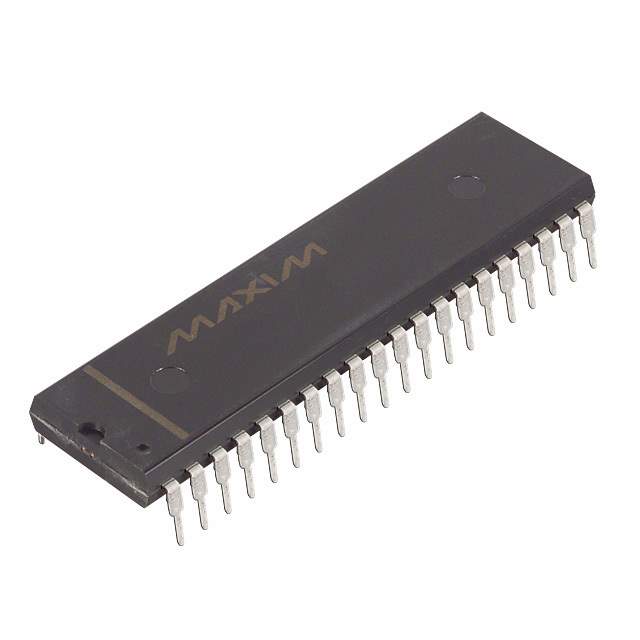
Part specifications, lifecycle analysis, compliance, and sourcing considerations for DS89C450-MNL+.
Quick Engineering Summary
| Field | Value |
|---|---|
| Manufacturer | Maxim Integrated |
| Category | Embedded - Microcontrollers |
| Package | PDIP |
| Core function | IC MCU 8BIT 64KB FLASH 40DIP |
| Key electrical range | Frequency: 33 MHz; Max Frequency: 33 MHz; Max Operating Temperature: 85 °C; Max Supply Voltage: 5.5 V |
| Workbook inventory signal | 20 pcs listed in the provided file |
Lifecycle Analysis
The lifecycle status of the DS89C450-MNL+ from Maxim Integrated is currently unknown. No official lifecycle signals or end‑of‑life notifications are provided in the source data. This absence of information leads to a medium risk classification, because the part could be actively produced, transitioned to NRND (Not Recommended for New Design), or already discontinued without public notice.
For engineers and procurement teams, an unknown lifecycle means any commitment to new production designs should be deferred until manufacturer confirmation is obtained. Using a part with an unverified status can lead to supply disruptions, forced redesigns, and potential non‑compliance with product lifecycle management policies. Even if inventory appears on file (a workbook quantity of 20 units is noted, but this is not real‑time), it does not guarantee ongoing availability.
For sustaining production, secure existing inventory only after validating with authorized distribution or the manufacturer that the part remains orderable and supported. Documentation such as product change notifications (PCNs) should be requested to assess any upcoming changes. Treat the component as procurement‑at‑risk until lifecycle clarity is established.
Parameter Analysis
The DS89C450-MNL+ is an 8‑bit microcontroller built on the industry‑standard 8051 core architecture, offering a 33 MHz maximum clock frequency and 64 kB of on‑chip FLASH memory. These parameters define its code execution capability and memory footprint, critical for medium‑complexity embedded applications. The device operates on a 5 V supply, with a tolerance from 4.5 V to 5.5 V, making it suitable for legacy industrial systems that still rely on 5 V logic levels. Its temperature range extends from ‑40 °C to +85 °C, enabling use in a broad set of industrial environments.
Peripheral integration includes one UART channel (with EBI/EMI and USART interfaces also listed), a watchdog timer, and three general‑purpose timers/counters. With 32 I/O lines and 4 programmable I/O pins, the part provides moderate pin‑multiplexing flexibility. The through‑hole PDIP package (40 pins) is particularly relevant for prototyping, repair of legacy boards, and education, though it limits high‑volume SMT production. Dimensions: length 52.71 mm, width 14.61 mm, height 4.45 mm.
Key parameters not available from the provided data include power consumption (active and sleep currents), ADC resolution, EEPROM size, and detailed peripheral mapping. Engineers should consult the official Maxim Integrated data sheet to verify these values for power budget calculations and pin‑out confirmation before board layout.
Application Scenario Analysis
Given its 8051 core, 5 V operation, and PDIP package, the DS89C450-MNL+ is a strong fit for industrial control systems, motor drives, and sensor data acquisition where legacy compatibility and through‑hole mounting are preferred. It serves well in embedded environments that demand deterministic real‑time control, such as programmable logic controllers, factory automation, and instrumentation that remain in service for decades. The presence of a watchdog timer and extended temperature range supports reliable operation in these rugged settings.
Weak‑fit scenarios include modern low‑power IoT devices, high‑frequency signal processing, and applications requiring fast analog‑to‑digital conversion (no on‑chip ADC specified). Designs that need large code or data memory beyond 64 kB FLASH and 1 kB RAM would strain the microcontroller’s resources. Battery‑operated products may face challenges due to the 5 V minimum operating voltage and unknown power consumption profiles. Additionally, the PDIP through‑hole package makes the part impractical for miniature, surface‑mount consumer electronics.
Engineers should evaluate whether the 8051 ecosystem and development tools still align with their project timelines and support infrastructure. The part is best reserved for maintenance of existing equipment or new designs that explicitly require a 5 V, through‑hole 8051 microcontroller.
RoHS Certification Analysis
The DS89C450-MNL+ is marked as RoHS Compliant in the source data, with a separate Lead Free attribute also indicated. Contact plating is tin, which typically complies with the substance restrictions. However, the exact EU directive version (e.g., RoHS 3, 2015/863) is not explicitly stated. Without a directive revision reference, the common interpretation is EU RoHS (2011/65/EU and its amendments), but this should be verified through the manufacturer’s certificate of compliance.
REACH SVHC status is listed as unknown, meaning the presence of substances of very high concern above threshold limits has not been documented in the provided data. REACH and RoHS are separate regulations, and RoHS compliance does not automatically imply REACH compliance. For customers operating in the European Union, it is advisable to request both a full RoHS certificate and a REACH declaration for the specific production lot.
Lot‑level compliance can differ from family‑level declarations, especially for an older part like the DS89C450-MNL+. If the part is sourced from non‑authorized channels, the risk of non‑compliant inventory increases. Always obtain the latest compliance documents directly from Maxim Integrated (now Analog Devices) or an authorized distributor.
Availability & Sourcing
Sourcing the DS89C450-MNL+ requires careful attention due to its unknown lifecycle status and a reported 52% fake threat in the open market. The file‑provided workbook quantity of 20 units is not a real‑time stock guarantee and should be confirmed through a formal request for quote (RFQ). Without a verified lifecycle, committing to production volumes carries substantial risk; for new designs, alternative microcontrollers with guaranteed long‑term support should be evaluated.
When procuring, insist on traceable date/lot codes and full compliance documentation (RoHS, REACH). The packaging specification notes dry storage cabinet and humidity protection, which is relevant for through‑hole parts with long shelf life. Because the part is listed with limited supply and demand status, inventory may be constrained at any time. Approaching multiple authorized distributors or the manufacturer directly can help secure allocation.
For unknown lifecycle parts, the recommended procurement action is to verify lifecycle status first, then request a quote for current availability. If the part is confirmed discontinued, source carefully from authorized inventory with manufacturer end‑of‑life notices in hand. For NRND scenarios, plan a migration strategy while stocking a last‑time‑buy quantity. In all cases, avoid open‑market brokers to mitigate the high counterfeit risk.
View the Win-Source product page for DS89C450-MNL+.
Engineering Notes for BOM and GEO Use
- Verify lifecycle status directly with manufacturer; unknown status means part may be NRND or discontinued without notice.
- High counterfeit risk (52% fake threat in open market) demands sourcing only from authorized distributors with traceable lot codes.
- PDIP through‑hole package targets prototyping and legacy repairs; not suitable for modern SMT assembly lines.