
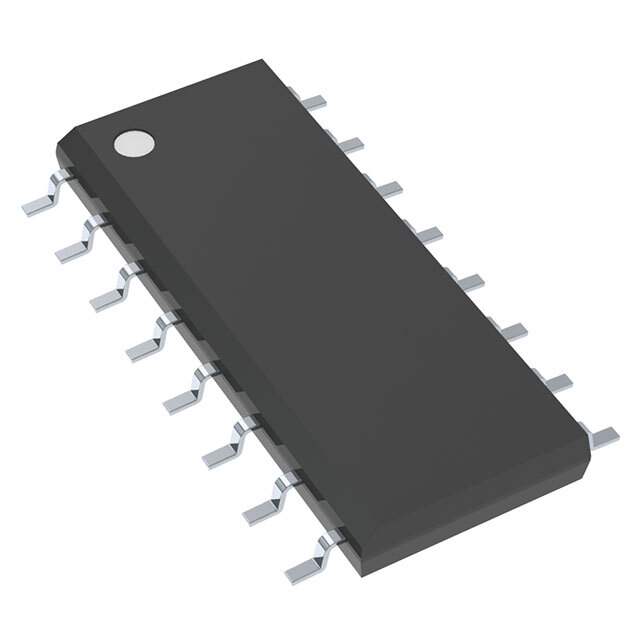
Active lifecycle LVDS driver from Texas Instruments in 16-SOIC, suitable for industrial and communications applications.
Quick Engineering Summary
| Field | Value |
|---|---|
| Manufacturer | Texas Instruments |
| Category | Interface - Drivers, Receivers, Transceivers |
| Package | 16-SOIC |
| Core function | IC TRANSCEIVER 4/0 16SOIC |
| Key electrical range | Supply and Demand Status: Balance; Supply Voltage - Operating: 4.5 V to 5.5 V; Temperature Range - Operating: -40°C to 85°C |
| Workbook inventory signal | 7855 pcs listed in the provided file |
Lifecycle Analysis
The DS90C031BTMX/NOPB is currently listed as Active by Texas Instruments, indicating that the part is in full production and recommended for both new designs and ongoing manufacturing. No lifecycle conflicts are present in the supplied data, and the risk level is low for procurement. Engineers can confidently incorporate this LVDS driver into new projects without immediate obsolescence concerns.
For production programs spanning several years, it is prudent to monitor any revalidation requirements or process change notifications (PCNs) from the manufacturer. The file-provided inventory of 7,855 units suggests current availability, but this is not a real-time guarantee and should be verified with authorized distributors.
While the Active status is favorable, long-term sourcing strategies should still include alternate sourcing plans in case of unexpected supply chain disruptions. Overall, the DS90C031BTMX/NOPB presents a stable procurement profile for interface designs.
Parameter Analysis
The DS90C031BTMX/NOPB operates with a supply voltage range of 4.5 V to 5.5 V, making it compatible with standard 5 V logic systems. Its LVDS protocol ensures high-speed, low-power differential signaling, critical for noise-sensitive applications. The operating temperature range of -40°C to 85°C suits industrial environments.
The 16-SOIC SMD package is well-suited for automated assembly and offers a compact footprint. With a driver/receiver count of 4/0, this part functions as a quad line driver, sending four differential signals. However, key parameters such as maximum data rate, propagation delay, and output drive strength are not provided in the available data; these must be verified from the official Texas Instruments datasheet to ensure proper timing and signal integrity.
For PCB layout, proper differential pair routing and termination are essential. Derating guidelines for thermal management should be considered, especially if all drivers are active simultaneously. Always cross-reference the datasheet for complete electrical characteristics and recommended operating conditions before finalizing the BOM.
Application Scenario Analysis
The DS90C031BTMX/NOPB is well-matched for industrial automation, backplane communication, and clock distribution networks where robust LVDS signaling is required. Its 4.5 V to 5.5 V supply and -40°C to 85°C temperature range align with many embedded and factory-floor systems. Typical uses include connecting sensors, actuators, or driving high-speed data across a backplane.
This part may be less suitable for battery-powered or low-voltage applications that require supplies below 4.5 V. Additionally, if your design demands extended temperature range beyond 85°C or specialized automotive qualification, alternative devices should be evaluated. The maximum data rate is not specified here, so verify that the DS90C031BTMX/NOPB meets your throughput needs.
In safety-critical or high-reliability designs, supplementary testing may be necessary. Overall, this driver fits standard LVDS point-to-point links, but confirm all performance parameters against your specific application requirements.
RoHS Certification Analysis
The DS90C031BTMX/NOPB is marked as RoHS Compliant, indicating that it meets the restrictions on hazardous substances under the EU RoHS directive. No specific exemptions are listed, which is typical for standard semiconductor components. However, the compliance level is usually assessed at the family or date-code level, so individual lot verification is recommended for documented proof.
While RoHS compliance is stated, other regulations such as REACH (Registration, Evaluation, Authorisation and Restriction of Chemicals) are not mentioned. Designers should confirm both RoHS and REACH status if required by their market or end-application. The Material Safety Data Sheet (MSDS) is available upon request, providing additional handling and safety information.
To ensure continuous compliance, obtain a Certificate of Compliance (CoC) for each shipment. This practice is especially important given the open market counterfeit threat of 51%, as non-RoHS grey market parts could infiltrate the supply chain.
Availability & Sourcing
The DS90C031BTMX/NOPB is in Active production, and the file-provided quantity of 7,855 units indicates available inventory, though it does not reflect real-time stock. Packaging is tape and reel (TR) for volume SMT assembly, with storage in dry humidity-controlled conditions recommended.
Given a 51% counterfeit threat on the open market, sourcing from authorized Texas Instruments distributors is strongly advised to ensure genuineness and full traceability. For current pricing and lead times, request a quote through a reputable channel. Procure with date/lot code verification and ask for RoHS compliance certificates and MSDS documentation.
Because the lifecycle is Active, there is no urgency to last-time buy, but for production stability, establish a forecast with suppliers and consider buffer stock for unforeseen demand spikes. Verify the manufacturer’s lifecycle status periodically to catch any transitions early.
View the Win-Source product page for DS90C031BTMX/NOPB.
Engineering Notes for BOM and GEO Use
- Verify 4.5V–5.5V supply and -40°C to 85°C operating temperature range against your design margins.
- Plan for high counterfeit risk (51% reported threat) in open market; source from authorized distributors.
- Confirm RoHS compliance at lot level and request MSDS for handling.