
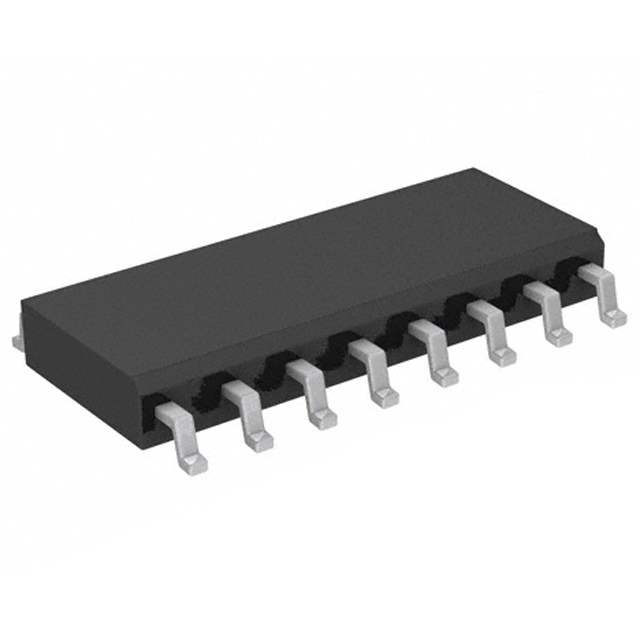
0/4 receiver, 16-SOIC, LVDS protocol, –40°C to 85°C operating temperature
Quick Engineering Summary
| Field | Value |
|---|---|
| Manufacturer | Texas Instruments |
| Category | Interface - Drivers, Receivers, Transceivers |
| Package | 16-SOIC |
| Core function | IC TRANSCEIVER 0/4 16SOIC |
| Key electrical range | Supply and Demand Status: Balance; Supply Voltage - Operating: 4.5 V to 5.5 V; Temperature Range - Operating: -40°C to 85°C |
| Workbook inventory signal | 5590 pcs listed in the provided file |
Lifecycle Analysis
The DS90C032TM/NOPB is classified as Active by Texas Instruments, with all lifecycle signals in agreement. There are no conflicts across manufacturer, distributor, or market data. This status indicates the part is in full production and supported for new design-in as well as ongoing procurement.
For new designs, the active lifecycle allows integration without immediate obsolescence concerns. For sustaining production, standard procurement practices apply, but periodic revalidation of manufacturer status is wise for long-life programs.
The supplied data indicates a file inventory quantity of 5,590 units; however, this is not a real-time figure. Engineers should request current stock levels and lead times during quoting. For risk mitigation, consider verifying with Texas Instruments the expected longevity and any planned process changes.
Parameter Analysis
The DS90C032TM/NOPB is a quad LVDS receiver, meaning it accepts four differential LVDS input signals and outputs corresponding single-ended signals. With 0 drivers, it cannot be used for LVDS transmission; pairing with a separate LVDS driver is necessary for bidirectional communication. The 4.5 V to 5.5 V supply voltage range aligns with common 5 V logic systems, but designers should account for power supply tolerances and sequencing if used with mixed-voltage devices.
The industrial temperature range of -40°C to 85°C makes it suitable for rugged environments, though designers must consider derating and thermal margins when ambient temperatures approach extremes. The 16-SOIC surface-mount package with a 3.90 mm body width is compatible with standard PCB assembly processes.
Critical parameters like maximum data rate, propagation delay, input common-mode voltage range, and output rise/fall times are not provided in the sourced data. These must be obtained from the official Texas Instruments DS90C032TM/NOPB datasheet to ensure signal integrity and timing compliance in the target application. Additionally, verify ESD ratings and pinout details before layout.
Application Scenario Analysis
The DS90C032TM/NOPB is well-suited for industrial sensing and instrumentation applications where multiple differential LVDS data streams need to be received and converted to single-ended logic levels. Typical use cases include factory automation sensor interfaces, data acquisition systems, and backplane communication where noise immunity of LVDS is required. Its 4-channel configuration reduces component count in systems with multiple parallel data lines.
For applications requiring both transmission and reception, a companion LVDS driver must be selected, as this part provides only receiver functionality. It is less suited for high-speed long-reach serial links that may exceed LVDS signaling rates, or for environments with extreme temperatures beyond -40°C to 85°C.
The part’s industrial temperature range and SMT package support use in moderate-to-harsh industrial settings, but designers should confirm vibration and humidity tolerance through system-level testing. For battery-powered or portable equipment, the 5 V supply requirement may necessitate a boost converter, potentially impacting efficiency.
RoHS Certification Analysis
According to the supplied records, the DS90C032TM/NOPB is RoHS Compliant. This designation typically means the part meets the requirements of the EU RoHS directive, including restrictions on lead, mercury, cadmium, and other hazardous substances. No specific RoHS standard version is cited, but compliance with RoHS 3 (2015/863) is likely given Texas Instruments’ standard practices.
For procurement documentation, a certificate of compliance or full material declaration should be requested for the specific lot to confirm that no exemptions apply and that the product meets current regulatory thresholds. Without a lot-level certificate, the compliance status is based on family-level declarations and may need revalidation for audited applications.
No REACH or MSL data is available in the source; engineers should query these separately if required for environmental or handling compliance.
Availability & Sourcing
The DS90C032TM/NOPB is available through distribution, with a file-provided quantity of 5,590 units at the time of data capture. This figure is not a real-time stock guarantee; interested buyers must request a current quote to confirm pricing, lead time, and available packaging. The part is supplied in tube/rail packaging, which is suitable for automated pick-and-place assembly.
Given a reported 30% counterfeit threat in the open market, procurement should be routed through authorized Texas Instruments distributors or reputable sources with traceability. Always verify date and lot codes against manufacturer records and request RoHS certificates alongside material declarations when compliance is critical.
With an active lifecycle status, the DS90C032TM/NOPB can be procured without immediate end-of-life concerns. Still, for ongoing production, periodic monitoring of Texas Instruments’ product change notifications (PCNs) is advisable. To secure supply, consider negotiating blanket orders or safety stock agreements based on program volumes and lead-time variability.
View the Win-Source product page for DS90C032TM/NOPB.
Engineering Notes for BOM and GEO Use
- Verify datasheet for missing parameters such as data rate, propagation delay, and input thresholds before committing to design.
- When sourcing, insist on lot-level RoHS and traceability documentation given the 30% counterfeit risk in the open market.
- For new designs, the active lifecycle status supports long-term availability, but confirm with Texas Instruments for production plans.