
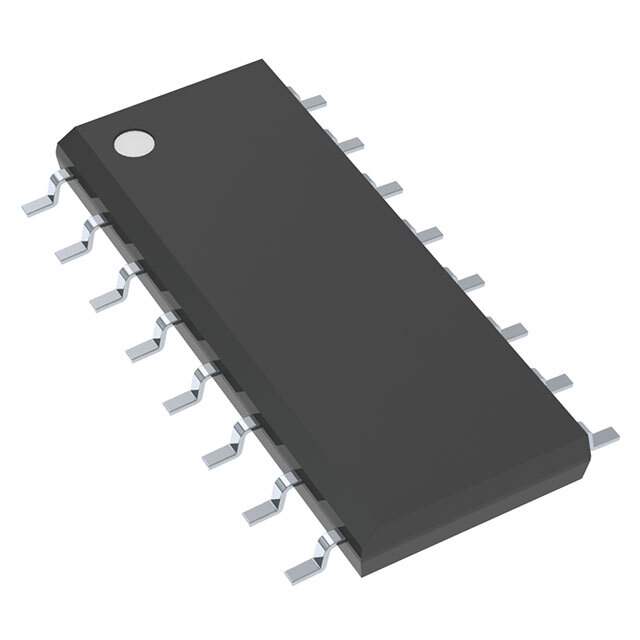
Texas Instruments LVDS Receiver – Specifications and Procurement Analysis
Quick Engineering Summary
| Field | Value |
|---|---|
| Manufacturer | Texas Instruments |
| Category | Interface - Drivers, Receivers, Transceivers |
| Package | 16-SOIC |
| Core function | IC TRANSCEIVER 0/4 16SOIC |
| Key electrical range | Supply and Demand Status: Balance; Supply Voltage - Operating: 4.5 V to 5.5 V; Temperature Range - Operating: -40°C to 85°C |
| Workbook inventory signal | 6000 pcs listed in the provided file |
Lifecycle Analysis
The DS90C032TM from Texas Instruments has been assigned an End-of-Life (EOL) status. This designation means the component is no longer recommended for new designs and may have limited or no ongoing production. Engineers should migrate to a newer alternative for new projects. For sustaining production, it is critical to secure remaining inventory while verifying last-time-buy and last-ship dates from the manufacturer. The file-provided inventory lists 6000 units; however, this is not a guaranteed real-time quantity and should be confirmed through a formal RFQ process.
All lifecycle signals in the source data align, indicating EOL without conflicting statuses. The high risk level reflects the potential for supply discontinuity and long-term unavailability. Purchasing teams should treat this as a legacy part and assess the impact on existing BOMs. It is essential to re-check EOL notices directly with Texas Instruments before placing bulk orders.
Parameter Analysis
The DS90C032TM is a quad LVDS receiver (0 drivers/4 receivers) in a 16-SOIC package. Key operating parameters include a supply voltage range of 4.5 V to 5.5 V and an industrial temperature range of -40°C to 85°C. These parameters make it suitable for standard 5 V logic systems and factory-floor environments. The surface-mount package (SMD) with tube/rail packaging supports automated assembly lines, but designers must ensure PCB footprints match the 3.9 mm body width.
Critical specifications missing from the provided data include maximum data rate, propagation delay, input common-mode voltage range, and differential input thresholds. Without these, engineers cannot fully validate signal integrity or timing margins. It is strongly recommended to consult the official Texas Instruments DS90C032 datasheet to obtain these values and confirm compatibility with the intended LVDS signal chain. Pay particular attention to receiver input sensitivity and skew characteristics when used in high-speed differential communication.
Application Scenario Analysis
The DS90C032TM is typically used in industrial LVDS signal reception, such as in sensing and instrumentation applications as indicated in the source data. It is well-suited for converting low-voltage differential signals to standard logic levels over twisted-pair cables, supporting robust data transmission in noisy environments. Legacy designs in factory automation, test equipment, and distributed I/O modules may still use this receiver.
However, due to its EOL status, this part is not appropriate for new designs. For new products, engineers should evaluate modern LVDS receivers that offer advanced features like higher data rates, lower power consumption, or integrated termination. In existing systems, the DS90C032TM may be a drop-in replacement only if the exact manufacturer part is used; no cross-references are provided, so verification is necessary before substitution.
RoHS Certification Analysis
The source data states the DS90C032TM is RoHS Compliant. This generally means the part meets the EU Restriction of Hazardous Substances directive, likely RoHS 3 (EU 2015/863) which limits substances such as lead, mercury, and cadmium. However, the specific RoHS standard version is not explicitly listed, so documentation should be verified. The absence of a REACH declaration in the data does not imply non-compliance; separate REACH statements should be requested if needed.
For end-of-life parts, RoHS compliance might be based on the original production lots. If stock is sourced from older inventory, ensure that the date code aligns with compliance claims. Lot-level certification documents can be obtained from the distributor or manufacturer to confirm environmental compliance for each shipment. This is particularly important when components are stored for extended periods under dry-pack conditions.
Availability & Sourcing
As an EOL component, the DS90C032TM should be sourced with caution. A file-provided quantity of 6000 units is noted, but this must be validated through a request for quote (RFQ) to Win Source or authorized distributors. Buyers should confirm real-time stock, date codes, and packaging integrity. The open market carries a 63% counterfeit risk, so authentication testing is strongly advised.
Ensure that any purchase includes proper traceability and compliance documentation. When ordering, request photos, lot numbers, and RoHS certificates. For new production, consider migrating to active alternatives recommended by Texas Instruments. For legacy support, secure enough inventory to cover the remaining product lifecycle, and negotiate last-time-buy terms directly with the manufacturer if available.
View the Win-Source product page for DS90C032TM.
Engineering Notes for BOM and GEO Use
- Verify last-time-buy and end-of-life schedules with Texas Instruments before finalizing orders.
- Perform in-circuit signal integrity tests using the LVDS receiver’s timing parameters from the official datasheet.
- Mitigate counterfeit risk by sourcing through authorized channels and conducting visual/decap inspection if necessary.