
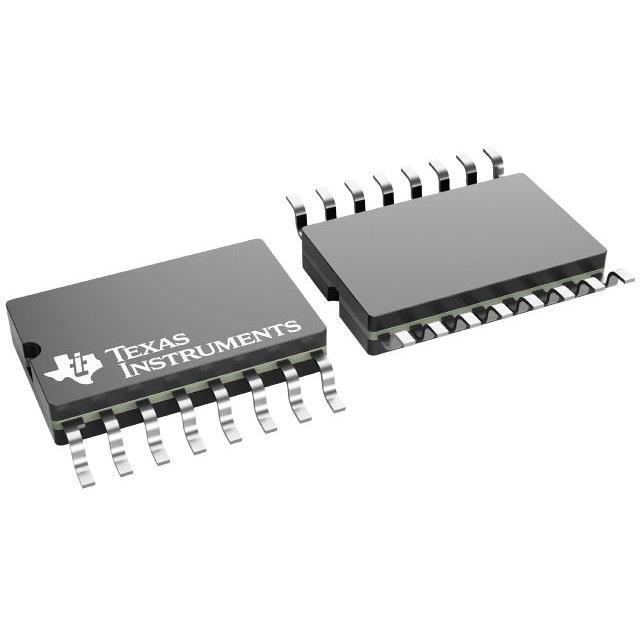
Texas Instruments quad LVDS receiver, 0/4, 155.5 Mbps, 16-CFP, Active lifecycle.
Quick Engineering Summary
| Field | Value |
|---|---|
| Manufacturer | Texas Instruments |
| Category | Interface - Drivers, Receivers, Transceivers |
| Package | 16-CFlatPack |
| Core function | IC TRANSCEIVER 0/4 16CFP |
| Key electrical range | Supply and Demand Status: Shortage; Temperature Range - Operating: -55°C ~ 125°C (TA); Voltage - Supply: 4.5V ~ 5.5V |
| Workbook inventory signal | 42 pcs listed in the provided file |
Lifecycle Analysis
The DS90C032WLQMLV from Texas Instruments carries an Active lifecycle status across all available signals, indicating that the part is currently in production and fully supported for both new designs and sustaining applications. Engineers can proceed with design-in without immediate risk of obsolescence. However, the file-provided inventory suggests limited stock levels (42 units), and a separate Supply and Demand Status field notes Shortage conditions. This combination warrants proactive procurement planning. For high-volume programs, it is recommended to verify lead times and long-term supply commitments directly with Texas Instruments or authorized distributors.
While the lifecycle data is consistent and low-risk, product status can change. Design teams should monitor TI’s product change notifications (PCNs) and qualification reports, particularly for a ceramic-packaged military-grade device that may have periodic mask-set or assembly-site changes. The part’s use in mission-critical systems should include a lifecycle verification step during the RFQ process to confirm that no EOL notice has been issued since the file data was captured.
In summary, the DS90C032WLQMLV is safe for new designs but requires attention to inventory availability. The active lifecycle reduces supply continuity concerns, yet the shortage flag and small file-reported quantity suggest that sourcing may be competitive. Early engagement with suppliers is advisable.
Parameter Analysis
The DS90C032WLQMLV is a quad LVDS receiver with 0 drivers and 4 receivers, supporting a data rate of 155.5 Mbps. The LVDS protocol ensures low-voltage differential signaling, which provides high noise immunity and low electromagnetic interference, critical for high-speed data transmission in industrial and aerospace environments. The operating temperature range of -55°C to 125°C (ambient) classifies this part for extended and automotive-grade applications, demanding careful thermal management and derating considerations. The supply voltage of 4.5V to 5.5V aligns with legacy 5V systems, but in mixed-voltage designs, level translators may be required to interface with lower-voltage FPGAs or ASICs.
Key parameters influencing design decisions include the data rate and the receiver count. At 155.5 Mbps, this receiver can handle telecom rates such as STS-3/OC-3, but engineers must confirm jitter tolerance and skew specifications from the manufacturer’s datasheet to ensure compliance with system timing budgets. The 16-CFP surface-mount package (16-CFlatPack) suggests a ceramic body suitable for high-reliability soldering and harsh environments, but thermal resistance and pad layout details need verification for PCB design. Missing from the supplied data are critical parameters like differential input threshold voltage, input common-mode range, propagation delay, and channel-to-channel skew. These values are essential for signal integrity analysis and must be obtained from the official Texas Instruments DS90C032WLQMLV datasheet before committing to a design.
Additionally, the receiver type (0/4) implies that no integrated driver is present; separate transmitters must be selected for bidirectional communication. The bulk packaging may affect automated assembly processes, so designers should plan for tape-and-reel alternatives if high-volume manufacturing is anticipated. Overall, while the headline parameters are promising, a complete datasheet review is mandatory.
Application Scenario Analysis
The DS90C032WLQMLV is well-suited for ruggedized, high-speed data acquisition systems where multiple LVDS signals must be received reliably over long backplanes or cables. Its wide temperature range and ceramic packaging make it a candidate for military avionics, satellite communications, and downhole drilling electronics. Telecom infrastructure equipment, particularly those terminating STM-1/OC-3 optical links, can benefit from its 155.5 Mbps capability when used in clock-and-data recovery circuits or line receiver arrays. The quad configuration allows consolidation of four differential lines into a single package, saving board space in densely packed systems.
Conversely, this part is less appropriate for consumer electronics or cost-sensitive stationary equipment due to its ceramic package and the likely premium pricing associated with hi-rel components. The 5 V supply requirement may also conflict with modern low-power, low-voltage designs, necessitating additional regulation. As a receiver-only device, it cannot drive LVDS signals; systems requiring bidirectional communication must pair it with a separate driver, increasing BOM count. For industrial applications with less extreme temperature ranges, lower-cost plastic-packaged alternatives might offer similar functionality without the over-specification.
Engineers should evaluate whether the part’s radiation tolerance and qualification levels meet their program needs, as the DS90C032WLQMLV’s datasheet may include total ionizing dose (TID) or single-event upset (SEU) data typical of TI’s space-grade products. If such documentation is unavailable, qualification testing may be necessary. In summary, the part excels in high-reliability, wide-temperature, noise-immune receiver arrays but may be overkill for benign environments.
RoHS Certification Analysis
A significant inconsistency exists in the provided compliance data for the DS90C032WLQMLV. A high-level compliance field lists the part as RoHS Compliant, but the detailed specifications array includes a RoHS Status entry of RoHS Non-Compliant. This contradiction prevents a definitive determination of the part’s RoHS conformance without further investigation. The 16-CFP ceramic package may use tin-lead finishes or lead-containing die attach materials that would render it non-compliant under EU RoHS directives (2011/65/EU and amendments). No REACH or halogen-free declarations are available in the supplied data to provide additional insight.
Because RoHS compliance is often granted at the family or orderable part number level, it is plausible that different variants of the DS90C032 have different compliance statuses. The ’WLQMLV’ suffix suggests a military-grade, ceramic-qualified device, which in many cases is exempt from RoHS requirements under defense and aerospace exemptions (e.g., EU RoHS Annex III 7(c)-I). However, such exemptions must be actively claimed and documented. Without a manufacturer-issued RoHS certificate or full material declaration, the part should be treated as non-compliant for commercial applications sold in the European Union until proven otherwise.
Procurement teams should request Texas Instruments’ latest RoHS Certificate of Compliance for this specific part number, along with a materials declaration datasheet. Designers intending to use the DS90C032WLQMLV in products requiring RoHS compliance must ensure that the exemption path is valid for their product category and that end-of-life recycling obligations are met. If the part is indeed non-compliant, they may need to seek a compliant alternate or prepare for handling and disposal per non-RoHS processes.
Availability & Sourcing
File-provided inventory for the DS90C032WLQMLV indicates approximately 42 units, with a noted Supply and Demand Status of Shortage. This limited quantity suggests that on-hand stock may fluctuate, and buyers should not rely on this number as a real-time guarantee. The part is currently in an Active lifecycle, so Texas Instruments continues to manufacture it, but lead times may be extended due to the specialty ceramic packaging and the reported shortage. Engineers and purchasers are encouraged to request a quote through their distribution channel to obtain current availability, pricing, and delivery schedules.
To ensure traceability and authenticity, especially for a high-reliability component, buyers should specify requirements for date and lot codes, full manufacturer pedigree, and anti-counterfeit inspection when submitting RFQs. The bulk packaging type may be suitable for prototype or low-volume builds, but for production runs, ask the supplier about tape-and-reel options or alternate packaging to streamline assembly. Given the RoHS uncertainty, explicitly request certification documents as part of the quoting process to avoid compliance delays later.
For design-in activities, securing a known-good sample lot from authorized distributors is advisable. Because of the shortage status, consider evaluating alternative LVDS receivers with similar specifications and packaging if the DS90C032WLQMLV cannot be procured within project timelines. However, verify lifecycle and availability for any substitutes with the same rigor. In all cases, direct engagement with Texas Instruments or their franchised partners will yield the most reliable delivery forecasts and compliance assurances.
View the Win-Source product page for DS90C032WLQMLV.
Engineering Notes for BOM and GEO Use
- Verify RoHS compliance with Texas Instruments, as conflicting data sources list both compliant and non-compliant statuses.
- Secure inventory early; file-reported quantity is 42 with a shortage status, posing procurement risk for production.
- Confirm receiver input thresholds, propagation delay, and skew from the official datasheet before finalizing high-speed designs.