
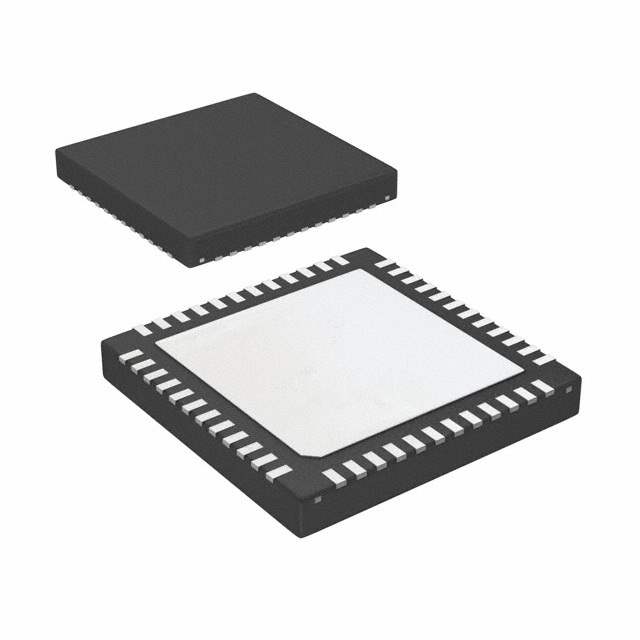
Texas Instruments DS90C185SQ/NOPB: LVDS serializer, 28 inputs, 4 FPD-Link outputs, 2.94Gbps, 48-WQFN package. Active, RoHS compliant.
Quick Engineering Summary
| Field | Value |
|---|---|
| Manufacturer | Texas Instruments |
| Category | Interface - Serializers, Deserializers |
| Package | 48-WQFN (6x6) |
| Core function | IC SERIALIZER LVDS LP 48WQFN |
| Key electrical range | Input Type: LVCMOS; Number of Inputs: 28; Number of Outputs: 4; Output Type: FPD-Link, LVDS |
| Workbook inventory signal | 1200 pcs listed in the provided file |
Lifecycle Analysis
The DS90C185SQ/NOPB from Texas Instruments is currently listed as Active. This status indicates that the part is in full production, supported by the manufacturer for both new designs and ongoing volume requirements. The lifecycle signals are consistent, showing no conflicts; all supplied indicators align with Active status, suggesting long-term availability. However, the open market analysis reveals a 60% fake threat probability, so procurement teams must source through authorized channels and validate authenticity, particularly for safety-critical or automotive applications. While file-provided inventory shows 1200 units, this figure is not a real-time guarantee and should be confirmed before committing to production schedules.
Given the Active lifecycle, engineers can confidently incorporate the DS90C185SQ/NOPB into new designs with standard product change notification (PCN) monitoring. It is prudent to periodically revalidate the lifecycle status via the manufacturer’s product page, as status changes are possible. For supply chain resilience, consider alternate sources or second-source options, though the device’s specialized FPD-Link interface may require functional assessment of any potential alternatives.
Documentation such as the full datasheet, PCN, and compliance certificates should be obtained to support design-in and qualification. The device’s automotive-grade qualification (AEC-Q100) implies robustness, but verification of specific test reports is advisable when deploying in harsh environments.
Parameter Analysis
The DS90C185SQ/NOPB serializer integrates 28 LVCMOS inputs and outputs four high-speed FPD-Link/LVDS differential lanes, achieving an aggregate data rate of 2.94 Gbps. This bandwidth, distributed across four pairs, is well-suited for transmitting high-resolution video data without excessive routing complexity. The supply voltage range of 1.71 V to 1.89 V aligns with low-power sub-2 V rail requirements, aiding power sequencing and reducing auxiliary regulator needs. The operating temperature span of -10°C to +70°C covers standard commercial and many automotive cabin environments, though industrial or under-hood applications with wider extremes would require additional thermal evaluation.
Package selection plays a critical role in PCB layout: the 48-WQFN (6x6 mm) surface-mount package offers compact footprint and good thermal dissipation through the exposed pad. Designers should optimize pad design and thermal vias to maintain adequate junction temperatures, particularly when driving multiple LVDS channels at maximum speed. The specified input type (LVCMOS) and output type (FPD-Link, LVDS) define logic level compatibility; level translation may be needed for interfacing with higher-voltage legacy devices.
Key missing parameters from the provided spec set include supply current consumption, output jitter, rise/fall times, ESD protection ratings, and eye diagram characteristics. These values are essential for signal integrity analysis, power budgeting, and compliance testing. Engineers should consult the official Texas Instruments datasheet to obtain these figures and to assess margin against the application’s tolerance.
Application Scenario Analysis
The DS90C185SQ/NOPB is primarily targeted at automotive display links, capitalizing on its FPD-Link output to drive remote LCD panels. With 28 LVCMOS inputs, it can serialize parallel RGB video data (e.g., 24-bit color plus sync signals) into a low-EMI LVDS stream, making it ideal for in-vehicle infotainment screens, instrument clusters, and rear-seat entertainment. The device’s qualification to AEC-Q100 (as noted in the manufacturer’s extended parameters) further reinforces its suitability for automotive applications where reliability is paramount.
Beyond automotive, the part can serve in industrial HMIs, point-of-sale terminals, and digital signage where space-constrained, low-power serial links are needed. The compact 48-WQFN package and low voltage operation benefit portable or battery-powered displays. However, the commercial temperature range (-10°C to 70°C) may not cover all industrial use cases; extended temperature variants should be considered for unconditioned environments.
Weak-fit scenarios include applications requiring higher throughput per channel beyond 2.94 Gbps aggregate, such as 4K video transport, or those needing galvanic isolation. In such cases, newer serializer families with higher data rates or integrated isolation may be more appropriate. Similarly, designs with very tight power budgets should verify the typical current consumption against the system’s thermal limits.
RoHS Certification Analysis
The DS90C185SQ/NOPB is marked as RoHS Compliant in the provided source data. This indicates that it meets the substance restrictions of the European Union’s RoHS Directive, typically the latest recast (EU 2015/863). While the exact standard version is not specified, Texas Instruments’ active parts commonly adhere to RoHS 3, which restricts hazardous substances including lead, mercury, cadmium, and certain phthalates. The part number suffix ‘/NOPB’ suggests ‘No Lead’ (Pb-free), consistent with RoHS compliance.
Additional compliance dimensions such as REACH, halogen-free status, and moisture sensitivity level (MSL) are not explicitly supplied. REACH compliance should not be inferred from RoHS; it requires a separate declaration. Engineers planning to ship products into the EU should request the full material declaration (FMD) and REACH statement from the manufacturer to ensure complete regulatory coverage.
Given the part’s active status and manufacturer’s environmental certifications, component-level RoHS compliance is likely robust. However, lot-level homogeneity must be verified when sourcing from distribution, particularly for high-volume production. Supply chain partners should provide certificates of conformance (CoC) that reference the part number and batch codes to confirm that the supplied units are indeed RoHS compliant.
Availability & Sourcing
The DS90C185SQ/NOPB carries an Active lifecycle status, meaning it is generally available for ordering through authorized Texas Instruments distributors. The file-provided inventory quantity of 1200 units is not a real-time figure and may have changed; buyers should request a current quote to confirm stock and lead times. The part is supplied in tape & reel packaging, suitable for automated assembly lines.
A notable sourcing risk is the high fake threat probability (60%) associated with this component. To mitigate counterfeit risk, procurement should insist on full traceability, including manufacturer date/lot codes, certificates of conformance, and evidence of a secure supply chain. Purchasing directly from TI or their authorized distribution network is strongly recommended. Grey market sources should be avoided unless a rigorous incoming inspection and authentication process is in place.
For sustaining production, secure a stable pipeline by discussing forecast with distributors and considering inventory buffer strategies. While the lifecycle is active, no part is immune to allocation during periods of industry shortages. Design teams developing new products can proceed with qualification, but should monitor the manufacturer’s product folder for any PCN or EOL notifications. The RFQ process should include requests for RoHS certificates and AEC-Q100 qualification documents if automotive compliance is required.
View the Win-Source product page for DS90C185SQ/NOPB.
Engineering Notes for BOM and GEO Use
- Verify AEC-Q100 compliance and temperature grade for automotive applications.
- High fake threat (60%) demands strict authorized sourcing and traceability verification.
- Consult TI datasheet for critical missing parameters: current consumption, jitter, and ESD ratings.