
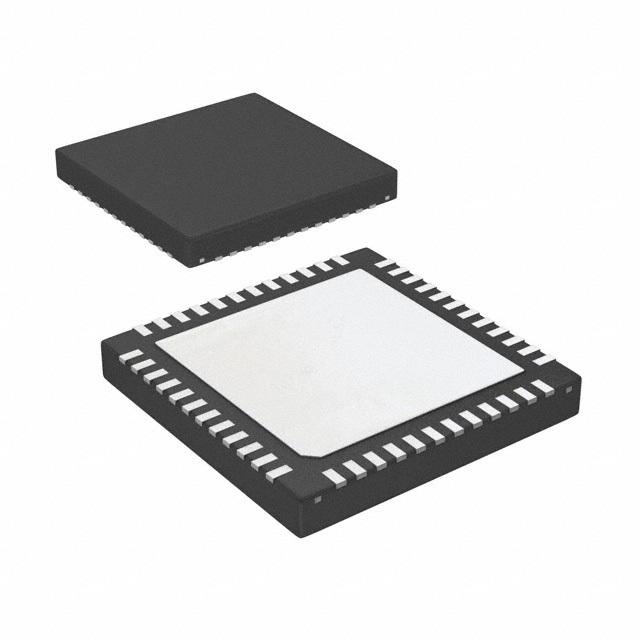
Texas Instruments LVDS Serializer – Active & RoHS Compliant
Quick Engineering Summary
| Field | Value |
|---|---|
| Manufacturer | Texas Instruments |
| Category | Interface - Serializers, Deserializers |
| Package | 48-WQFN (6x6) |
| Core function | IC SERIALIZER LVDS LP 48WQFN |
| Key electrical range | Input Type: LVCMOS; Number of Inputs: 28; Number of Outputs: 4; Output Type: FPD-Link, LVDS |
| Workbook inventory signal | 1810 pcs listed in the provided file |
Lifecycle Analysis
The DS90C185SQE/NOPB from Texas Instruments is currently marked Active by the manufacturer, with all available lifecycle signals in agreement. This classification indicates full support for new designs and ongoing production, making it a safe insertion for programs that will continue into the mid-term future. Design teams can approach qualification with confidence, though it remains best practice to periodically review the manufacturer’s product life cycle notifications, as an Active status can change.
For procurement, an Active status means parts are likely readily available through authorized distribution channels. The source data shows a file-provided inventory figure of 1810 units; however, this is not a real-time stock guarantee and should be verified during quoting. No lifecycle conflicts were noted, so we assess the risk level as low. Sustaining production buyers should still request a current lead-time estimate and volume availability confirmation when planning for extended manufacturing runs.
Parameter Analysis
Key parameters for the DS90C185SQE/NOPB serializer center on its data throughput and I/O configuration. The 2.94Gbps maximum data rate enables high-resolution video transmission over LVDS links, but engineers must ensure that the signal integrity and PCB trace design are sufficient to maintain this rate across temperature and voltage variations. The device accepts 28 LVCMOS inputs and serializes them into 4 FPD-Link/LVDS outputs, which suits applications where parallel bus width reduction is needed.
The operating voltage range is narrow at 1.71 V to 1.89 V, so careful power supply design and decoupling are essential to avoid noise-induced data errors. The commercial temperature range (-10°C to 70°C) limits its use to non-automotive or non-industrial environments unless additional qualification is performed. The 48-WQFN surface-mount package (6x6 mm) demands proper thermal management and solder profile control. Missing from the provided data are current consumption figures, ESD ratings, and detailed timing specifications; these should be obtained from the official Texas Instruments datasheet to complete a thorough design review.
Application Scenario Analysis
The DS90C185SQE/NOPB is best suited for commercial display interfaces, such as notebook or monitor panels, where it can reduce cabling and connector size by converting wide parallel RGB data into compact LVDS streams. Its 2.94Gbps aggregate bandwidth can handle resolutions like 1920×1200 at 60 Hz, assuming appropriate pixel clock mapping. The device also fits well in digital signage, point-of-sale terminals, and medical imaging equipment that operates within standard office temperature ranges.
Conversely, the part is less ideal for extreme environments: the 70°C upper limit precludes direct use in automotive cabin systems or outdoor kiosks without additional cooling or qualification. However, if the part carries AEC-Q100 certification (as suggested by some raw data fields), it may have been tested for reliability, but the temperature grade remains a limiting factor. Designers considering automotive or industrial applications should verify the exact qualification status and temperature capability directly with Texas Instruments.
RoHS Certification Analysis
The DS90C185SQE/NOPB is listed as RoHS Compliant, which supports its use in products destined for the European Union and other regions that restrict hazardous substances. The supplied data does not specify the exact RoHS directive version (e.g., 2011/65/EU or 2015/863), so procurement teams should request a certificate of compliance (CoC) to confirm conformity to the latest EU RoHS requirements and to clarify whether any exemptions apply.
Although the part number suffix ‘NOPB’ (No Lead / No Pb) is a Texas Instruments indicator of lead‑free terminations, this does not automatically guarantee full RoHS compliance across all homogeneous materials. For high‑volume purchasing, it is advisable to verify the MSL (Moisture Sensitivity Level) and any halogen‑free claims via the manufacturer’s official documentation. REACH status is not provided here and must be evaluated separately when required for end‑product declarations.
Availability & Sourcing
Procurement of the DS90C185SQE/NOPB benefits from its Active lifecycle status and moderate market popularity. The source workbook indicates a quantity of 1810 units; however, these figures are file‑provided and not a live inventory guarantee. Buyers should request a formal quotation to secure current stock and lead time, especially if long‑term production is planned.
The device is supplied in tape‑and‑reel (TR) packaging suitable for automated assembly, with a recommended storage condition of dry and humidity‑protected environments. Given the part’s 47% open‑market counterfeit threat rating, traceability and authorized distribution should be prioritized. Requesting date/lot codes, certificates of conformance, and performing visual or electrical inspection upon receipt are prudent steps. Since lifecycle status is Active, the focus should be on competitive sourcing while maintaining quality; consider negotiating buffer stock agreements for production continuity.
View the Win-Source product page for DS90C185SQE/NOPB.
Engineering Notes for BOM and GEO Use
- Verify the 2.94Gbps LVDS signal integrity and PCB layout rules from the datasheet to avoid link failures at full data rate.
- Check the power supply design: 1.71V–1.89V core voltage requires a clean, stable rail; transient noise can corrupt serialization.
- Confirm AEC‑Q100 qualification with Texas Instruments if the design targets automotive applications, as it is not a listed specification here.