
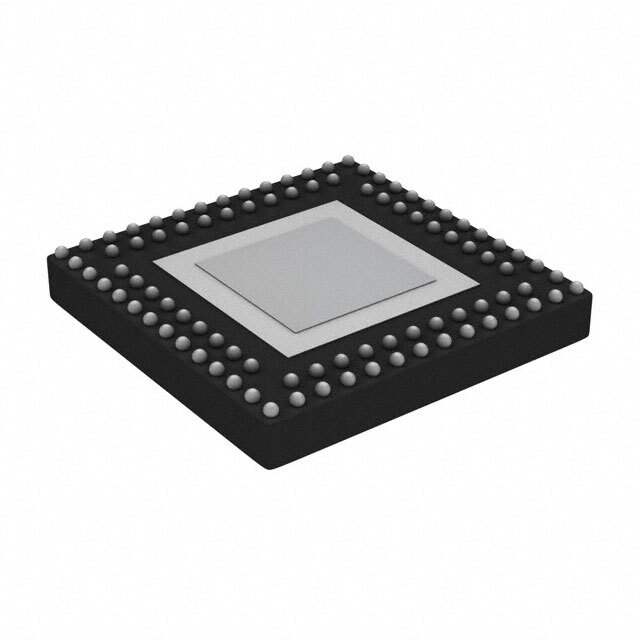
Technical specifications, lifecycle analysis, and procurement guidance for the Texas Instruments DS90C187LF/NOPB automotive LVDS serializer.
Quick Engineering Summary
| Field | Value |
|---|---|
| Manufacturer | Texas Instruments |
| Category | Interface - Serializers, Deserializers |
| Package | Tape & Reel |
| Core function | IC SERIALIZER DL LVDS LP 92QFN |
| Key electrical range | Input Type: LVCMOS; Number of Inputs: 53; Number of Outputs: 8; Output Type: FPD-Link, LVDS |
| Workbook inventory signal | 2059 pcs listed in the provided file |
Lifecycle Analysis
The DS90C187LF/NOPB is listed as Active by Texas Instruments, with no conflicting signals from any lifecycle source. This status indicates the part is in full production and recommended for new designs. Engineers can integrate this serializer into upcoming projects with confidence, as the manufacturer continues to supply and support the device.
For sustaining production, an Active lifecycle minimizes supply disruption risks, but procurement teams should still monitor any product change notifications (PCNs) or end-of-life notices. The file-provided inventory quantity of 2059 units suggests current availability in the channel, though this is not a real-time guarantee and should be validated with a quote.
Given the automotive AEC-Q100 qualification, design cycles are long, so confirming long-term availability directly with Texas Instruments is advised for programs extending beyond typical automotive production lifetimes.
Parameter Analysis
Key parameters for the DS90C187LF/NOPB center on its serializer function: 53 LVCMOS inputs to 8 FPD-Link/LVDS outputs at 5.57Gbps data rate. This makes it suitable for high-bandwidth video aggregation in automotive infotainment or camera systems. The supply voltage range of 1.71V—1.89V requires a stable, low-noise rail, and the operating temperature range of -10°C to 70°C confines use to cabin or moderate industrial environments.
The 92-VQFN-MR (7x7) dual-row, exposed-pad package demands careful PCB layout for thermal management and signal integrity—particularly for LVDS traces. The part’s AEC-Q100 grade indicates extended qualification for automotive reliability, but engineers should verify parameters such as jitter performance, power consumption, and eye diagram compliance against their specific requirements, as these are not detailed in the provided summary.
Missing datasheet details that require review include input hysteresis levels, output current drive strength, and ESD ratings. The standard package of 1,000 pieces on tape and reel suits automated production, but sample availability should be checked for prototyping.
Application Scenario Analysis
The DS90C187LF/NOPB is a strong fit for automotive display or camera links where LVCMOS camera data must be serialized to LVDS for transmission over twisted-pair cables. Typical use cases include surround-view systems, rear-seat entertainment, and instrument cluster video interfaces. Its AEC-Q100 qualification supports use in passenger vehicle environments, though the 70°C maximum operating temperature may limit deployment near engine or exhaust components.
Industrial machine vision or medical imaging systems that require LVDS transmission with high input count can also utilize this part, provided the ambient temperature stays within range. The 53-channel input count allows aggregation of multiple parallel video streams, reducing connector count and wire harness weight.
The part is a weak fit for applications requiring only a few serialized channels, as its high input count and VQFN package may be overkill. Similarly, designs needing differential inputs (e.g., LVDS inputs) would require a different device. Designers should confirm that the LVCMOS input standard aligns with their source drivers’ output levels.
RoHS Certification Analysis
Texas Instruments reports the DS90C187LF/NOPB as RoHS Compliant, which typically aligns with RoHS 3 (EU 2015/863) requirements. The REACH Status is listed as Unaffected, indicating no SVHC concerns in the current bill of materials. Additionally, the moisture sensitivity level is MSL 3, meaning the device requires proper storage and a 168-hour floor life after opening the dry pack.
While these compliance declarations apply at the part family level, actual lot-level compliance should be verified through the distributor’s certificate of conformance. For high-reliability sectors such as automotive or medical, requesting full material declarations is prudent. No exemptions are noted, but the absence of explicit exemption documentation means users should assume none are claimed unless otherwise stated.
Note that REACH Unaffected does not replace RoHS certification; both standards must be independently validated. The part number suffix /NOPB indicates lead-free finish, which supports RoHS compliance.
Availability & Sourcing
The DS90C187LF/NOPB is an active production part, so procurement can follow standard RFQ processes. File-provided workbook quantity of 2059 units suggests availability, but it is not a real-time stock position—buyers should request a quote to confirm current inventory levels, lead times, and factory commitments.
Given the reported 65% fake threat in the open market, sourcing through authorized Texas Instruments distributors is strongly recommended to ensure traceability and genuine components. Request full documentation including date/lot codes, certificates of conformance, and RoHS/REACH declarations with each shipment. Packaging is tape and reel, with a standard quantity of 1,000 pieces per reel, suitable for volume production.
For engineers evaluating the part, requesting samples or evaluation modules from TI and verifying package authenticity upon receipt are essential steps. No substitute or drop-in replacement is indicated in the source data, so if the DS90C187LF/NOPB becomes unavailable, a cross-reference search would be required based on the specific interface requirements.
View the Win-Source product page for DS90C187LF/NOPB.
Engineering Notes for BOM and GEO Use
- AEC-Q100 qualification makes it suitable for automotive camera and display links, but the -10°C to 70°C operating range limits use to passenger cabin or non-extreme environments.
- Verify jitter and signal integrity margins in your layout because the 5.57Gbps data rate demands controlled impedance for the LVDS pairs.
- MSL 3 requires baking if the package is exposed to ambient conditions beyond 168 hours—plan handling accordingly.