
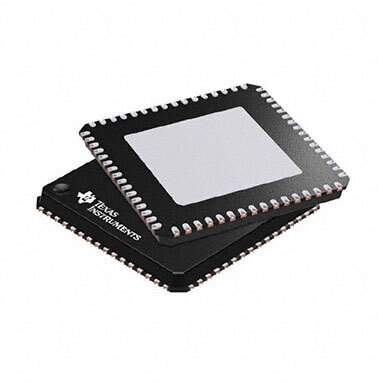
Automotive-grade serializer with LVCMOS input and LVDS output, AEC-Q100 qualified, RoHS compliant.
Quick Engineering Summary
| Field | Value |
|---|---|
| Manufacturer | Texas Instruments |
| Category | Interface - Serializers, Deserializers |
| Package | Tape & Reel (TR) |
| Core function | INTERFACE IC MISC |
| Key electrical range | Input Type: LVCMOS; Output Type: LVDS; Temperature Range - Operating: -40°C ~ 115°C; Voltage - Supply: 1.71V ~ 1.89V |
| Workbook inventory signal | 11600 pcs listed in the provided file |
Lifecycle Analysis
The DS90C189TWRTDTQ1 is reported as active with no conflicting signals, indicating full manufacturer support and ongoing production. This status is suitable for both new design-ins and volume procurement for sustaining programs.
For automotive-qualified components, active status typically implies a long product life, but it remains prudent to verify the specific product change notification (PCN) and end-of-life (EOL) policy directly with Texas Instruments. The AEC-Q100 qualification suggests the device is intended for vehicle applications where lifecycles often extend beyond a decade.
A file-provided inventory snapshot indicates 11,600 units on hand, but real-time stock must be confirmed at the time of ordering. No NRND or discontinuation notices were found, so buyers can proceed with confidence for both prototyping and production, provided they source through authorized channels to mitigate counterfeit risk.
Parameter Analysis
The DS90C189TWRTDTQ1 functions as a serializer with LVCMOS input and LVDS output. Key specification highlights include supply voltage range (1.71V to 1.89V), operating temperature (-40°C to 115°C), and automotive qualification (AEC-Q100). The narrow supply tolerance demands careful regulator design, while the wide temperature range supports harsh environments.
Missing from the supplied data are critical parameters such as maximum data rate, number of input channels, and channel configuration. These directly affect compatibility with video or data pipelines. The LVDS output typically offers high noise immunity and low EMI, essential for automotive infotainment and camera systems. The 64-VQFN (9x9) package with exposed pad implies thermal management considerations; verify junction-to-ambient resistance and recommended PCB layout from the datasheet.
The 54% open-market fake threat rate underscores the importance of verifying parametric performance through sample testing or sourcing only from authorized distributors. Additional specifications like jitter, bit error rate, and ESD ratings must be retrieved from the full datasheet to complete a design-in assessment.
Application Scenario Analysis
The DS90C189TWRTDTQ1 is designed for automotive serializer applications where an LVCMOS parallel bus is converted to a high-speed LVDS serial stream. Strong-fit scenarios include automotive infotainment head units, instrument clusters, rear-seat entertainment, and camera module interconnects. Its AEC-Q100 qualification and extended temperature range make it suitable for on-vehicle use.
Potential weak-fit scenarios arise if the data rate (unverified) is insufficient for high-resolution video above 1080p or for multi-megapixel camera sensors that require multi-gigabit throughput. In such cases, a higher-speed serializer from the same family may be needed. Additionally, industrial applications with less stringent temperature requirements could use this part, but cost optimization might favor a non-automotive variant.
Before committing, engineers should match the serializer’s timing, channel count, and encoding scheme with the chosen deserializer and ensure compatibility with the intended display or processing interface. The absence of a specified data rate in the provided sourcing data means a full datasheet review is mandatory for any application requiring precise bandwidth calculations.
RoHS Certification Analysis
The DS90C189TWRTDTQ1 is declared RoHS Compliant according to the supplied data, and the REACH status is listed as REACH Unaffected. This indicates the component meets current EU directives for hazardous substance restrictions, which is essential for selling into European markets.
However, the data does not specify which version of RoHS (e.g., RoHS 3, 2015/863) or provide exemptions. For complete regulatory assurance, request the full material declaration and RoHS certificate from the manufacturer. MSL Level 3 (168 hours) is reported, which requires adherence to moisture-sensitive handling procedures during board assembly. No halogen-free claim is included, so if low-halogen compliance is required, additional confirmation is needed.
Because RoHS compliance is often determined at the lot level, each shipment should be accompanied by a certificate of conformance. This is particularly relevant for automotive supply chains where documentation is rigorously audited.
Availability & Sourcing
The DS90C189TWRTDTQ1 is currently available in a tape and reel package with a standard package quantity of 250 units. A file-provided inventory quantity of 11,600 units suggests reasonable stock levels, but this is not a real-time figure and must be verified through a quote request.
Given the 54% open-market counterfeit threat, sourcing strictly through authorized Texas Instruments distributors or directly from the manufacturer is strongly recommended. Request traceability documentation, including date/lot codes and RoHS compliance certificates, with every order.
As an active part, the standard procurement workflow applies: submit an RFQ, confirm current lead times and pricing (prices not available in this guide), and arrange logistics. For automotive programs, consider placing a scheduled order to secure long-term allocation. Should lifecycle changes occur, Texas Instruments typically issues PCNs, so stay subscribed to manufacturer alerts. For immediate needs, contact your preferred supplier to verify stock and negotiate terms.
View the Win-Source product page for DS90C189TWRTDTQ1.
Engineering Notes for BOM and GEO Use
- Verify MSL Level 3 handling requirements before reflow to avoid moisture-induced defects.
- Confirm LVDS output compliance with target receiver specifications for automotive display applications.
- Monitor lifecycle status due to 54% fake threat in open market; source from authorized distribution.