
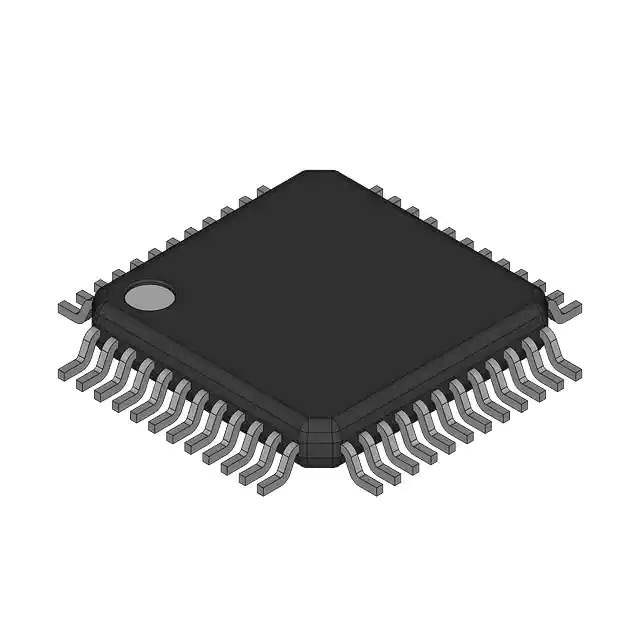
Active automotive serializer with 840Mbps FPD-Link II output, 24 LVCMOS inputs, -40°C to 105°C range.
Quick Engineering Summary
| Field | Value |
|---|---|
| Manufacturer | National Semiconductor (TI) |
| Category | Interface - Serializers, Deserializers |
| Package | Bulk |
| Core function | LINE DRIVER, 1 FUNC, 24 DRIVER, |
| Key electrical range | Input Type: LVCMOS; Number of Inputs: 24; Number of Outputs: 1; Output Type: FPD-Link II, LVDS |
| Workbook inventory signal | 10300 pcs listed in the provided file |
Lifecycle Analysis
The DS90C241IVS is confirmed Active across all checked lifecycle signals—Excel parameter, product status, and lifecycle status all agree. This alignment supports its use in both new designs and ongoing production without immediate risk of obsolescence. The part’s AEC-Q100 automotive qualification further indicates a managed, extended-lifetime product typically supported by Texas Instruments’ longevity programs.
From a procurement perspective, the Active status allows standard lead-time planning and volume ordering. Nevertheless, engineers and buyers should periodically revalidate the lifecycle through TI’s official product page or distributor alerts, as semiconductor market conditions can shift. The provided workbook inventory figure of 10,300 units is a file-based snapshot that does not reflect real-time stock; always confirm current availability and factory lead times when planning production ramps.
Parameter Analysis
Key parameters for the DS90C241IVS guide both electrical integration and system-level performance. The device aggregates 24 parallel LVCMOS inputs into a single differential FPD‑Link II/LVDS output, slashing cable and connector count in automotive and industrial video links. With an 840 Mbps data rate, it supports high-resolution imaging or sensor data streams, but designers must budget for signal integrity over the target transmission distance—eye‑diagram analysis and proper LVDS termination are essential.
The 3V to 3.6V supply range and -40°C to +105°C operating temperature make it suitable for harsh environments, but thermal derating and power-supply decoupling should follow the datasheet recommendations. The 48‑TQFP surface‑mount package (7×7 mm) demands careful layout for controlled‑impedance traces. Missing from the provided specifications are output swing, random jitter, and channel‑to‑channel skew; these must be extracted from the full datasheet to guarantee compliance with the receiving deserializer’s timing budget.
Application Scenario Analysis
The DS90C241IVS fits naturally in automotive video and sensor aggregation systems. Typical use cases include surround‑view cameras, rear‑seat entertainment, or ADAS sensor hubs where multiple parallel video sources are serialized onto a single coax or STP cable using the FPD‑Link II protocol. Its AEC‑Q100 qualification and wide temperature range reinforce its suitability for passenger‑vehicle and heavy‑equipment deployments.
Beyond automotive, the part can serve industrial machine vision, high‑speed data acquisition, and medical imaging where 24‑bit parallel data must be transmitted with minimal latency. It is less appropriate for applications requiring ultra‑low standby power (no sleep‑mode spec provided) or where a dissimilar output standard such as HDMI or MIPI is needed. In those cases, an alternative interface IC would be required.
RoHS Certification Analysis
The DS90C241IVS is documented as RoHS Compliant, indicating that it meets the requirements of the EU Restriction of Hazardous Substances directive in its current revision. For most procurement workflows, this global trade status is sufficient to begin sourcing, but a formal certificate of conformity should be requested from the distributor or manufacturer for your specific lot.
Important nuances exist: RoHS compliance is typically a family‑level declaration; individual production lots can vary. Automotive-grade components sometimes employ exemptions such as lead‑based die‑attach or solder finishes for reliability. Although no exemptions are listed here, buyers should explicitly ask about any active exemptions that might affect end‑equipment RoHS declarations. REACH data is not available; a separate inquiry is advised if SVHC reporting is required.
Availability & Sourcing
The DS90C241IVS remains an Active product, and initial RFQ‑based sourcing is the recommended next step. The provided workbook shows 10,300 units, but this is a non‑binding snapshot; contact an authorized distributor to obtain current on‑hand stock, factory lead times, and date‑code provenance. Request a quote that includes RoHS compliance documentation and traceability options such as lot codes or date stamps.
Standard packaging is bulk (74 pieces per standard package), but high‑volume users may require tape‑and‑reel; confirm packaging availability when quoting. Verify that the life‑cycle status has not changed since the last data update. For automotive production, ask about PPAP documentation and long‑term supply agreements. Engaging early with TI or its franchised partners ensures volume allocation and reduces re‑work later.
View the Win-Source product page for DS90C241IVS.
Engineering Notes for BOM and GEO Use
- Verify data eye diagram and jitter performance for 840Mbps over your target cable length; design for LVDS termination impedance.
- Account for automotive temperature range (-40°C to 105°C) in thermal analysis and ensure supply rail stability under 3.3V nominal.
- Confirm equipment availability in production packaging (Tape & Reel if needed, although standard package is 74 pcs bulk); request a quote for current stock levels.