
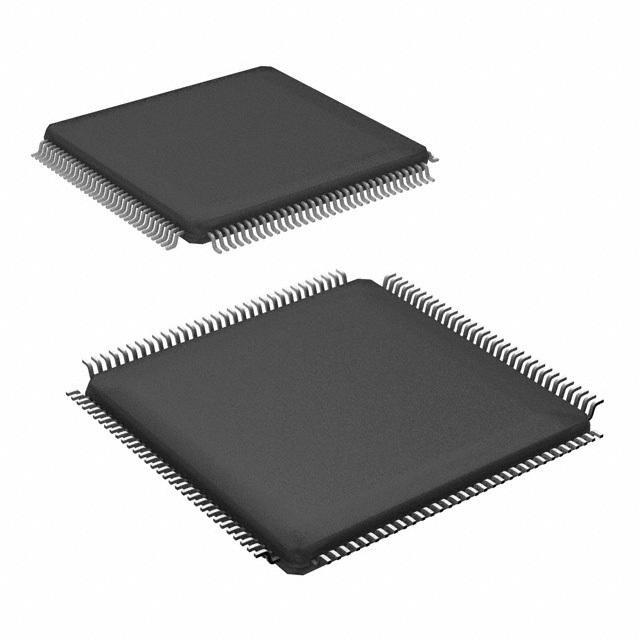
EOL FPD-Link LVDS driver with 945Mbps, 10 drivers, 128-TQFP; verify last-time buy and migration
Quick Engineering Summary
| Field | Value |
|---|---|
| Manufacturer | Texas Instruments |
| Category | Interface - Drivers, Receivers, Transceivers |
| Package | 128-TQFP (14x14) |
| Core function | IC TRANSCEIVER 10/0 128TQFP |
| Key electrical range | Operating Supply Voltage: 3.15 V ~ 3.6 V; Operating Temperature Range: 0°C ~ 70°C; Supply and Demand Status: Balance |
| Workbook inventory signal | 2180 pcs listed in the provided file |
Lifecycle Analysis
The DS90C3201VS/NOPB is confirmed end-of-life by Texas Instruments, with an estimated last-time-buy date in 2029. Using an EOL part in new designs carries high risk, as manufacturer support, documentation updates, and long-term availability are no longer guaranteed. Engineers should immediately transition to the recommended replacement and avoid committing this component to upcoming products.
For existing production lines, securing sufficient inventory through a last-time buy is critical. The provided file shows a quantity of 2180 units, but this is not a real-time guarantee. Buyers must confirm current availability and negotiate delivery terms directly. Relying on spot-market purchases after official supply ends exposes projects to counterfeit and pricing risks.
All available lifecycle signals align on EOL status. Nevertheless, it is prudent to request a formal product change notification (PCN) or similar documentation from Texas Instruments to validate the timeline and any exceptions. Plan your migration path now to avoid production interruptions.
Parameter Analysis
The DS90C3201VS/NOPB operates as a 10-lane driver, sending parallel data over FPD-Link/LVDS at 945Mbps. This data rate supports high-resolution video transmission, making the part suitable for applications requiring synchronized pixel transport. The 3.15V to 3.6V supply voltage range is typical for LVDS signaling, but careful decoupling and layout are necessary to maintain signal integrity.
The commercial temperature range of 0°C to 70°C limits deployment to indoor or climate-controlled environments. The 128-TQFP package with 14x14mm body is well suited for SMD assembly, but thermal management should consider the high-speed switching nature of 10 drivers operating concurrently.
Missing from the available data are critical timing parameters such as channel-to-channel skew, propagation delay, and jitter performance. These must be extracted from the official Texas Instruments datasheet to qualify the part for your specific timing budget. Also verify pad layout and land pattern compatibility with your PCB design.
Application Scenario Analysis
With its FPD-Link protocol and 10-driver architecture, the DS90C3201VS/NOPB is engineered for high-speed video interfaces, particularly in automotive infotainment, industrial cameras, and display connections. It serializes parallel video data for transmission over differential pairs, reducing wiring and PCB complexity.
This part is a driver only (10 transmitters, 0 receivers), so it cannot operate as a transceiver. It is best paired with a compatible FPD-Link deserializer. The 945Mbps rate suits 24-bit color depth at resolutions such as 1280x800 at 60Hz, but systems demanding higher refresh rates or resolutions should verify headroom.
Applications that do not require the full lane count or high speed may consider lower-cost alternatives. Also, this device is not suited for bidirectional communication or protocols other than FPD-Link/LVDS. Always validate the complete signal chain, including cable and connector performance, to ensure link robustness.
RoHS Certification Analysis
Texas Instruments states the DS90C3201VS/NOPB is RoHS compliant, and it is also noted as halogen free. These designations apply to the component family when packaged in 128-TQFP. While the RoHS status is documented as compliant, the exact directive version (e.g., EU 2015/863) is not specified; buyers should confirm that compliance covers the latest restrictions, including lead, mercury, and phthalates.
No REACH declaration is provided in the source data. REACH compliance covers different substances and is not interchangeable with RoHS. If REACH is required for your market, request a separate compliance statement.
Since this is an EOL part, lot-level variation in material composition cannot be ruled out entirely. When sourcing, always request the current RoHS certificate and, if possible, a declaration of conformity for the specific date/lot codes you receive. This is especially important when dealing with inventory that may have been manufactured years earlier.
Availability & Sourcing
The DS90C3201VS/NOPB is an end-of-life component, so availability is constrained to existing stock. The file-driven quantity of 2180 units is a snapshot, not a live inventory count. To obtain current pricing and stock, submit a request for quotation (RFQ) and specify your required quantity, target date, and acceptable packaging. The part is typically shipped in trays, stored in dry conditions with humidity protection.
Open-market risk is elevated: a 60% fake threat percentage suggests counterfeit concerns. Procure only through authorized or traceable sources. Request lot codes, date codes, and original manufacturer packaging to verify authenticity. Insist on full re‑reeling documentation if tape‑and‑reel conversion is needed.
Given the EOL status, your sourcing strategy should concentrate on a single, reliable purchase of remaining inventory rather than piecemeal procurement. Validate RoHS and halogen-free certificates with each shipment, and plan your in‑house inspection process to detect non‑conforming parts before they reach the production line.
View the Win-Source product page for DS90C3201VS/NOPB.
Engineering Notes for BOM and GEO Use
- Verify lifecycle and last-time buy window directly with TI before committing to new production.
- Design substitutes should match FPD-Link protocol and 10-driver lane configuration for drop-in compatibility.
- Inspect incoming lots for RoHS and halogen-free compliance certificates, especially given 60% counterfeit risk.