
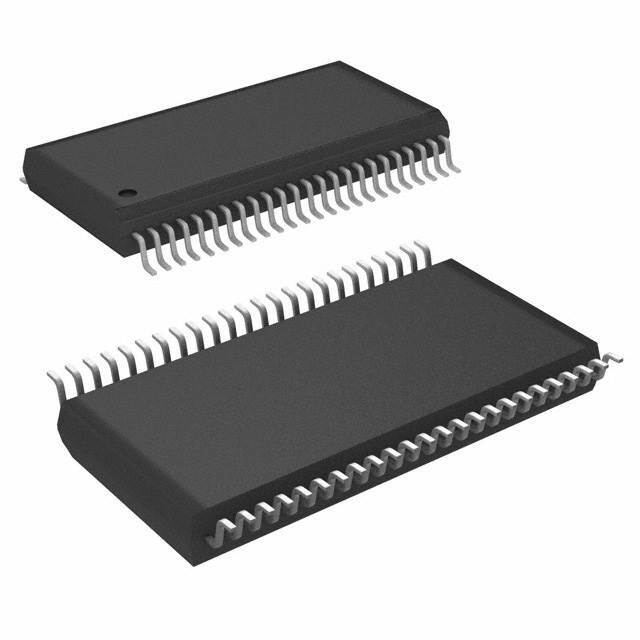
A detailed analysis of lifecycle, key parameters, applications, RoHS compliance, and procurement guidance for engineers and buyers.
Quick Engineering Summary
| Field | Value |
|---|---|
| Manufacturer | Texas Instruments |
| Category | Interface - Specialized |
| Package | Tube |
| Core function | IC INTERFACE SPECIALIZED 48TSSOP |
| Key electrical range | Voltage - Supply: 3V ~ 3.6V |
| Workbook inventory signal | 1 pcs listed in the provided file |
Lifecycle Analysis
The DS90C363MTD/NOPB currently shows conflicting lifecycle indications. The Lifecycle Status is listed as Active, but the Product Status is explicitly Not For New Designs. Additionally, an Excel parameter states '不适用于新设计' (not for new design). This contradiction forces a conservative interpretation: the part should be treated as NRND (Not Recommended for New Designs).
For engineers, this means the DS90C363MTD/NOPB is unsuitable for new product introductions. Using it in new designs risks obsolescence during the product life cycle. For existing sustaining production, it may still be available, but the procurement team must verify the manufacturer's roadmap and secure long-term inventory.
Given the medium risk level, any commitment to this part should include a formal PCN (Product Change Notification) review and a last-time-buy plan if the device moves to EOL. Relying on distributor stock alone is not sufficient; always cross-check with Texas Instruments' official product page.
Parameter Analysis
The most decision-relevant parameters from the provided data are the supply voltage range of 3V to 3.6V, the 48-TSSOP surface-mount package, and the classification as an Interface – Specialized device. The narrow voltage band suggests tightly regulated 3.3V rails are required, and the TSSOP package influences PCB footprint, thermal dissipation, and assembly yield.
Critical electrical characteristics such as interface protocol, number of channels, signaling rate, and ESD rating are missing from the summary. The DS90C363 often belongs to a family of LVDS transmitters; however, without confirming the datasheet, assumptions cannot be made. Missing specifications must be verified to ensure compatibility with the target design's signal integrity requirements.
For a robust design, engineers should obtain the full datasheet to check timing diagrams, output compliance, and power sequencing. Thermal derating should be considered, especially in enclosed designs, and the MSL Level 2 requires careful bake-out if the moisture barrier is breached.
Application Scenario Analysis
The Interface – Specialized category and 48-TSSOP form factor suggest the DS90C363MTD/NOPB is typically used in high-speed digital video or data transmission applications, such as LCD panel interfaces, industrial cameras, or medical imaging displays. Its 3.3V operation and surface-mount design suit space-constrained embedded systems.
Strong-fit scenarios include applications originally designed around the DS90C363 where a drop-in compatible footprint and voltage range are mandatory. Weak-fit scenarios would be high-data-rate applications exceeding the typical LVDS limits of similar devices, unless the datasheet confirms otherwise. Without protocol details, the part should not be assumed interchangeable with other interface ICs.
Designers considering this part for a new application should first confirm that the features match the required data mapping and link configuration. For applications requiring automotive qualification, the absence of an AEC-Q100 rating means additional testing would be necessary.
RoHS Certification Analysis
The DS90C363MTD/NOPB is marked as RoHS Compliant according to the supplier data. It is also REACH Unaffected, which covers separate but complementary chemical regulations. The EU RoHS directive (2011/65/EU and amendment 2015/863) restricts hazardous substances, and this compliance generally indicates lead-free terminations and materials.
No specific exemptions are noted in the provided information. However, many interface ICs may contain lead as an exemption under 7(b) or 7(c)-I; engineers should verify the actual exemption list from the manufacturer's certification. The REACH Unaffected status confirms that the part does not contain Substances of Very High Concern above threshold.
MSL Level 2 (1 Year floor life) is a moisture sensitivity rating, not a RoHS parameter, but it impacts solderability and must be managed during production. For procurement, request a certificate of compliance for each shipment to ensure lot-level conformity to RoHS requirements.
Availability & Sourcing
The DS90C363MTD/NOPB is listed as Not For New Designs, so availability is likely constrained. File-based inventory data indicates a quantity of 1 unit, but this is not real-time. Standard packaging is tube, with 38 pieces per tube. For volume procurement, an RFQ (Request for Quote) is essential to determine current stock, lead time, and pricing without implying any specific price.
Due to the NRND status, buyers should evaluate a last-time-buy strategy and negotiate with authorized distributors for scheduled deliveries. Always verify the date and lot codes to avoid aged inventory that may exceed MSL floor life. The 33% fake threat probability in the open market underscores the need to source through authorized channels and request traceability documentation.
Compliance documentation such as RoHS, REACH, and MSL certificates should accompany each shipment. If this part is critical for a sustaining program, Texas Instruments may offer a limited-time purchase window; direct engagement with the manufacturer is recommended. Do not commit to new production use without first confirming the part’s ongoing status.
View the Win-Source product page for DS90C363MTD/NOPB.
Engineering Notes for BOM and GEO Use
- Treat lifecycle as NRND; do not design into new products without explicit manufacturer confirmation of future availability.
- Datasheet verification is essential for interface protocol, channel count, and maximum data rate, which are absent from the provided summary.
- Factor in MSL 2 handling and 33% open-market counterfeit risk when planning assembly and sourcing.