
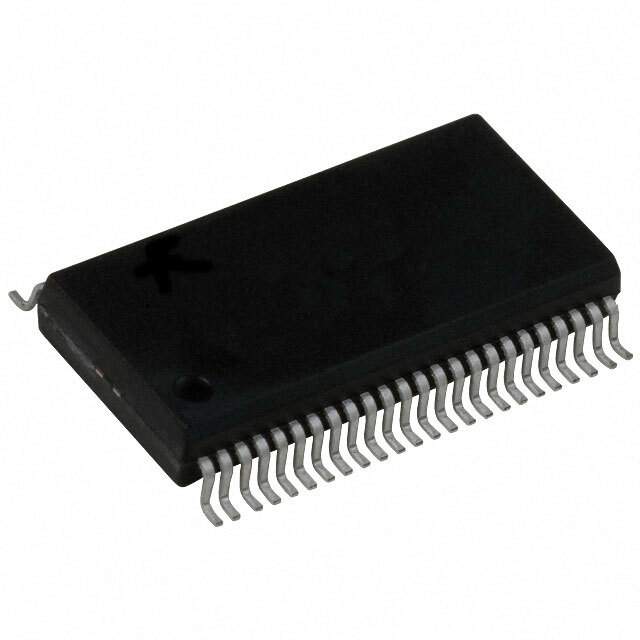
FPD-Link LVDS Transceiver Sourcing Guide – 1.785 Gbps, 48-TSSOP
Quick Engineering Summary
| Field | Value |
|---|---|
| Manufacturer | Texas Instruments |
| Category | Interface - Drivers, Receivers, Transceivers |
| Package | 48-TSSOP |
| Core function | IC TRANSCEIVER 4/0 48TSSOP |
| Key electrical range | Supply and Demand Status: Balance; Supply Voltage - Operating: 3 V to 3.6 V; Temperature Range - Operating: -10°C to 70°C |
| Workbook inventory signal | 8060 pcs listed in the provided file |
Lifecycle Analysis
The lifecycle status of the DS90C365AMT/NOPB presents a conflict: while the component specification lists the status as Active, the lifecycle data source indicates Unknown. This discrepancy is significant for procurement engineering, as an Unknown status carries medium risk. Any new design-in or production commitment should be preceded by direct verification with Texas Instruments or an authorized distributor to obtain the official Product Life Cycle status.
Until confirmed, the device should not be treated as long-term available. For sustaining production, existing BoM usage may continue provided inventory levels are adequate, but buyers should monitor for transitions to NRND or EOL. The file-provided quantity of 8060 units is a snapshot and does not guarantee future supply.
Engineers should document this lifecycle ambiguity in revision-controlled procurement notes and plan for a confirmed status update at least quarterly. A migration path evaluation should be considered if the part is found to be approaching discontinuation.
Parameter Analysis
The DS90C365AMT/NOPB is specified for a high-speed data rate of 1.785 Gbps, supporting FPD-Link and LVDS protocols. This data rate demands careful PCB design with controlled impedance traces and minimal stubs. The operating supply voltage spans 3.0 V to 3.6 V, requiring stable power rails and typical decoupling practices. The 48-TSSOP package is a surface-mount device suitable for automated assembly, and the commercial-grade temperature range of -10°C to 70°C limits its use in extended temperature environments.
Key parameters to verify against the official Texas Instruments datasheet include differential output voltage levels, maximum jitter, channel-to-channel skew, and ESD protection ratings, as these are not present in the provided summary. Additionally, the driver configuration is 4/0, meaning the device has four drivers and no receivers, which dictates its unidirectional use in transmit-only architectures.
Important for sourcing: a fake threat assessment of 32% on the open market underscores the need for strict anti-counterfeit protocols and test procedures upon receipt.
Application Scenario Analysis
This transceiver is inherently suited for high-speed unidirectional data transmission, making it a strong candidate in FPD-Link based video links, such as automotive infotainment displays, rear-seat entertainment systems, and industrial HMI panels. The 4-driver configuration supports quad-channel LVDS data streams commonly used for RGB or V-by-One signaling.
Conversely, the DS90C365AMT/NOPB is less appropriate for bidirectional communication interfaces or applications that require receiver functionality, as it offers zero receivers. Its commercial temperature range also precludes use under hood automotive applications or other harsh environments that demand -40°C to +125°C operation. Designers integrating this part should assess the total system latency and alignment requirements, because the supplied data does not include detailed timing parameters.
Given the 32% open market fake threat, integration into safety-critical systems should involve additional qualification and source authentication beyond standard incoming inspection, regardless of the application.
RoHS Certification Analysis
According to the available data, the DS90C365AMT/NOPB is RoHS Compliant, which typically aligns with the EU RoHS Directive 2011/65/EU including the latest amendments under RoHS 3 (EU 2015/863). However, exact compliance category and any applicable exemptions should be confirmed from the manufacturer’s official Declaration of Conformity or datasheet addendum.
No information on REACH, conflict minerals, or halogen-free status is present in the supplied record, so these must be requested separately if required by the end market. Procurement teams should note that RoHS compliance may be documented at the family level, and lot-specific testing may be necessary for high-reliability sectors.
When sourcing, always request a valid RoHS certificate along with date codes and batch numbers to ensure traceability to compliant production runs.
Availability & Sourcing
The DS90C365AMT/NOPB is available in Tube/Rail packaging and assembled as a surface-mount component. A file-provided inventory shows 8060 units, but this is not a real-time guarantee. Given the Unknown lifecycle classification, buyers should verify stock availability and lead times by submitting a request for quote.
The open market presents a notable counterfeit risk, with a 32% fake threat index; therefore, sourcing should be limited to authorized Texas Instruments distributors or known franchise partners. Insist on full traceability including manufacturer date codes, lot numbers, and compliance certifications.
To mitigate supply chain disruptions, evaluate pipeline inventory, alternate source viability, and consider buffering inventory if the device is found to be Active and sole-sourced. For NRND or EOL scenarios, immediate migration planning is advised. Contact your Win Source representative for current availability and compliance documentation.
View the Win-Source product page for DS90C365AMT/NOPB.
Engineering Notes for BOM and GEO Use
- Verify the actual lifecycle status with Texas Instruments, as conflicting indications (Active vs. Unknown) require resolution before design-in.
- Note the 1.785 Gbps data rate and 3.0V–3.6V operating voltage; ensure signal integrity and power sequencing meet FPD-Link requirements in your layout.
- Due to a 32% fake threat in the open market, source only through authorized distributors and insist on full traceability documentation.