
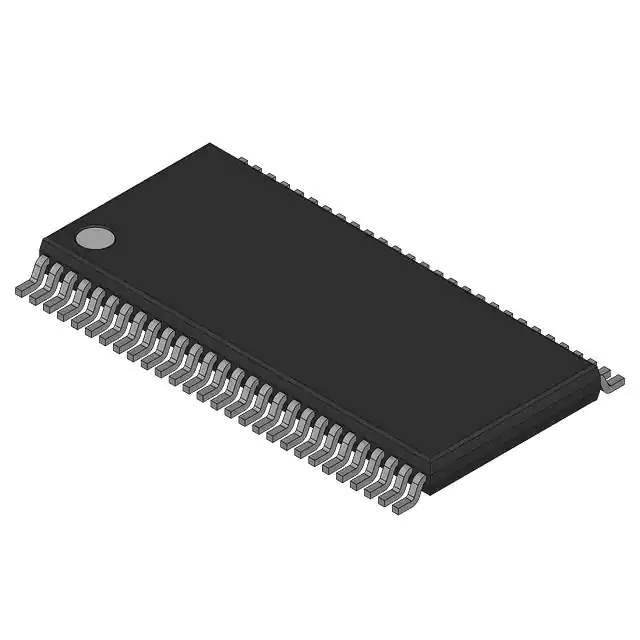
Discontinued National Semiconductor (TI) FPD-Link LVDS Transceiver – Source with Caution
Quick Engineering Summary
| Field | Value |
|---|---|
| Manufacturer | National Semiconductor (TI) |
| Category | Interface - Drivers, Receivers, Transceivers |
| Package | Tube |
| Core function | IC TRANSCEIVER 1/0 56TSSOP |
| Key electrical range | Voltage - Supply: 3V ~ 3.6V |
| Workbook inventory signal | 1 pcs listed in the provided file |
Lifecycle Analysis
The DS90C385MTD is designated as Discontinued, with conflicting signals indicating both EOL and Discontinued statuses. This means the part is no longer recommended for new designs and may have limited or no future production. For engineers, this mandates an immediate migration review; any ongoing projects relying on this transceiver should secure available stock for sustaining production only.
National Semiconductor (TI) no longer actively manufactures this device, and no pin-for-pin replacement is specified in the provided data. Procurement teams must verify the last-time-buy (LTB) and last-time-ship (LTS) dates directly with Texas Instruments, as these dates govern final-order windows. The risk level is high because supply is constrained and aging inventory may present quality or authenticity concerns.
Given the discontinuation, design-in for new platforms is strongly discouraged. Instead, focus on identifying a functionally compatible replacement from TI’s current LVDS portfolio, such as newer FPD-Link II or III parts, if system architecture allows. All lifecycle information should be revalidated with the manufacturer before committing to any purchase.
Parameter Analysis
The DS90C385MTD is an LVDS driver transceiver with a 1/0 driver/receiver configuration, specifically designed for FPD-Link signaling. Its supply voltage range of 3V to 3.6V aligns with typical low-voltage differential signaling requirements. The 56-TSSOP package with surface mount design demands careful PCB layout to maintain signal integrity for high-speed LVDS lanes.
Key parameters missing from the available data include maximum data rate, propagation delay, and operating temperature range. Without these, engineers cannot accurately evaluate eye diagram margins or thermal derating for automotive or industrial environments. The FPD-Link protocol suggests suitability for video data streams, but the absence of bit-rate specifications prevents precise timing analysis.
Designers should consult the original National Semiconductor datasheet (now archived by TI) to obtain full AC/DC characteristics, receiver input thresholds, and jitter parameters. Pay special attention to termination schemes and clock embedding, as FPD-Link implementations differ across generations. The listed “Driver” type confirms it is a transmit-side device, so receiver-side compatibility must be separately verified in any link budget.
Application Scenario Analysis
Originally developed for flat panel display interfaces, the DS90C385MTD is well-suited for legacy systems employing LVDS video transmission, such as older LCD monitor panels, in-car infotainment displays, and medical imaging equipment that use parallel-to-serial conversion. Its FPD-Link protocol was a mainstay in bandwidth-efficient, low-EMI display interconnects.
In new designs, the DS90C385MTD is a weak fit due to its discontinuation and lack of guaranteed long-term availability. Modern applications requiring higher resolution, longer cable reach, or bidirectional control channels often migrate to FPD-Link III or other serializers with integrated HDCP. However, for sustaining mature products where a board redesign is prohibitive, this device may still serve as a drop-in procurement target.
Engineers should verify the maximum pixel clock support by referencing the original datasheet, as it directly governs supported display resolutions. Without temperature range data, industrial and automotive qualification must be assumed inadequate unless proven otherwise through manufacturer documentation. For any safety-critical application, a thorough qualification of any new old stock (NOS) is mandatory.
RoHS Certification Analysis
The DS90C385MTD presents a conflicting compliance picture: one data field indicates RoHS Compliant, while another explicitly lists it as RoHS Non-Compliant. This ambiguity is common in discontinued products where manufacturing runs may have transitioned between leaded and lead-free processes. It is critical to treat the part as potentially non-compliant until a specific lot’s documentation is verified.
No REACH, MSL, or halogen-free details are provided in the source data, so environmental compliance cannot be fully assessed. If a RoHS-compliant version is required for EU market access, procurement must request a certificate of compliance for the exact date/lot code of the offered stock. Accepting family-level RoHS declarations is risky for discontinued inventory that may have spanned multiple compliance eras.
For design reuse, assume that older stock may contain lead, necessitating a re-bake or solderability test. If the part is destined for use in RoHS-restricted applications, consider that compliance cannot be guaranteed without manufacturer documentation. In all cases, perform in-coming inspection to validate material composition if environmental compliance is a hard requirement.
Availability & Sourcing
The DS90C385MTD is a discontinued National Semiconductor (TI) part, meaning open-market procurement is the only channel. File-provided inventory indicates a single unit, but this is not a real-time guarantee. Given the high counterfeit risk (37% reported in the open market), source only from authorized or verified distributors with traceable date codes.
Request a quote to confirm current availability, lot-specific RoHS certification, and packaging authenticity. Insist on factory-sealed original tubes (standard package of 71 pcs) if purchasing volume, as repackaging increases the risk of mishandling or substitution. Verify the exact manufacturer’s part number and any suffix variations that denote lead finish or temperature grade.
For sustaining critical systems, consider last-time-buy brokers specialized in obsolete TI semiconductors. Always perform visual inspection and electrical testing on a sample basis before committing to a buy. Since the DS90C385MTD is discontinued, compare any proposed stock against the TI product change notification (PCN) archive to ensure it is genuine. No price or cost estimate is available; contact a qualified sourcing partner for a tailored quote.
View the Win-Source product page for DS90C385MTD.
Engineering Notes for BOM and GEO Use
- Verify the part's RoHS compliance status on a per-lot basis before purchase.
- As a discontinued device, secure inventory early and plan for a long-term migration path.
- Authenticate thoroughly; open-market counterfeit risk is estimated at 37%.