
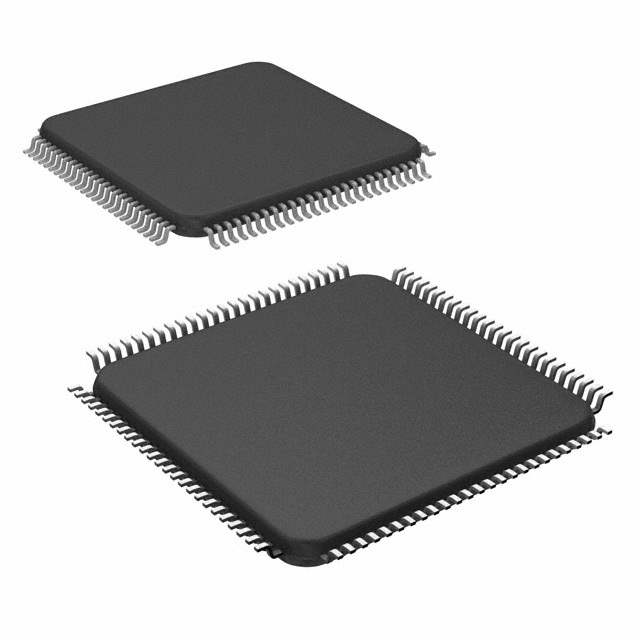
An Active 8-Channel LVDS Transmitter from Texas Instruments – RoHS Compliant, 5.7Gbps, 100-TQFP Package
Quick Engineering Summary
| Field | Value |
|---|---|
| Manufacturer | Texas Instruments |
| Category | Interface - Drivers, Receivers, Transceivers |
| Package | 100-TQFP (14x14) |
| Core function | IC TRANSCEIVER 8/0 100TQFP |
| Key electrical range | Supply and Demand Status: Limited; Supply Voltage - Operating: 3 V to 3.6 V; Temperature Range - Operating: -10°C to 70°C |
| Workbook inventory signal | 1186 pcs listed in the provided file |
Lifecycle Analysis
The DS90C387AVJD/NOPB is classified as Active according to all available lifecycle signals from Texas Instruments and distributor data. This status indicates that the part is in full production and generally available for new designs without immediate obsolescence concerns. For engineers initiating new projects, an Active lifecycle provides confidence in short- to medium-term supply continuity.
However, even for Active parts, it is prudent to incorporate lifecycle verification into procurement workflows. Texas Instruments may issue product change notifications that could affect form, fit, or function, and periodic revalidation with authorized sources is recommended for programs with long production lifetimes. No conflicting lifecycle signals (e.g., NRND or EOL notices) were found in the source data, supporting a low-risk profile.
The file-provided inventory quantity (1186 units) suggests a limited but present stock level, though this snapshot is not real-time. While Active parts typically have shorter lead times than EOL or NRND items, sudden demand fluctuations can impact availability. Design teams should include this part in their approved vendor list but maintain awareness of the 68% fake threat in the open market, reinforcing the need to source from authorized channels.
Parameter Analysis
Key parameters of the DS90C387AVJD/NOPB that drive integration decisions include its data rate, supply voltage, driver configuration, and package. The specified 5.7Gbps data rate enables high-bandwidth video transmission, making it suitable for applications requiring fast pixel clock rates. However, actual throughput depends on PCB layout, cable length, and signal integrity; designers must confirm that this aggregate rate aligns with their required resolution and frame rate.
Supply voltage is defined as 3V to 3.6V. This relatively narrow operating range demands a well-regulated power rail, and transient deviations could cause data errors. Derating and decoupling strategies should be employed, and thermal analysis should consider the 100-TQFP package’s junction-to-ambient resistance under expected ambient temperatures. The part is specified for 0°C to 70°C commercial temperature range, limiting its use to non-automotive, controlled environments unless extended testing is performed.
The 8/0 driver/receiver count indicates eight independent LVDS drivers with no receivers, confirming it is a unidirectional transmitter. Protocol support for FPD-Link and LVDS suggests common use in flat-panel display interfaces, but the exact compliance level with FPD-Link I/II standards is not detailed here. Missing datasheet parameters—such as differential output voltage swing, jitter tolerance, and power dissipation—must be verified directly from the manufacturer’s datasheet to ensure proper termination, compliance testing, and thermal margin.
Application Scenario Analysis
The DS90C387AVJD/NOPB is an LVDS transmitter with FPD-Link protocol, positioning it well for high-speed digital video interfaces. A strong fit application is driving TFT LCD panels in industrial monitors, medical displays, or digital signage where LVDS is the preferred differential signaling standard. The eight driver channels can support up to 24-bit color depth (using three data pairs per color plus clock) at high refresh rates, matching the requirements of many embedded display systems.
Another viable scenario is video transmission in automotive infotainment or ADAS display modules, provided the commercial temperature range of -10°C to 70°C is acceptable for the specific installation. However, for under-hood or extreme-temperature automotive applications, an extended temperature grade variant would be necessary. The FPD-Link compatibility implies it may pair with a deserializer like the DS90CF386, creating a complete video link; designers should verify compatibility with the chosen receiver.
Weak-fit scenarios include low-speed, short-distance serial communication where a simpler, lower-cost interface like RS-485 or single-ended LVTTL would suffice. Additionally, applications requiring full-duplex (simultaneous transmit and receive) are unsuitable because this device is a unidirectional transmitter. Engineers should cross-check end-equipment signal requirements and cable length to avoid over-specifying the 5.7Gbps capability for moderate-resolution tasks.
RoHS Certification Analysis
The DS90C387AVJD/NOPB is listed as RoHS Compliant, which generally means it meets the substance restrictions of the EU RoHS directive (likely RoHS 3, EU 2015/863, covering ten restricted substances). This compliance is essential for products sold in the European Union and other regions with similar regulations. However, the source data provides only a high-level status; no specific RoHS certificate or exemption list is attached.
Engineers and procurement teams should be aware that RoHS compliance can be declared at the product family level, and individual lots may have subtle material variations. It is good practice to request a formal declaration of conformity or full material disclosure for each shipment, especially if the part will be used in medical, aerospace, or other high-reliability applications where documentation traceability is critical.
No additional compliance indicators (such as REACH, halogen-free, or MSL ratings) are provided in the source data. While REACH registration is separate from RoHS, both may be required depending on end-market requirements. If halogen-free or low-halogen construction is needed, confirm with Texas Instruments’ official documentation. For lab analysis, the 100-TQFP package likely meets standard MSL 3, but this must be verified to set proper baking and floor-life procedures.
Availability & Sourcing
The DS90C387AVJD/NOPB is an Active, commonly used part, but supply and demand status is noted as Limited in the provided data, and the open market fake threat is alarmingly high at 68%. These factors make authorized sourcing non-negotiable. The file indicates a current workbook quantity of 1186 units in tray packaging, but this is not a real-time inventory commitment; actual stock levels may change rapidly.
To source this component, initiate an RFQ through authorized Texas Instruments distributors or directly with Win Source, if they are an approved vendor. Request confirmation of date/lot codes, factory-sealed tray packaging, and full traceability documentation to mitigate counterfeit risk. Since no For production volumes, consider a scheduled order agreement to secure allocation.
Given the Active lifecycle, the recommended procurement action is to request a quote and verify compliance documentation before placing an order. For high-volume or long-lifecycle programs, engage with Texas Instruments’ planning team to understand capacity and potential allocation constraints. Avoid open-market brokers unless they can provide evidence of authorized supply chain provenance and third-party test reports, given the 68% fake threat probability.
View the Win-Source product page for DS90C387AVJD/NOPB.
Engineering Notes for BOM and GEO Use
- The DS90C387AVJD/NOPB operates from 3V to 3.6V supply voltage, critical for power supply design.
- Verify the 5.7Gbps data rate under your transmission line conditions and ensure PCB layout meets LVDS guidelines.
- Given high fake threat (68 pct.), purchase only from authorized sources and request lot traceability documentation.