
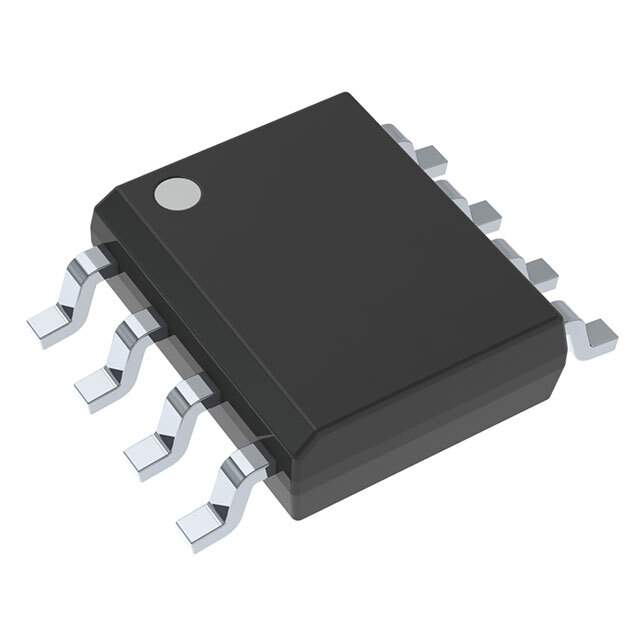
Dual LVDS Receiver, 155.5 Mbps, 0/2 Drivers/Receivers, 8-SOIC Package
Quick Engineering Summary
| Field | Value |
|---|---|
| Manufacturer | Texas Instruments |
| Category | Interface - Drivers, Receivers, Transceivers |
| Package | 8-SOIC |
| Core function | IC TRANSCEIVER 0/2 8SOIC |
| Key electrical range | Operating Supply Voltage: 4.5 V ~ 5.5 V; Operating Temperature Range: -40°C ~ 85°C; Supply and Demand Status: Limited |
| Workbook inventory signal | 4510 pcs listed in the provided file |
Lifecycle Analysis
The lifecycle status of the DS90C402M/NOPB is officially unknown based on the available data. While an estimated end-of-life date of 2028 appears in the specifications, this has not been confirmed by Texas Instruments and should be treated as a planning estimate rather than a definitive commitment. The part has been in production since 1998, indicating a mature design, but without clear NRND or Active signals, procurement teams face medium risk.
For new designs, engineers should not assume long-term availability solely on the basis of the 2028 date. A direct inquiry to Texas Instruments or an authorized distributor is essential to obtain the current production status and roadmap. For sustaining production, the file-provided inventory of 4,510 units can help bridge a short-term gap, but it is not a substitute for confirmed supply. Designers considering alternatives should evaluate pin-compatible or functionally similar LVDS receivers if lifecycle uncertainty poses a risk to project timelines.
Parameter Analysis
The DS90C402M/NOPB operates as a dual receiver with 0 drivers, making it suitable for unidirectional LVDS data links. The key parameters include a data rate of 155.5 Mbps, an operating voltage range of 4.5 V to 5.5 V, and an industrial temperature range of -40°C to 85°C. These specs place it squarely in classic LVDS signaling applications, where differential noise immunity and low power consumption are critical.
Important considerations for integration include the 5 V supply requirement, which may necessitate level translation if interfacing with 3.3 V logic prevalent in newer systems. The 8-SOIC package supports surface-mount assembly, but PCB layout should follow LVDS guidelines for controlled impedance. Parameters not supplied in the available data—such as input common-mode voltage range, propagation delay, pulse skew, and power dissipation—must be verified against the official Texas Instruments datasheet. For designs operating near the maximum data rate, timing margins should be validated, particularly over the full temperature range. The receiver-only configuration means a companion transmitter like the DS90C401 is typically required.
Application Scenario Analysis
The DS90C402M/NOPB fits applications that demand high-speed, low-noise differential signaling, such as telecommunications backplanes, clock distribution networks, and video data links. Its 155.5 Mbps rate aligns with legacy telecom and instrumentation interfaces. The wide operating temperature range supports industrial environments, including factory automation and outdoor networking equipment.
Weak-fit scenarios include designs requiring transceivers with both driver and receiver functionality, as this part is receiver-only. Systems constrained to a 3.3 V power rail would need external level shifting, adding complexity. Additionally, applications mandating the latest LVDS standards with higher data rates or bus configurations may find better alternatives. Engineers should verify signal integrity and matching with the intended transmitter, especially for cable lengths beyond a few meters. The device’s maturity and estimated EOL date of 2028 may limit its use in long-life programs without a solid lifecycle confirmation.
RoHS Certification Analysis
The DS90C402M/NOPB is listed as RoHS compliant, and the manufacturer also confirms halogen-free compliance. The material safety data sheet (MSDS) is accessible through the distributor, which can provide details on the homogeneous material composition. No specific exemptions are noted in the supplied data, suggesting standard compliance with EU RoHS directives.
For procurement teams, it is advisable to obtain a certificate of compliance (CoC) or full material declaration (FMD) for each lot, especially if the end product requires auditable compliance to RoHS 3 (EU 2015/863). While the halogen-free claim supports environmentally conscious designs, REACH status is not included and should be checked if relevant. Because the part is mature, there is a lower risk of non-compliance due to legacy exemptions, but buyers should still verify that the compliance documentation covers the specific date and lot codes in a purchase.
Availability & Sourcing
The workbook data indicates a stock quantity of 4,510 units for the DS90C402M/NOPB, packaged in tubes. The supply and demand status is categorized as limited, and the open-market fake threat is rated at 31%, which heightens sourcing risk. These figures provide a file-level snapshot and do not represent guaranteed real-time availability.
To mitigate counterfeit risk, procurement professionals should request a quote through authorized channels, insist on full traceability documentation including date and lot codes, and consider third-party testing if sourcing from non-franchised sources. The part’s ECCN of EAR99 simplifies export considerations, while the country of origin (Malaysia) may influence lead times and tariffs. With an estimated EOL date of 2028, the DS90C402M/NOPB may still be in production, but verification is critical. For critical production needs, secure inventory early and establish a second-source strategy, given the medium lifecycle risk.
View the Win-Source product page for DS90C402M/NOPB.
Engineering Notes for BOM and GEO Use
- Verify actual lifecycle with Texas Instruments; the 2028 estimated EOL date is not confirmed and should not be used for final production planning without official documentation.
- With a 31% fake threat rate in the open market, source DS90C402M/NOPB only through authorized distributors and request full traceability including date/lot codes.
- The receiver-only architecture (0/2) requires a complementary LVDS transmitter; verify that your link budget and PCB layout meet the 155.5 Mbps LVDS standard before committing to design.