
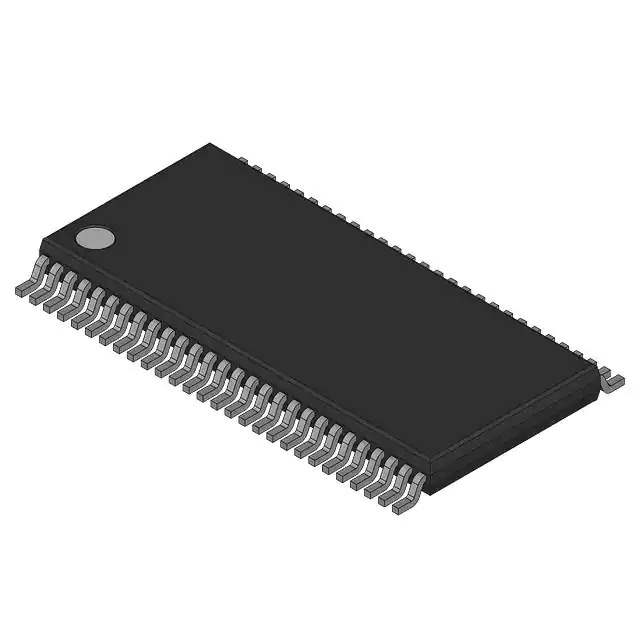
Discontinued 28‑driver/4‑receiver FPD‑Link LVDS transceiver for flat panel interfaces. Verify compliance and stock before ordering.
Quick Engineering Summary
| Field | Value |
|---|---|
| Manufacturer | National Semiconductor (TI) |
| Category | Interface - Drivers, Receivers, Transceivers |
| Package | Tube |
| Core function | IC TRANSCEIVER 28/4 56TSSOP |
| Key electrical range | Voltage - Supply: 3V ~ 3.6V |
| Workbook inventory signal | 1050 pcs listed in the provided file |
Lifecycle Analysis
The DS90CF383AMTD from National Semiconductor (TI) carries a discontinued lifecycle status, with supporting signals including EOL and discontinued flags in manufacturer databases. This means the part is no longer in active production and is not recommended for new designs. For existing products, procurement teams should treat this as a last‑time buy situation and secure sufficient inventory to cover the remaining product lifecycle or plan for a redesign.
All available lifecycle indicators align, confirming obsolescence. While some internal records may show slight variation in terminology (EOL vs. Discontinued), the conservative interpretation is clear: this device has exited the market. Any existing stock noted in distributor files, such as the workbook quantity of 1050 units, is not guaranteed real‑time and should be validated before making commitments.
Engineers and buyers must engage with the manufacturer or authorized partners to obtain formal end‑of‑life notices and to discuss potential migration paths to active pin‑compatible alternatives if available. Without such verification, the risk of supply interruption is high.
Parameter Analysis
The DS90CF383AMTD is a 28‑driver, 4‑receiver LVDS transceiver intended for FPD‑Link protocols. Its key operating parameters include a supply voltage range of 3V to 3.6V and a 56‑TSSOP surface‑mount package. The driver/receiver count indicates it handles parallel pixel data for LCD interfaces, with 28 outputs likely mapped to 24‑bit RGB plus control signals. The narrow supply voltage demands careful power supply design and sequencing.
Several critical parameters are missing from the provided data, such as maximum data rate, differential output voltage, propagation delay, channel‑to‑channel skew, and recommended termination. These are essential for evaluating signal integrity and compatibility in high‑resolution display designs. Additionally, temperature range and ESD ratings are unspecified, which are vital for industrial or automotive applications.
For any design re‑evaluation or second sourcing, obtain the full datasheet to verify these missing specs. This will ensure the device meets timing and reliability requirements, especially since older LVDS transceivers may not support modern high‑bandwidth panels.
Application Scenario Analysis
The DS90CF383AMTD was primarily used in flat panel display interfaces, converting parallel TTL/CMOS video data from a graphics controller into serialized LVDS streams for the panel. Its 28‑driver configuration made it suitable for 24‑bit true color displays with additional synchronization signals. Legacy notebook PCs, desktop monitors, and kiosk displays likely integrated this part.
Today, the part fits only legacy maintenance or repair of existing equipment. New designs should avoid it due to the discontinued status and high counterfeit risk. In systems where an exact replacement is required, a form‑fit‑function alternative with similar LVDS mapping may be hard to find without redesigning the board layout and firmware. In weak‑fit scenarios, such as modern low‑power or high‑resolution interfaces, newer LVDS or eDP devices are far preferable.
RoHS Certification Analysis
RoHS compliance for the DS90CF383AMTD is uncertain. The provided source data contains conflicting information: a high‑level compliance field marks it as 'RoHS Compliant,' but a detailed specification entry lists it as 'RoHS Non‑Compliant.' This discrepancy could stem from different production batches, datasheet revisions, or data entry errors. Consequently, no definitive RoHS claim can be made without manufacturer documentation.
If the part is required for equipment sold in the EU or other RoHS‑regulated regions, procurement must insist on a valid RoHS certificate of compliance for the specific date and lot code being shipped. It is also advisable to check REACH and other restricted substance declarations. Without such verification, the part should be considered non‑compliant by default to avoid regulatory penalties.
Availability & Sourcing
Given its discontinued status, availability of the DS90CF383AMTD is limited and dwindling. The workbook indicates 1050 pieces in stock, but this does not reflect live inventory and must be confirmed through a quote request. The part is packaged in tubes with a standard quantity of 71 units per tube. Open‑market availability is overshadowed by a high fake part threat index of 67%, making procurement extremely risky without stringent controls.
To source this transceiver for maintenance or repair, buyers should request quotes only from authorized distributors or established brokers who can provide full traceability, including date and lot codes. Insist on visual inspection against known‑good samples and, if possible, electrical testing to rule out counterfeits. For any new production, transition to an active LVDS transmitter alternative is strongly advised.
View the Win-Source product page for DS90CF383AMTD.
Engineering Notes for BOM and GEO Use
- Verify RoHS compliance per lot; conflicting data indicates both compliant and non‑compliant variants may exist.
- The 67% fake threat rate in the open market mandates sourcing only through authorized distributors with full traceability.
- With lifecycle discontinued, plan immediate redesign to an active alternative for new production runs.