
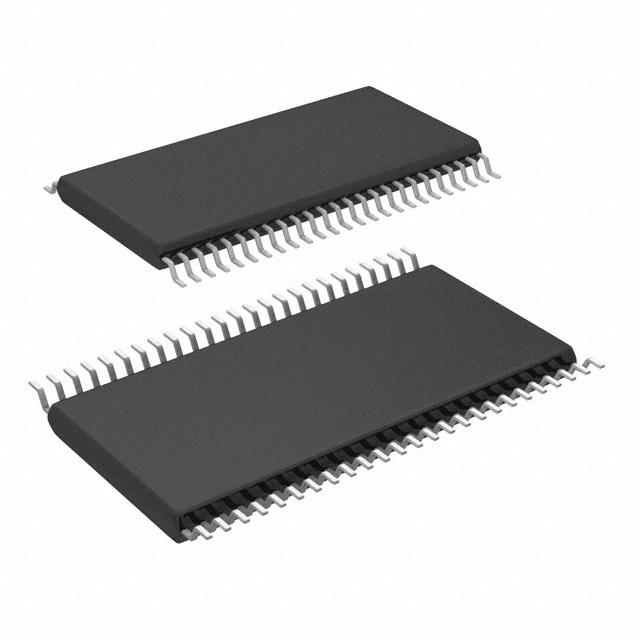
End-of-life interface specialized IC from Texas Instruments. Verify availability and compliance before sourcing.
Quick Engineering Summary
| Field | Value |
|---|---|
| Manufacturer | Texas Instruments |
| Category | Interface - Specialized |
| Package | 48-TSSOP |
| Core function | IC INTERFACE SPECIALIZED 48TSSOP |
| Key electrical range | Operating Supply Voltage: 4.5 V ~ 5.5 V; Supply and Demand Status: Balance |
| Workbook inventory signal | 1 pcs listed in the provided file |
Lifecycle Analysis
Texas Instruments has designated the DS90CR211MTDX as end-of-life (EOL). The lifecycle signals reviewed—including the Excel lifecycle parameter, part status as Obsolete(EOL), and the official lifecycle status—all confirm that this part is no longer in active production. For new designs, the DS90CR211MTDX should not be considered; engineers must evaluate migration to a recommended replacement or an alternative interface solution. For existing production lines, immediate action is required to secure sufficient inventory for last-time buys and to plan a redesign or requalification.
The high risk level reflects the part’s discontinued status, limited remaining stock, and the need for careful sourcing to avoid counterfeit or depleted stock. The file-provided workbook quantity indicates one unit, but this is not a real-time inventory figure and should not be relied upon for procurement decisions. Procurement teams should work closely with authorized distributors and the manufacturer to verify any available lot, confirm date codes, and ensure traceability before purchase.
Parameter Analysis
The DS90CR211MTDX operates with a supply voltage range of 4.5 V to 5.5 V, which places it in a standard 5 V logic domain. Designers must ensure that system power rails stay within this window and account for tolerance stackups, especially when interfacing with lower-voltage devices. The 48-TFSOP surface-mount package (0.240-inch, 6.10 mm width) requires careful PCB layout for thermal dissipation and signal integrity, as the small footprint can concentrate heat and demands proper pad design.
Given that the part is an interface specialized IC, critical parameters such as data rate, number of differential channels, LVDS signaling levels, and input/output specifications are absent from the file-provided data. Engineers should obtain the original Texas Instruments datasheet for the DS90CR211 family to verify these values before committing to a design. Missing information like jitter tolerance, common-mode voltage range, and ESD protection ratings must be confirmed to qualify the part for high-speed data transmission applications.
Application Scenario Analysis
The DS90CR211MTDX resides in Texas Instruments' DS90CR211 family, which is known for LVDS serializer/deserializer functions commonly used in high-speed point-to-point data transmission. Typical strong-fit applications include digital video links, industrial camera interfaces, flat-panel display connections, and backplane data communication where 5 V supply and TSSOP mounting are acceptable. Legacy systems designed around the 5 V LVDS standard are the primary candidates for this part.
Conversely, the DS90CR211MTDX is a weak fit for modern designs that operate at lower core voltages, demand smaller package geometries, or require extended temperature ranges not listed in the available data. Applications transitioning to FPD-Link III or other advanced serializers should avoid this EOL device. Without detailed frequency, channel count, and protocol specifics, designers cannot confirm suitability for high-bandwidth automotive or consumer video links without full datasheet review.
RoHS Certification Analysis
The RoHS status for the DS90CR211MTDX is listed as 'Request Verification,' meaning compliance has not been confirmed with the available data. Texas Instruments originally manufactured this part; many TI components are RoHS compliant, but for EOL parts, the compliance may vary by production date code or assembly site. The absence of a definitive RoHS 3 (EU 2015/863) declaration creates uncertainty for customers needing to meet regulatory requirements.
Procurement teams should request a certificate of compliance or full material declaration from the supplier for the specific lot before purchase. Since the part is obsolete, remaining stock may originate from different production periods; some older lots may contain lead or other restricted substances. Additionally, while not a substitute for RoHS, verification of REACH status and any available Material Safety Data Sheet (MSDS) can provide further substance information. Buyers should treat each order as lot-specific regarding environmental compliance.
Availability & Sourcing
Sourcing the DS90CR211MTDX requires a proactive and cautious approach given its EOL status and a reported open-market counterfeit threat level of 33%. The file-provided inventory shows a single unit, but this is not a guaranteed real-time quantity; actual stock may be zero or consist of remnant lots. Buyers should request a quote and confirm current availability through distributors or brokers, insisting on full traceability including date codes, lot codes, and manufacturer origin.
The part is supplied in reel (TR) packaging, which is standard for high-volume production; however, small-lot purchases are more common now. All quotes should be accompanied by verification of lifecycle status directly with Texas Instruments' EOL notices and a certificate of compliance for RoHS. To mitigate counterfeit risks, implement rigorous incoming inspection: visual marking analysis, solderability testing, and electrical parametric verification. For sustained needs, immediately evaluate a migration path to an active replacement recommended by TI, as spot-market sourcing is not a long-term strategy.
View the Win-Source product page for DS90CR211MTDX.
Engineering Notes for BOM and GEO Use
- EOL status demands immediate last-time buy planning and migration evaluation.
- Open market counterfeit risk is significant (33% fake threat); rigorous visual and electrical testing is essential.
- RoHS compliance must be verified per production lot; request documentation from the supplier.