
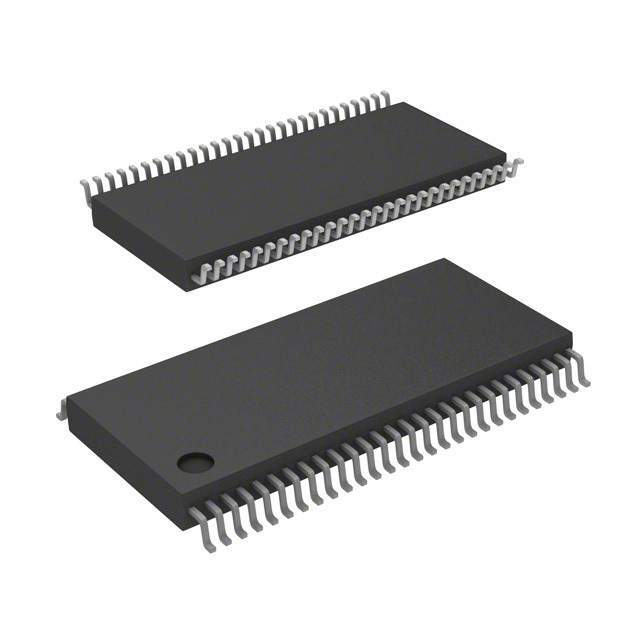
Specifications, Lifecycle Status, and Procurement Guidance for the DS90CR282MTD
Quick Engineering Summary
| Field | Value |
|---|---|
| Manufacturer | Texas Instruments |
| Category | Interface - Specialized |
| Package | Tube |
| Core function | IC INTERFACE SPECIALIZED 56TSSOP |
| Key electrical range | Voltage - Supply: 4.5V ~ 5.5V |
| Workbook inventory signal | 1 pcs listed in the provided file |
Lifecycle Analysis
The DS90CR282MTD from Texas Instruments is officially listed as Discontinued. Multiple lifecycle indicators confirm the part has reached end-of-life status, with Excel-based parameters and product status both marked as Discontinued or EOL. This means the component is no longer recommended for new designs and may have limited or no future production. For existing production lines, engineers must verify stock availability and plan for last-time buys or redesigns. The lifecycle risk is high, as availability will only shrink over time. While a file-provided inventory shows a quantity of one unit, this is not a real-time guarantee and must be validated through a formal quote. Any procurement strategy should include a thorough review of Texas Instruments’ discontinuation notices and PCN documents to understand the exact timeline and any migration paths. Given the high counterfeit threat in the open market, sourcing should be limited to authorized distributors or thoroughly vetted independent suppliers with full traceability.
Parameter Analysis
The DS90CR282MTD operates over a supply voltage range of 4.5V to 5.5V, typical for LVDS-based interface ICs, necessitating careful power supply design and decoupling. The package is a 56-lead TSSOP (56-TFSOP) with a 0.240-inch width, surface-mount, and an MSL rating of 1, indicating unlimited floor life before soldering. These physical parameters are known, but essential functional specifications such as data rate, channel count, interface protocol, and timing characteristics are absent from the available data. Engineers must consult the full Texas Instruments datasheet to obtain critical parameters like maximum pixel clock frequency, input/output delays, and jitter specifications. Without these, it is impossible to validate compatibility with existing designs or assess signal integrity margins. The device is classified under ECCN 5A991B1 and HTSUS 8542.39.0001, which may affect export compliance. Any replacement evaluation should also verify temperature range and derating requirements, which are not provided in the current dataset.
Application Scenario Analysis
As a specialized interface IC, the DS90CR282MTD is typically found in high-speed data transmission applications, such as Channel Link deserializers used in LCD display interfaces, machine vision, and video processing systems. The 56-TSSOP package suggests a moderate pin-count device likely handling parallel-to-serial or serial-to-parallel conversion. Given its discontinuation, the strongest fit remains in sustaining legacy systems that already integrate this part. For new designs, this component is a weak fit due to lifecycle risk, and engineers should evaluate newer Texas Instruments alternatives with active lifecycle status. The exact application domain can only be verified once the full datasheet is reviewed, as the current description is generic. Any system relying on this device must account for its 5V operation and ensure compatibility with contemporary lower-voltage logic. Additionally, considering the 58% fake threat, even for legacy maintenance, rigorous incoming inspection is mandatory.
RoHS Certification Analysis
The compliance data for the DS90CR282MTD presents a conflict: the top-level compliance field indicates RoHS Compliant, while a specification attribute states RoHS Non-Compliant. This discrepancy suggests that the component may have been manufactured in both compliant and non-compliant variants, or that the compliance record is inaccurate. Engineers and procurement teams must obtain a manufacturer’s certificate of compliance for the specific lot before purchase, especially for products destined for RoHS-regulated markets. Related information shows REACH status unaffected and an MSL of 1, but neither REACH nor MSL can substitute for RoHS compliance. The halogen-free status is not provided. Given the high counterfeit risk, counterfeit parts may falsely claim compliance. At a minimum, request an up-to-date RoHS test report or full material declaration from the supplier. Without clear documentation, assume the part may not be RoHS-compliant for new assembly or trigger compliance issues in audits.
Availability & Sourcing
The DS90CR282MTD is a discontinued part with extremely limited availability. A file-provided inventory indicates one unit on hand, but this does not reflect real-time stock and must be confirmed via a request for quote. Because the component is no longer in production, sourcing options are narrowed to remaining channel inventory or specialized excess-stock brokers. The open market carries a 58% counterfeit threat, making it essential to use only authorized or traceable sources. Buyers should request date codes, lot codes, and proof of original packaging to mitigate counterfeit risk. The standard packaging is tube, likely in quantities of 34 units per tube as per the standard package specification. For maintenance of legacy systems, consider verifying Texas Instruments’ official discontinuation notice and evaluating if a pin-compatible active alternative exists. However, no such alternatives are suggested in the provided data. To proceed, submit an RFQ through a reliable platform to check current availability and compliance documentation. Never rely on unverified distributor listings without full traceability.
View the Win-Source product page for DS90CR282MTD.
Engineering Notes for BOM and GEO Use
- The DS90CR282MTD is discontinued; verify last-time-buy and EOL notices from Texas Instruments before committing to new production.
- RoHS compliance is ambiguous—confirm lot-specific certification as the component is listed as non-compliant in spec records.
- 58% fake threat rate in the open market requires rigorous visual inspection, date-code verification, and supply-chain traceability.