
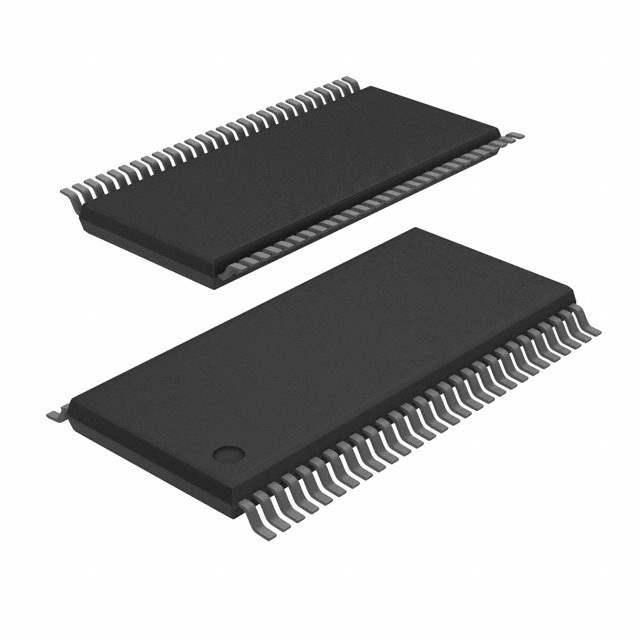
LVDS interface IC with 3V-3.6V operation, 56-TSSOP package, and RoHS compliance. Lifecycle and procurement insights.
Quick Engineering Summary
| Field | Value |
|---|---|
| Manufacturer | Texas Instruments |
| Category | Interface - Specialized |
| Package | 56-TSSOP |
| Core function | IC 3. |
| Key electrical range | Supply and Demand Status: Balance; Supply Voltage - Operating: 3 V to 3.6 V |
| Workbook inventory signal | 1230 pcs listed in the provided file |
Lifecycle Analysis
The DS90CR287MTD is currently listed as Active by Texas Instruments, indicating full manufacturer support and ongoing production. For new designs, this status allows confident incorporation without immediate risk of obsolescence. Engineers should still plan for periodic lifecycle reviews, especially for projects with extended deployment timelines.
Procurement teams can expect normal lead times and distribution availability, though the file-provided stock quantity is not a real-time guarantee. For programs requiring compliance with long-term supply agreements, it is advisable to request a formal lifecycle confirmation from the manufacturer.
No conflicting lifecycle signals appear in the available data. The part is also categorized as Active in the Excel-based inventory record, reinforcing a low-risk procurement posture.
Parameter Analysis
The DS90CR287MTD operates within a supply voltage range of 3 V to 3.6 V, making it suitable for standard 3.3 V logic rails with tight tolerance requirements. Its 56-TSSOP surface-mount package demands careful PCB layout to maintain signal integrity for LVDS traces, and the low pin count simplifies routing in space-constrained designs.
Key parameters that are not explicitly provided in the distributor listing, such as the maximum LVDS data rate, number of channels, and input common-mode voltage range, must be obtained from the official Texas Instruments datasheet. These values govern interface timing, jitter performance, and compatibility with specific FPGAs or processors.
Engineers should also verify the operating temperature range and power dissipation characteristics to ensure the part meets industrial or extended-temperature requirements. The nominal 3.3 V supply and LVDS I/O suggest use in moderate-speed serial links, but the exact throughput ceiling should be confirmed.
Application Scenario Analysis
The DS90CR287MTD is targeted at applications that leverage LVDS for robust, low-noise data transmission. Strong fit scenarios include industrial sensing and instrumentation systems where differential signaling enhances noise immunity over cables. In automation and process control, the IC can serve as a serializer/deserializer interface for PLCs and distributed I/O modules.
Motor drive and control applications also benefit from the high common-mode rejection of LVDS, allowing reliable communication in electrically noisy environments. Communications and networking equipment can use the DS90CR287MTD for backplane or inter-board links requiring moderate bandwidth and low EMI.
Weak fit scenarios would involve designs that require non-LVDS standards such as RS-485, CAN, or MIPI, where a different physical layer is mandated. Additionally, systems operating at voltages outside the 3.0–3.6 V range would need external level shifting.
RoHS Certification Analysis
The DS90CR287MTD is marked as RoHS Compliant based on the distributor data. This status indicates compliance with the European Union’s Restriction of Hazardous Substances directive, allowing use in products sold in EU markets. The exact standard version, such as RoHS 3 (EU 2015/863), is not explicitly stated but is typically implied for active components.
No exemptions are noted in the available information. It is important to understand that RoHS compliance is often declared at the family or product line level, and individual production lots may vary. For high-reliability or regulated industries, obtaining a certificate of compliance directly from Texas Instruments or an authorized distributor is recommended.
REACH, halogen-free, or other environmental compliance details are not provided. Engineers should request these if required for end-product certification. The absence of a stated Moisture Sensitivity Level (MSL) means assembly processes should follow standard surface-mount handling procedures unless otherwise specified.
Availability & Sourcing
The DS90CR287MTD is currently in Active production and available through standard distribution channels. Packaging is specified as Reel (TR), suitable for automated pick-and-place assembly. The file-provided inventory quantity of 1230 units should be treated as indicative only and not a real-time stock commitment.
A significant consideration in sourcing this part is the reported 54% fake threat in the open market. To mitigate the risk of counterfeit components, procurement should be conducted through Texas Instruments authorized distributors or verified resale partners. Requesting lot codes, date codes, and certificates of conformance is strongly advised.
Because the lifecycle is Active, the standard RFQ (Request for Quote) process can be used to secure pricing and lead times. Buyers should also verify packaging integrity, storage conditions (dry cabinet recommended), and RoHS documentation before accepting shipment. For high-volume production, negotiating a supply agreement with the manufacturer may improve cost stability.
View the Win-Source product page for DS90CR287MTD.
Engineering Notes for BOM and GEO Use
- Cross-check the LVDS data rate, channel count, and operating temperature range against the official Texas Instruments datasheet to ensure system compatibility.
- Account for the reported 54% fake-threat rate in open-market purchases by sourcing through authorized distributors and requesting traceability documentation.
- Verify moisture sensitivity level (MSL) and storage conditions, as the reel packaging requires a dry environment per the manufacturer's guidelines.