
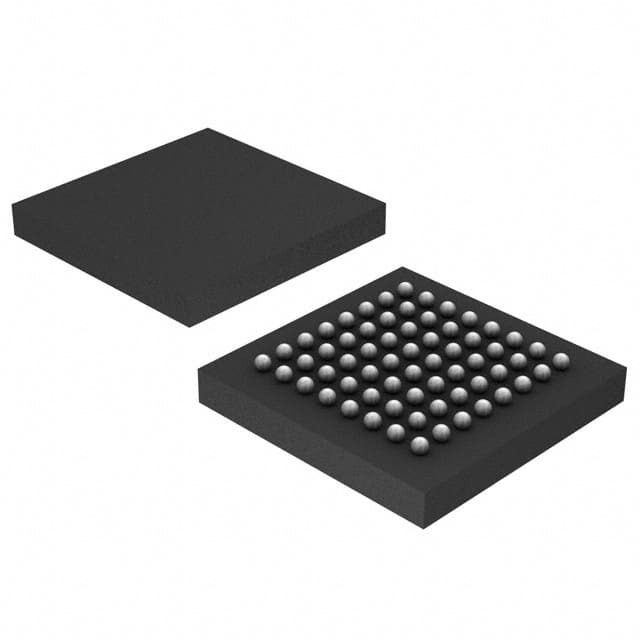
Texas Instruments Interface - Specialized | 64-NFBGA, 3V–3.6V, NRND, RoHS Compliant
Quick Engineering Summary
| Field | Value |
|---|---|
| Manufacturer | Texas Instruments |
| Category | Interface - Specialized |
| Package | 64-NFBGA (8x8) |
| Core function | IC INTFACE SPECIALIZED 64NFBGA |
| Key electrical range | Supply and Demand Status: Balance |
| Workbook inventory signal | 3310 pcs listed in the provided file |
Lifecycle Analysis
The DS90CR287SLC/NOPB carries a lifecycle status of 'Not For New Designs' (NRND) according to the part status field, although a separate 'Lifecycle Status' entry lists it as 'Active'. This conflict demands a conservative interpretation for sourcing. For new applications, the part should be considered NRND—meaning Texas Instruments does not recommend its use, and future availability is not assured. Existing production programs may continue to source the component, but design teams should initiate a qualification process for a replacement pin-compatible or functionally equivalent device to mitigate supply risk.
Given the medium risk level and the NRND designation, buyers should avoid last-time buy assumptions. Instead, they should maintain close communication with authorized distributors and monitor any official PCN (Product Change Notification) or EOL announcements from Texas Instruments. Documentation revalidation and supplier audits are advisable to ensure continuity.
Parameter Analysis
The DS90CR287SLC/NOPB is a specialized interface IC housed in a 64-ball NFBGA package (8mm x 8mm). The surface‑mount package requires careful PCB layout for thermal management and signal integrity, especially given the dense ball grid. The operating voltage range is 3V to 3.6V, which places it in a standard 3.3V domain—this is critical for power supply decoupling and ensuring stable operation. The MSL (Moisture Sensitivity Level) is rated at Level 2, meaning the part has a floor life of one year after opening the moisture barrier bag when stored under controlled conditions. Proper handling and baking procedures must be followed to prevent popcorning during reflow.
Key parameters such as maximum data rate, number of channels, interface protocol details (e.g., LVDS), and I/O compatibility are not provided in the available data. Engineers must consult the full manufacturer datasheet before committing to design, as missing electrical characteristics directly affect system timing, power consumption, and EMC compliance. Pay particular attention to operating temperature range and derating guidelines, which are common gaps in preliminary sourcing checks.
Application Scenario Analysis
The DS90CR287SLC/NOPB is typically deployed in applications requiring high‑speed, low‑voltage differential signaling (LVDS) for point‑to‑point data transmission. Given its specialized interface category and the DS90CR287 family’s known pedigree, it is well‑suited for legacy flat‑panel display links, industrial monitors, and embedded vision systems where a compact 64‑NFBGA footprint is acceptable. The 3.3V operation aligns with many FPGA and media processor I/O banks, making it a plausible choice in established video processing modules.
However, its NRND status imposes clear boundaries. Strong‑fit scenarios are limited to sustaining existing designs where the part is already qualified and the software/hardware ecosystem is stable. Weak‑fit or unsuitable scenarios include new product developments (especially those requiring long lifespans, such as automotive or medical equipment), applications demanding extended temperature grades not confirmed in the available data, and any design where the 83% reported fake threat in the open market becomes an unacceptable procurement risk. In all cases, verify that the specific interface protocol matches the system’s requirements by cross‑referencing the datasheet.
RoHS Certification Analysis
The DS90CR287SLC/NOPB is listed as RoHS Compliant, meaning it meets the restrictions on hazardous substances as defined by EU Directive 2011/65/EU. However, the source data does not specify the exact amendment level (e.g., 2015/863 for phthalates), so manufacturers' documentation should be reviewed to confirm full compliance with the latest EU RoHS (often called RoHS 3). The REACH status is 'Unaffected', which indicates no current substances of very high concern (SVHC) are present above the threshold, but this is independent of RoHS.
MSL information is available as Level 2 with a one‑year floor life. This is not directly part of RoHS, but it is a material‑handling specification often bundled with environmental compliance documentation. Since RoHS compliance can be subject to lot‑to‑lot variation, particularly for parts in active but NRND status, a certificate of compliance is recommended for each shipment. If halogen‑free requirements exist, those must be separately verified as no data is present in the source.
Availability & Sourcing
File‑based inventory for the DS90CR287SLC/NOPB shows approximately 3310 units, but this is not a real‑time stock level. Actual availability must be confirmed through a request for quote. The part is supplied in tray packaging (360 units per tray) and carries an ECCN of 5A991B1, which may affect export logistics. With a reported fake component threat of 83% in the open market, sourcing from authorized or traceable supply chains is essential. Buyers should insist on full lot‑code documentation, date codes, and where possible, certificates of authenticity.
Because the part is NRND, typical RFQ workflows should include not only price and lead‑time negotiation but also a discussion with the distributor about product longevity and potential last‑time buy scenarios. For sustaining production, consider increasing safety stock and simultaneously evaluating a drop‑in replacement or a form‑fit‑function equivalent to ensure supply continuity. Verify lifecycle status with Texas Instruments or authorized partners before committing to large‑volume orders.
View the Win-Source product page for DS90CR287SLC/NOPB.
Engineering Notes for BOM and GEO Use
- Verify exact RoHS compliance at the lot level, as the certificate may vary with production date.
- Given the 'Not For New Designs' status, evaluate migration paths for new projects and secure inventory for existing systems.
- MSL Level 2 demands soldering within 1 year of bag opening; plan assembly to avoid moisture-related defects.