
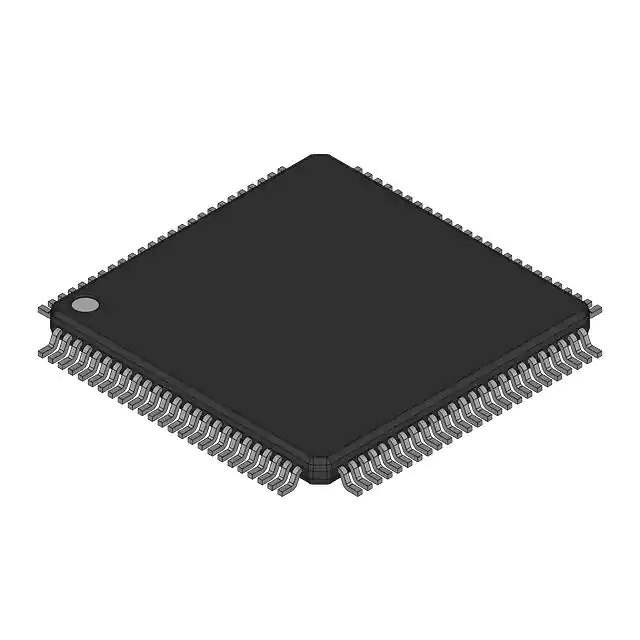
End-of-life 48-input CMOS/TTL to LVDS serializer with 5.38Gbps data rate, AEC-Q100 qualified, in 100-TQFP package. Verify availability.
Quick Engineering Summary
| Field | Value |
|---|---|
| Manufacturer | National Semiconductor (TI) |
| Category | Interface - Serializers, Deserializers |
| Package | Bulk |
| Core function | IC SERIALIZER 48BIT 100TQFP |
| Key electrical range | Input Type: CMOS/TTL; Number of Inputs: 48; Number of Outputs: 8; Output Type: LVDS |
| Workbook inventory signal | 1360 pcs listed in the provided file |
Lifecycle Analysis
The DS90CR483VJD from National Semiconductor (now Texas Instruments) presents conflicting lifecycle signals. The Lifecycle Status and Excel lifecycle parameter indicate End-of-Life (EOL), while the Product Status field is listed as Active. Given the risk of relying on a single optimistic status, this guide conservatively treats the DS90CR483VJD as EOL. This means the part is not recommended for new designs, and any usage in ongoing production should be carefully evaluated to avoid supply disruptions.
For existing designs, an EOL status typically signals the need for last-time buy planning and migration to a recommended replacement. Engineers and buyers must request a formal product discontinuation notice (PDN) from Texas Instruments to confirm the exact timeline and available inventory. Without such confirmation, assuming continued availability for new production carries significant risk.
File-provided inventory data indicates approximately 1,360 units of the DS90CR483VJD are available. However, this quantity is a snapshot and not guaranteed to reflect real-time stock. Before placing orders, verify current inventory and lead times directly with authorized distributors, and secure traceable, date-coded stock to avoid counterfeit risks, especially given the reported 50% fake threat rate in the open market.
Parameter Analysis
The DS90CR483VJD is a 48-bit serializer that converts 48 parallel CMOS/TTL inputs into 8 LVDS differential outputs, enabling high-speed data transmission up to 5.38 Gbps. This high channel count and data rate are critical in applications requiring compact, low-power links for display or camera data. The supply voltage range of 3V to 3.6V and industrial temperature range of -10°C to 70°C must be carefully considered for thermal margin in enclosed systems. The automotive AEC-Q100 qualification suggests it meets stringent reliability standards, but the part is rated only for commercial temperature range, not full automotive, so design derating is necessary.
The 100-TQFP surface-mount package with a 14x14 mm body and MSL level 3 requires controlled storage and handling to prevent moisture damage. The serializer’s LVDS outputs provide good noise immunity and low EMI, which is beneficial for long cable runs. However, the datasheet should be consulted for output swing, setup/hold times, and jitter specifications, as these are not supplied here. Engineers must verify that the input setup and hold timings align with their source device, and that the output eye diagram meets the requirements of the receiving deserializer.
Missing parameters that must be verified from the manufacturer’s datasheet include maximum power dissipation, LVDS termination requirements, and detailed AC timing characteristics. Without this information, a thorough timing analysis cannot be completed. Additionally, the 50% fake threat statistic underscores the need to validate electrical performance on received samples.
Application Scenario Analysis
The DS90CR483VJD is primarily designed for serializing wide parallel buses in applications such as flat-panel displays, medical imaging, and industrial camera links. With 48 inputs and a 5.38 Gbps aggregate data rate, it is a strong fit for systems that require transmitting high-resolution video or large amounts of sensor data over a reduced number of cables. For example, in a digital signage panel, the serializer can take 48-bit RGB pixel data from a graphics processor and drive LVDS lanes directly to the panel controller, simplifying cabling and improving EMI performance.
However, the part may be a weak fit in scenarios where the parallel bus width is smaller than 48 bits, as unused channels would waste pins and board space. Additionally, its commercial temperature range (-10°C to 70°C) precludes use in harsh automotive or outdoor environments without further ruggedization, despite its AEC-Q100 qualification, which typically implies higher temperature grades. Designers integrating this serializer into an automotive system must ensure the ambient temperature stays within the specified range, which may not hold in under-hood placements.
The DS90CR483VJD is also not suitable for very low-power or battery-operated devices, as the power consumption details are not provided but likely to be in the hundreds of milliwatts given the channel count and data rate. For legacy systems that already use this part, sustaining production may be necessary, but new projects should evaluate the end-of-life status and consider pin-compatible or alternative serializers from Texas Instruments or other vendors that offer longer lifecycle commitments.
RoHS Certification Analysis
The DS90CR483VJD is marked as RoHS compliant, indicating adherence to the EU Restriction of Hazardous Substances directive. However, the specific version of RoHS (e.g., RoHS 3 (EU 2015/863)) is not explicitly stated, so buyers should verify that the product meets the latest requirements, especially given its end-of-life status which might mean compliance was certified against an older standard. The REACH status is listed as unaffected, which confirms that the device does not contain substances of very high concern above threshold limits, but this does not replace RoHS compliance documentation.
The moisture sensitivity level (MSL) is 3, classified for a floor life of 168 hours after opening the dry pack. This is typical for 100-TQFP packages and requires proper storage and baking before reflow if exposure limits are exceeded. Compliance is typically demonstrated at the family level, but for critical applications, lot-level certificates should be requested to ensure that the specific batch of DS90CR483VJD parts meets all environmental regulations.
For sourcing from non-authorized channels, the risk of counterfeit parts with non-compliant materials is heightened, as indicated by the 50% fake threat. Therefore, it is imperative to request full material declarations and RoHS certificates with each purchase, and to perform incoming inspection including XRF testing if traceability is in doubt.
Availability & Sourcing
As an end-of-life part, sourcing the DS90CR483VJD demands a strategic approach. Buyers should immediately request a quote from authorized distributors to validate current stock, as the file-provided quantity of 1,360 units may not be up to date. The standard packaging is bulk with 20 pieces per standard package, which is suitable for prototyping or small production runs, but larger quantities may need to be negotiated directly.
Given the 50% fake threat in the open market, purchasing from unauthorized sources significantly increases the risk of receiving non-functional or substandard components. It is essential to source only through Texas Instruments authorized distribution channels or verified aftermarket vendors with robust inspection and testing protocols. Request date/lot code traceability and certificates of conformance for each shipment. Since the DS90CR483VJD is in EOL status, securing final inventory for bridge builds or repair stocks is critical, but new designs should not incorporate this part without a guaranteed long-term supply.
To mitigate risk, engineering teams should place the DS90CR483VJD under engineering change control and begin evaluating replacements. For immediate availability, submit an RFQ through our platform to connect with qualified suppliers who can confirm stock, lead times, and compliance documentation. Always cross-check the manufacturer’s PDN and last-time buy notices before committing to a purchase.
View the Win-Source product page for DS90CR483VJD.
Engineering Notes for BOM and GEO Use
- Treat the DS90CR483VJD as end-of-life; validate lifecycle with Texas Instruments before committing to new production.
- The 50% fake threat in the open market demands rigorous supply chain authentication and authorized distributor sourcing.
- AEC-Q100 qualification and MSL 3 require careful handling during assembly and verification of lot traceability.