
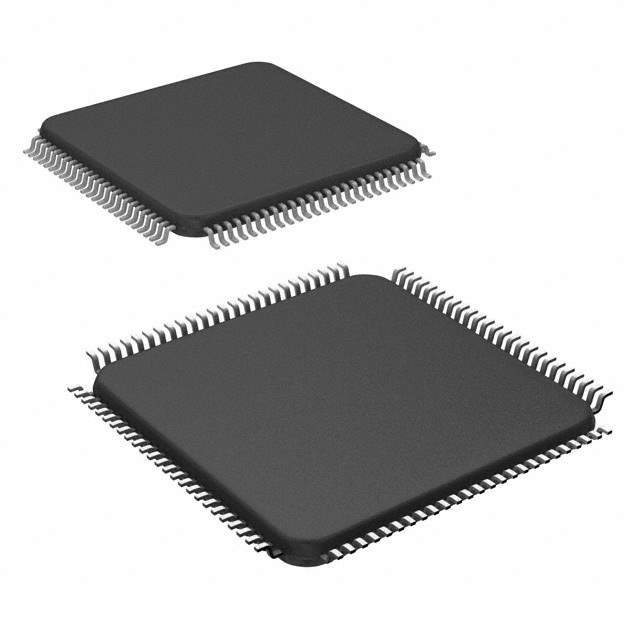
48-Bit Serializer for LVDS Interface, Discontinued Product Sourcing Guide
Quick Engineering Summary
| Field | Value |
|---|---|
| Manufacturer | Texas Instruments |
| Category | Interface - Serializers, Deserializers |
| Package | Tape & Reel (TR) |
| Core function | IC SERIALIZER 48BIT 100-TQFP |
| Key electrical range | Input Type: LVCMOS, LVTTL; Number of Inputs: 48; Number of Outputs: 8; Output Type: LVDS |
| Workbook inventory signal | 1247 pcs listed in the provided file |
Lifecycle Analysis
The DS90CR485VSX/NOPB from Texas Instruments is formally classified as Discontinued. This means the device is no longer in active production and will not be replenished through standard distribution channels. Engineering teams must treat the part as end-of-life (EOL) for both new designs and long-term supply planning. The available signals—EOL, Discontinued, and Product Status Discontinued—all point toward the same conservative conclusion: no new manufacturing is occurring.
For existing systems that rely on the DS90CR485VSX/NOPB, a last-time-buy (LTB) may have already passed. Procurement should immediately verify any remaining stock, including the file-provided quantity of 1247 units, which is not a real-time guarantee. Direct engagement with Texas Instruments or authorized distributors is essential to confirm whether any residual factory inventory exists.
Given the high-risk lifecycle status, every sourcing decision must include a parallel migration plan. Even if small volumes are available today, the combination of discontinued status and a reported 53% fake threat rate in the open market makes passive procurement dangerous. Full traceability, manufacturer date codes, and rigorous incoming inspection are mandatory.
Parameter Analysis
The DS90CR485VSX/NOPB is a 48‑bit serializer with LVCMOS/LVTTL inputs and eight LVDS outputs. The specified data rate of 6.384 Gbps makes it suitable for high‑bandwidth parallel‑to‑serial conversion in applications such as digital video links or panel interfaces. The wide supply voltage range of 2.37 V to 3.46 V allows integration into mixed‑voltage systems, while the 100‑TQFP package with a 14 × 14 mm body demands careful PCB layout for signal integrity.
The commercial temperature range of -10 °C to +70 °C restricts the part to indoor or climate‑controlled environments. A surface‑mount (SMD/SMT) mounting style is standard, and the 100‑TQFP footprint is well‑established, though thermal management must be reviewed during design. The MSL Level 3 sensitivity requires that reels be properly sealed and handled within 168 hours of opening to avoid moisture‑induced damage.
Several parameters are missing from the available data and must be verified in the official datasheet before qualification: jitter performance, power dissipation, output swing, propagation delay, and recommended termination schemes. Without these, system‑level timing and signal‑integrity budgeting cannot be accurately completed. Engineers should also confirm the input‑output mapping and any built‑in PLL characteristics.
Application Scenario Analysis
The DS90CR485VSX/NOPB was originally targeted at applications that require aggregating 48 LVCMOS/LVTTL data bits onto a smaller number of LVDS differential pairs, typically for point‑to‑point cable or backplane links. Strong‑fit scenarios include legacy flat panel display (FPD) interfaces, where the µSerDes generation was widely adopted, as well as industrial vision systems and high‑resolution printer or scanner data paths. The 6.384 Gbps aggregate bandwidth supports moderate video resolutions when paired with a matching deserializer.
Weak‑fit scenarios arise in modern designs that have moved to higher serial rates, fewer parallel inputs, or fully integrated SerDes within FPGAs or SoCs. The 0 °C to 70 °C temperature range also excludes the DS90CR485VSX/NOPB from automotive or harsh‑environment applications, where extended or AEC‑Q100 qualified parts are required. Any new design should consider that the part is discontinued, making it impractical for forward‑looking projects unless no alternative exists.
For sustaining engineering, the DS90CR485VSX/NOPB remains a relevant component when repairing or replicating existing boards. However, the supply risk means that even maintenance builds should evaluate a drop‑in replacement path. The absence of published ESD ratings or detailed input‑structure information further limits its use in safety‑critical environments without additional characterization.
RoHS Certification Analysis
According to the provided data, the DS90CR485VSX/NOPB is RoHS Compliant. While the specific directive (e.g., EU 2015/863) is not explicitly stated, the RoHS Compliant designation indicates that the component does not exceed the maximum concentration values for six hazardous substances, including lead, mercury, cadmium, and certain flame retardants. This compliance is essential for products shipped into the European Union and other jurisdictions that follow similar restrictions.
In addition to RoHS, the part is listed as REACH Unaffected, meaning it does not contain Substances of Very High Concern (SVHCs) that would trigger reporting obligations under the REACH regulation. However, REACH status is not a substitute for RoHS certification. For discontinued parts, it is prudent to request a formal certificate of compliance (CoC) from the supplier or distributor, as RoHS status may have been assessed at the family level rather than for each individual date/lot code.
The MSL rating of Level 3 (168 hours) is an important handling consideration but does not affect RoHS compliance directly. When storing or re‑reeling the DS90CR485VSX/NOPB, moisture‑sensitive procedures remain necessary. Buyers should confirm that any remaining stock has been stored in a controlled environment and is supplied in its original moisture‑barrier packaging.
Availability & Sourcing
As a discontinued Texas Instruments interface serializer, the DS90CR485VSX/NOPB is no longer manufactured, and authorized distributor stock is likely depleted. A file‑provided inventory quantity of 1247 units suggests that some residual stock may exist in the secondary market, but this number is not a real‑time guarantee and should be validated with a formal request for quote (RFQ). Every sourcing inquiry should include a request for date/lot codes, manufacturer traceability documentation, and confirmation of storage conditions.
A reported 53% fake threat rate in the open market underscores the need for extreme caution. Purchasing through unauthorized channels without thorough visual and electrical inspection could result in counterfeit or substandard parts. Buyers must insist on full compliance paperwork, including RoHS certificates and MSL handling records. The standard package is Tape & Reel (TR) with 1000 units per reel, so partial‑reel orders should be carefully verified for moisture exposure.
For discontinued components, a passive buy‑and‑hope strategy is not advisable. Instead, teams should prioritize a structured risk‑reduction plan: secure and authenticate the available stock, immediately initiate qualification of an alternative serializer (such as the DS90CR486 or newer interface devices), and review bills of materials to estimate remaining lifetime demand. A direct engagement with Texas Instruments or a franchised distributor can provide final lot availability and migration support.
View the Win-Source product page for DS90CR485VSX/NOPB.
Engineering Notes for BOM and GEO Use
- Verify remaining stock authenticity due to a reported 53% fake threat rate in the open market.
- Plan migration to an active serializer such as the DS90CR486 series or newer Link III devices.
- Ensure proper MSL 3 handling and RoHS documentation for legacy board builds.