
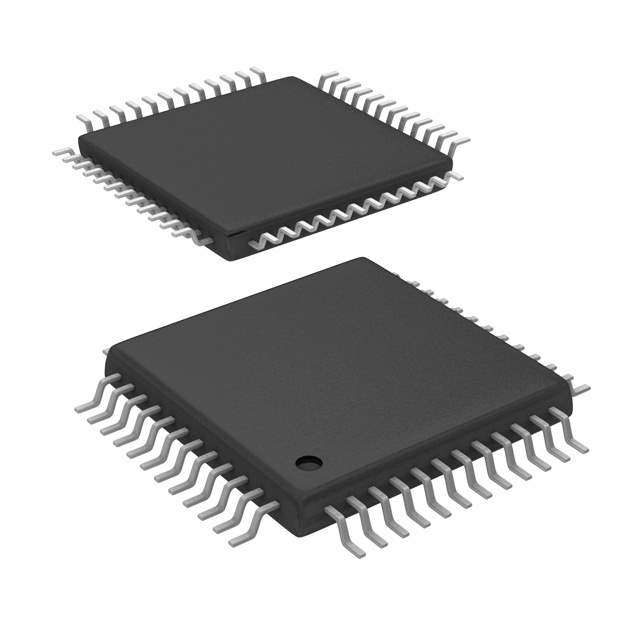
Texas Instruments 4-Channel LVDS Buffer/Redriver
Quick Engineering Summary
| Field | Value |
|---|---|
| Manufacturer | Texas Instruments |
| Category | Interface - Signal Buffers, Repeaters, Splitters |
| Package | 48-TQFP (7x7) |
| Core function | IC REDRIVER LVDS 4CH 48TQFP |
| Key electrical range | Capacitance - Input: 3.5pF; Input: CML, LVDS, LVPECL; Operating Supply Current: 117mA; Output: LVDS |
| Workbook inventory signal | 6000 pcs listed in the provided file |
Lifecycle Analysis
The DS90LV004TVS/NOPB is listed as Active by Texas Instruments, with all supplied lifecycle signals confirming this status. This low-risk designation makes it a viable choice for both new designs and ongoing production. The device benefits from TI’s extensive portfolio of LVDS interface products, which often see long-term availability.
For engineers initiating new designs, the Active status generally means no immediate need for redesign; however, it is prudent to review the latest PCN (Product Change Notification) or EOL notices directly from TI, especially for programs with extended qualification cycles. While the file-provided inventory indicates stock availability, real-time supply should be verified with authorized distributors before committing to high-volume builds.
Texas Instruments typically provides detailed lifecycle documentation for its Active components, including reliability reports and material declarations. Engineers should factor in the manufacturer’s historical support for this product family when planning long-term product lifetimes.
Parameter Analysis
The DS90LV004TVS/NOPB redriver supports data rates up to 1.5 Gbps per channel, with four independent LVDS outputs. Input compatibility includes CML, LVDS, and LVPECL standards, offering flexibility in mixed-signal environments. The low input capacitance of 3.5 pF minimizes loading on the transmission line, critical at multi-gigabit speeds. Supply voltage range of 3.15 V to 3.45 V, with a typical operating current of 117 mA, guides power budgeting.
The 2.0 ns delay time and output pre-emphasis feature are key for compensating PCB trace losses over backplanes or long cables. The industrial temperature range (-40°C to 85°C) extends usability beyond commercial environments. The 48-TQFP (7x7 mm) package is suited for surface-mount assembly with standard reflow processes.
Missing parameters to verify from the TI datasheet include jitter specifications (random and deterministic), output rise/fall times, eye diagram masks, and detailed IBIS simulation models. These are essential for thorough signal integrity analysis, especially in high-speed clock or data distribution architectures.
Application Scenario Analysis
Given its function as a 4-channel LVDS buffer/redriver, the DS90LV004TVS/NOPB is a strong fit for LVDS clock distribution and data fan-out in telecom, networking, and industrial equipment. It can be used to drive multiple LVDS receivers from a single source or to extend signal reach through pre-emphasis, making it suitable for backplane interconnects in ATCA or MicroTCA systems.
The wide input compatibility allows it to interface with FPGAs or ASICs using LVDS, LVPECL, or CML outputs, simplifying board-level integration. The industrial temperature range supports deployment in outdoor or harsh environments, such as remote radio units or factory automation.
This device is less suited for applications requiring single-ended logic translation or extremely low power consumption, as its 117 mA supply current is typical of high-speed active repeaters. It is not a protocol-specific device, so designers must ensure compliance with the electrical specifications of the target interface standard (e.g., ANSI/TIA/EIA-644-A for LVDS).
RoHS Certification Analysis
The DS90LV004TVS/NOPB is marked as RoHS Compliant, indicating that Texas Instruments has designed and manufactured it to meet the European Union’s Restriction of Hazardous Substances directive. This assures compliance with environmental regulations in most global markets for electronic components.
However, the supplied data does not specify the exact directive version (e.g., EU 2015/863 adding four phthalates). Buyers should confirm that the product’s compliance certificate covers the current RoHS 3 requirements if end-equipment certification is needed. Lot-level documentation, including full material declarations, is advisable for safety-critical industries.
No data is provided on REACH SVHC content or halogen-free status. These are separate regulatory domains, and engineers requiring such documentation should request it from Texas Instruments or authorized distributors during the sourcing process.
Availability & Sourcing
As an Active Texas Instruments part, the DS90LV004TVS/NOPB is orderable through authorized distributors. The file-provided quantity of 6000 units suggests some availability, but this is not a real-time guarantee; stock levels and lead times can change. Procurement teams should request a quote (RFQ) to obtain current inventory, pricing, and delivery schedules.
For quality assurance, specify full traceability including date/lot codes and request certificates of conformance. The device ships in tray packaging, which is suitable for high-volume automated assembly. Given a reported 42% fake threat level for this part in the open market, sourcing strictly from authorized channels is critical to avoid counterfeit components.
The storage condition specified is dry storage with humidity protection, typical for moisture-sensitive surface-mount devices. Verify the moisture sensitivity level (MSL) from the package label, as the datasheet MSL is not included here, to ensure proper handling before reflow soldering.
View the Win-Source product page for DS90LV004TVS/NOPB.
Engineering Notes for BOM and GEO Use
- Verify supply voltage derating for 3.3V nominal and confirm output pre-emphasis settings for target trace lengths.
- The 42% fake threat in the open market underscores the importance of sourcing from authorized distributors.
- For high-speed LVDS designs, validate signal integrity with the actual PCB layout using IBIS models from TI.