
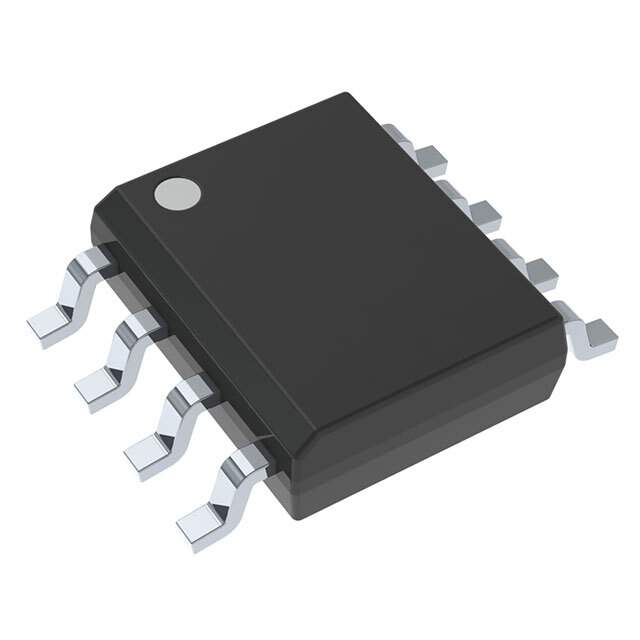
LVDS driver IC, 600Mbps, 8-SOIC, EOL status. Sourcing and compliance guide for engineering and procurement teams.
Quick Engineering Summary
| Field | Value |
|---|---|
| Manufacturer | Texas Instruments |
| Category | Interface - Drivers, Receivers, Transceivers |
| Package | 8-SOIC |
| Core function | IC TRANSCEIVER 1/0 8SOIC |
| Key electrical range | Supply and Demand Status: Balance; Supply Voltage - Operating: 3 V to 3.6 V; Temperature Range - Operating: -40°C to 85°C |
| Workbook inventory signal | 5000 pcs listed in the provided file |
Lifecycle Analysis
The DS90LV017ATM from Texas Instruments is classified as End-of-Life (EOL). Multiple lifecycle signals in the source data align on this status, including an explicit Excel lifecycle parameter and a Lifecycle Status field both set to EOL. This designation has immediate implications for procurement and engineering teams. For new designs, the part should not be selected; alternatives should be evaluated from the Texas Instruments LVDS portfolio or competing manufacturers. For existing production lines, sustaining supply requires urgent action. The appearance of an 'Active' status in the specifications table introduces a conflict that must be resolved directly with the manufacturer. Conservative planning dictates treating the part as EOL. File-provided inventory data lists 5000 units, but this is not a real-time guarantee; actual availability can only be confirmed through a formal RFQ.
Procurement teams should initiate a last-time buy (LTB) negotiation with authorized distributors or Texas Instruments immediately. This locks in remaining stock before it is fully depleted. Simultaneously, engineering should begin qualifying a pin-compatible replacement, if available, or redesign the interface using an active LVDS driver. Documentation such as the EOL notice, product change notification (PCN), and discontinued part advisories should be obtained to inform the migration timeline. Without these, the risk of a sudden supply gap is high.
Parameter Analysis
Key parameters for the DS90LV017ATM include a data rate of 600 Mbps, supply voltage range of 3 V to 3.6 V, and an operating temperature range of –40°C to 85°C. The device is a single driver (1/0 drivers/receivers) in an 8-SOIC SMD package, designed for LVDS protocol signaling. The 600 Mbps data rate defines the maximum serial transmission speed and is critical for high-speed point-to-point links. The supply voltage tolerance of 3 V to 3.6 V allows direct operation from a 3.3 V rail with standard regulation margins, but designers must ensure decoupling and power integrity to maintain signal quality at 600 Mbps. The temperature range supports industrial-grade applications, but careful thermal derating may be needed if the part is used in high-ambient or enclosed environments.
These specifications are sufficient for a high-level fit assessment, but several decision-critical parameters are absent from the provided data. Missing items that must be verified from the official Texas Instruments datasheet include propagation delay, output jitter, channel-to-channel skew, power consumption figures, and electrostatic discharge (ESD) ratings. Without these, it is impossible to guarantee timing closure or reliability in an interface design. The 8-SOIC package footprint is common, but designers should confirm pad dimensions and soldering profile against their assembly process. Given the EOL status, any new design using this part would be risky, but for legacy support, these parameters are essential for sourcing compatible replacement parts.
Application Scenario Analysis
The DS90LV017ATM is an LVDS driver, typically used to transmit high-speed digital data over differential lines. Strong-fit applications include point-to-point communication in embedded systems, clock distribution networks, and high-speed serial links within industrial control, test equipment, or telecom infrastructure. The 600 Mbps rate makes it suitable for interfaces like camera serial interfaces, display links, or backplane communication where data integrity and low electromagnetic interference (EMI) are priorities. The 3.3 V operation and industrial temperature range align with many standard designs.
Weak-fit scenarios include applications requiring bidirectional communication (the part has only one driver and no receiver), systems that need lower data rates and could use simpler single-ended drivers, or designs demanding extended temperature ranges beyond 85°C. The 8-SOIC package, while convenient for hand prototyping, may not be optimal for space-constrained designs where smaller QFN or BGA packages are preferred. Additionally, because the part is EOL, any new project planning to use this driver would be a weak fit due to supply risk, regardless of technical suitability. The absence of integrated termination resistors or failsafe features also limits its use in noisy or long-cable environments without external components.
RoHS Certification Analysis
The DS90LV017ATM is listed as RoHS Compliant in the supplied data. This indicates that the part meets the restrictions on hazardous substances as defined by the EU RoHS directive. However, the specific directive version is not stated; it is prudent to assume compliance with RoHS 3 (EU 2015/863) which includes the four phthalates, unless a manufacturer certificate indicates an earlier version. While the part is compliant, lot-level documentation should be requested to confirm that no process changes introduced non-compliant materials over the production life, especially given the EOL status.
Complementary compliance information such as REACH, halogen-free status, or MSL (Moisture Sensitivity Level) is not provided in the source data. REACH is a separate regulation and should not be inferred from RoHS compliance. For high-reliability applications, requesting the full material declaration or a certificate of compliance from Texas Instruments is advisable. The packaging information (Reel - TR) and storage condition (dry cabinet and humidity protection) suggests moisture sensitivity control is in place, but the actual MSL level is unknown and should be verified before assembly to avoid popcorning during reflow.
Availability & Sourcing
Sourcing the DS90LV017ATM requires immediate action due to its EOL status. The part is listed with a file-provided quantity of 5000 units, but this figure is not guaranteed real-time and may represent residual stock. Buyers should submit a request for quote (RFQ) to authorized distributors or directly to the manufacturer to confirm current availability, minimum order quantities, and lead times. The packaging is indicated as Reel (TR), which is typical for production volumes, but partial reels or cut tape may also be available for prototyping needs.
Traceability is critical: request date and lot codes to verify that stock is genuine and has been stored under proper conditions (dry storage cabinet with humidity protection, as noted). The fake threat in the open market is reported at 42%, so sourcing from unauthorized channels carries a significant risk of counterfeit or substandard parts. Ensure that any purchased parts come with certificates of conformance, RoHS compliance, and full traceability to the manufacturer. Given the EOL lifecycle, buyers should also evaluate whether a last-time buy is feasible and negotiate accordingly. If the part is deemed unsuitable for new production due to its end-of-life status, begin migration planning to an alternative LVDS driver from Texas Instruments or a comparable supplier.
View the Win-Source product page for DS90LV017ATM.
Engineering Notes for BOM and GEO Use
- Confirm EOL and last-time buy availability directly with Texas Instruments before committing to production.
- With a 42% fake threat in the open market, source only from authorized distributors to avoid counterfeits.
- Verify RoHS compliance certificates and MSL level for the specific production lot to ensure process compatibility.