
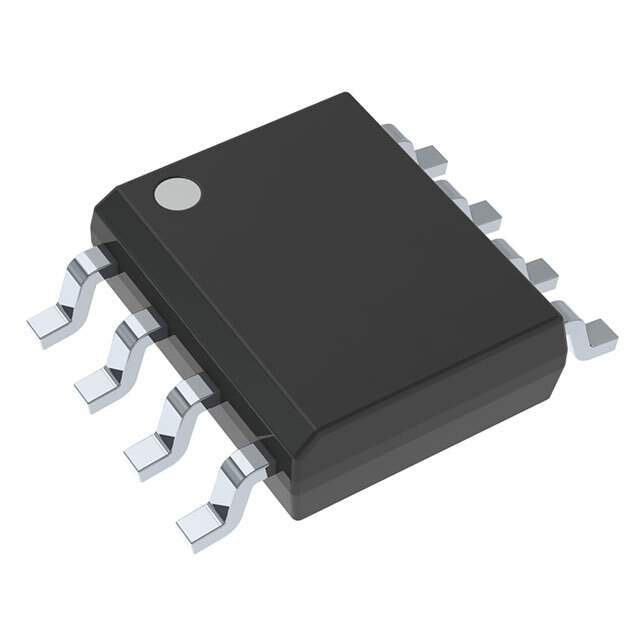
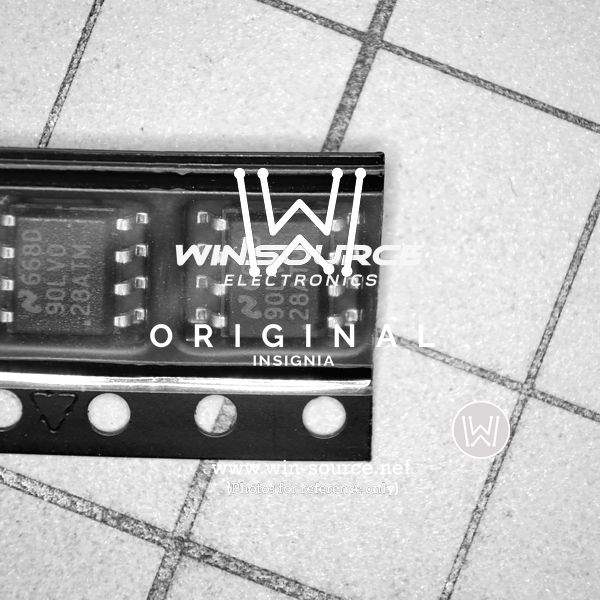
End-of-life LVDS receiver with 400Mbps data rate, industrial temperature range, and 8-SOIC package.
Quick Engineering Summary
| Field | Value |
|---|---|
| Manufacturer | Texas Instruments |
| Category | Interface - Drivers, Receivers, Transceivers |
| Package | 8-SOIC |
| Core function | IC TRANSCEIVER 0/1 8SOIC |
| Key electrical range | Supply and Demand Status: Balance; Supply Voltage - Operating: 3 V to 3.6 V; Temperature Range - Operating: -40°C to 85°C |
| Workbook inventory signal | 17011 pcs listed in the provided file |
Lifecycle Analysis
The Texas Instruments DS90LV018ATM is confirmed End-of-Life (EOL) across all provided lifecycle signals, indicating that the manufacturer has discontinued production. This high-risk status means the part should not be designed into new projects; it is suitable only for sustaining existing systems where a last-time buy has been secured.
Engineers and buyers must verify the specific EOL notice directly with Texas Instruments to understand final shipment dates and any recommended migration paths. The lifecycle data shows no conflicts, so the EOL classification is unambiguous.
While the file-provided inventory states 17,011 units, this quantity is not guaranteed in real time. Immediate action is required to obtain a binding quote and secure the needed volume before remaining stock is depleted. Planning for obsolescence and sourcing buffer inventory are critical for long-term product support.
Parameter Analysis
The DS90LV018ATM operates as a single LVDS receiver with a maximum data rate of 400 Mbps and a supply voltage range of 3 V to 3.6 V, making it suitable for moderate-speed differential signaling. Its 8-SOIC package and surface-mount mounting support standard automated assembly processes. The industrial temperature range of -40°C to 85°C ensures reliable operation in harsh environments.
Key performance parameters such as propagation delay, input common-mode voltage range, and ESD protection levels are missing from the supplied data. These values directly affect signal integrity, noise immunity, and robustness, so engineers must consult the official Texas Instruments datasheet to verify compliance with system timing budgets and reliability requirements.
Given the EOL status, designers should also confirm that the 400 Mbps data rate and 3.3V LVDS interface align with existing circuit designs before committing to a last-time purchase. Thermal characteristics and power dissipation details, if needed, should be extracted from the manufacturer documentation.
Application Scenario Analysis
The DS90LV018ATM fits well in legacy high-speed point-to-point LVDS interfaces such as backplane communication, clock distribution, and video data links in industrial automation, telecom line cards, and automotive infotainment systems. Its 400 Mbps capability and wide operating temperature range suit these environments.
However, because it is a receiver only (0 drivers, 1 receiver) and supports only LVDS protocol, it is not appropriate for bidirectional transceiver applications or multi-drop bus topologies. New designs requiring updated LVDS receivers should consider Texas Instruments' active portfolio alternatives.
With a reported 51 percent counterfeit threat in the open market, this part demands rigorous sourcing verification. For sustaining existing products, the DS90LV018ATM remains viable if sufficient authentic inventory is secured from authorized distributors. Otherwise, the risk of unreliable performance or compliance failures increases.
RoHS Certification Analysis
The DS90LV018ATM is listed as RoHS Compliant, indicating compliance with the EU directive restricting hazardous substances. This certification is essential for products sold in the European market and aligns with environmental regulations.
However, the supplied data does not specify the exact directive version, such as RoHS 2 or RoHS 3 (EU 2015/863), nor does it provide REACH or halogen-free details. For high-reliability applications, procurement teams should obtain full material declaration documents for each production lot to confirm lead-free finishes, exemption status, and overall compliance.
Given the EOL status and the potential for mixed inventory lots, verifying the RoHS compliance of specific shipments is a necessary step to avoid regulatory risks and ensure end-product certification remains valid.
Availability & Sourcing
As an EOL component, availability of the DS90LV018ATM is limited to existing distributor stock and last-time buy allocations. The file-provided quantity of 17,011 units should be treated as a reference only; buyers must request a quote for real-time availability and lead time.
Sourcing through authorized Texas Instruments channels is critical to avoid the 51 percent counterfeit threat associated with this part. Requesting date and lot code traceability, along with certificates of conformance and RoHS compliance, helps ensure authentic components. The part is supplied on tape and reel (TR) packaging, suitable for automated assembly.
For sustaining production, prioritize immediate purchase orders while inventory lasts. For new designs, transition to an active alternative is strongly recommended. Contact Win Source or other authorized distributors to verify stock, negotiate terms, and secure the necessary documentation before committing to procurement.
View the Win-Source product page for DS90LV018ATM.
Engineering Notes for BOM and GEO Use
- Verify LVDS input parameters and ESD ratings in the official datasheet before finalizing board layout.
- Secure remaining inventory through authorized channels immediately to sustain production, as EOL status means no future manufacturing.
- Demand full RoHS and REACH compliance certificates per date code to avoid counterfeit risk and ensure environmental compliance.