
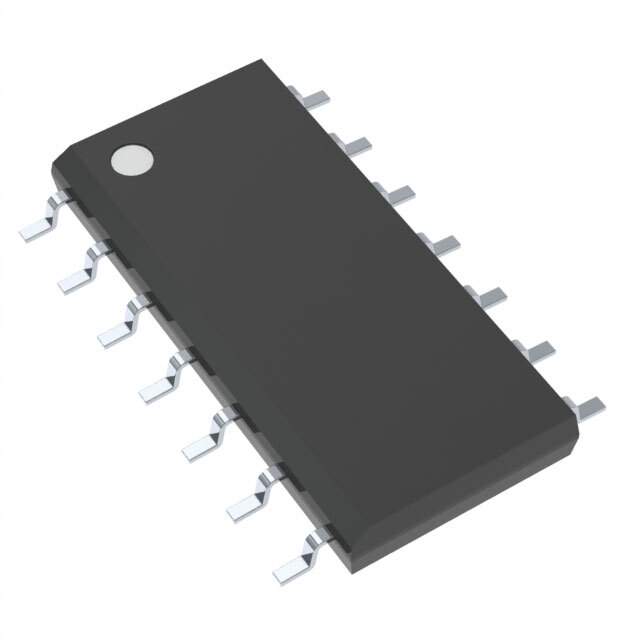
Lifecycle status unknown; verify before new designs. 100Mbps LVDS transceiver in 14-SOIC.
Quick Engineering Summary
| Field | Value |
|---|---|
| Manufacturer | Texas Instruments |
| Category | Interface - Drivers, Receivers, Transceivers |
| Package | 14-SOIC |
| Core function | IC TRANSCEIVER FULL 1/1 14SOIC |
| Key electrical range | Operating Supply Voltage: 3 V ~ 5.5 V; Operating Temperature Range: -40°C ~ 85°C; Supply and Demand Status: Limited |
| Workbook inventory signal | 10123 pcs listed in the provided file |
Lifecycle Analysis
The lifecycle status of the DS90LV019TM/NOPB is Unknown based on the available data. No formal lifecycle signal from Texas Instruments is present. However, the specifications include an Estimated EOL Date of 2029, which suggests the manufacturer may continue to support this device for several years. This ambiguity creates a medium risk level for procurement and design.
For new designs, it is essential to obtain a direct lifecycle confirmation from TI. Relying on an estimated date without official notice can lead to unexpected discontinuations. The 2029 timeline is a positive indicator but should be treated as preliminary.
For sustaining production, the part may remain available, but any production commitments should be validated with the manufacturer. The file-provided inventory quantity is not a real-time guarantee of stock. Engineers should plan for a potential last-time buy scenario if TI updates the status.
Parameter Analysis
The DS90LV019TM/NOPB is a full-duplex LVDS transceiver with single driver and receiver channels. Key available parameters include a data rate of 100 Mbps, supply voltage range of 3 V to 5.5 V, and industrial operating temperature from -40°C to 85°C. These specifications make it suitable for moderate-speed differential signaling in various embedded systems.
The 100 Mbps data rate is adequate for many point-to-point serial links, while the wide input voltage allows interfacing with both 3.3 V and 5 V logic. However, critical parameters such as supply current, propagation delay, differential output amplitude, and input sensitivity thresholds are not provided in this sourcing data. These missing values are essential for power budgeting and signal integrity analysis.
Engineers should consult the official Texas Instruments datasheet to obtain complete electrical characteristics, including ESD ratings, package thermal resistance, and timing diagrams. Without these details, a thorough qualification cannot be performed from this guide alone.
Application Scenario Analysis
As an LVDS transceiver, the DS90LV019TM/NOPB is well suited for low-voltage differential signaling applications that require noise immunity and low power dissipation. Strong-fit scenarios include backplane communication, clock distribution, and data links between microcontrollers, FPGAs, or sensors in industrial automation and test equipment.
The full-duplex capability and 100 Mbps data rate align with serial communication over moderate distances. The industrial temperature range supports deployment in factory floors and outdoor equipment within the specified limits.
Weak-fit scenarios involve applications needing data rates beyond 100 Mbps, multi-drop bus architectures, or automotive-grade qualification (AEC-Q). The device's LVDS protocol limits its use in systems requiring RS-485 or CAN interfaces. Additionally, safety-critical designs should not rely solely on this part without redundancy. Designers must verify signal integrity at the intended cable length and data rate using the complete datasheet parameters.
RoHS Certification Analysis
The DS90LV019TM/NOPB is listed as RoHS Compliant and Halogen Free Compliant. These designations indicate that the part meets the requirements of the EU RoHS Directive 2011/65/EU, including RoHS 3 (EU 2015/863), restricting hazardous substances such as lead, mercury, and cadmium.
The Halogen Free status further suggests compliance with low halogen content standards, which is beneficial for environmentally sensitive applications. No exemptions are noted, implying the part does not contain substances like lead in solders or finishes that might otherwise be exempted.
However, REACH compliance is not mentioned and is a separate regulatory requirement. For critical applications, lot-level certification should be requested from the distributor to confirm the specific date code. This ensures that the received units adhere to the declared RoHS status, as compliance can vary by production batch.
Availability & Sourcing
File-provided data shows an internal workbook quantity of 10,123 units and an additional 278 units, but these figures are not real-time and should be considered indicative only. The supply and demand status is listed as Limited, and the open market fake threat probability is 33%, underscoring the need for authorized sourcing.
The device is packaged in tubes and uses a 14-SOIC surface-mount package. To obtain current availability and lead times, buyers must request a quote from their distributor. Because the lifecycle status is unknown, verifying the part's active production status with Texas Instruments is critical before placing orders.
When procuring, confirm date codes, lot traceability, and request a Certificate of Conformance along with RoHS compliance documentation. For high-volume production, consider negotiating buffer stock agreements to mitigate supply chain risks, especially given the Limited supply status.
View the Win-Source product page for DS90LV019TM/NOPB.
Engineering Notes for BOM and GEO Use
- Obtain the official Texas Instruments datasheet to verify supply current, propagation delay, and differential output levels before design-in.
- Confirm lifecycle status directly with manufacturer; the estimated EOL date of 2029 suggests long-term support, but current status is unconfirmed.
- Source from authorized distributors to mitigate the 33% fake threat risk reported in the open market; request traceable date/lot codes.