
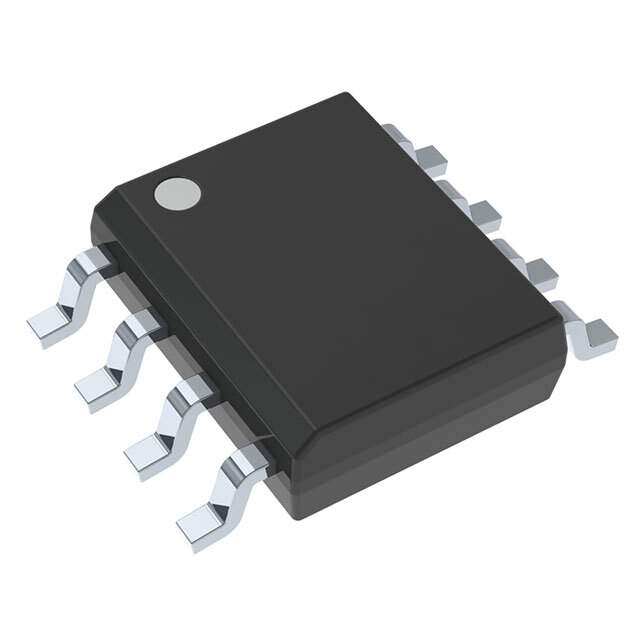
LVDS Dual Driver, 600 Mbps, 8-SOIC
Quick Engineering Summary
| Field | Value |
|---|---|
| Manufacturer | Texas Instruments |
| Category | Interface - Drivers, Receivers, Transceivers |
| Package | 8-SOIC |
| Core function | IC 600MBPS LVDS DUAL HI |
| Key electrical range | Supply and Demand Status: Balance; Supply Voltage - Operating: 3 V to 3.6 V; Temperature Range - Operating: -40°C to 85°C |
| Workbook inventory signal | 15000 pcs listed in the provided file |
Lifecycle Analysis
The DS90LV027ATM from Texas Instruments is classified as Active with all lifecycle signals aligned. This means the part is in full production and suitable for new designs without immediate risk of discontinuation. For sustaining production, procurement teams should monitor manufacturer notices periodically.
While the status suggests stability, design changes or supply chain adjustments can occur, so verification of current lifecycle through official TI documentation is recommended before committing to large-scale production. The inventory quantity provided (15000 units) is from a supplier workbook and does not guarantee real-time availability.
Parameter Analysis
The DS90LV027ATM is a dual LVDS driver with a data rate of 600 Mbps, making it suitable for high-speed point-to-point data transmission. Its supply voltage range of 3 V to 3.6 V requires a well-regulated power rail to meet LVDS swing specifications. The operating temperature range of -40°C to 85°C supports industrial applications, but designers should evaluate thermal margins in enclosed environments.
The 8-SOIC SMD package simplifies PCB layout but attention should be given to trace impedance and length matching for LVDS pairs. Missing critical parameters include propagation delay, output skew, and jitter specs—these must be verified from the official datasheet to ensure signal integrity in the target application.
Application Scenario Analysis
This dual driver is designed for LVDS signaling, ideal for applications such as clock distribution, high-speed backplane communication, and digital video interfaces. Because it provides two drivers and no receivers, it fits point-to-point or unidirectional multi-drop topologies where a single transmitter drives multiple loads.
It is less suitable for bidirectional bus architectures or long cable runs where signal termination and noise immunity are more challenging. Engineers should assess the data rate and loading conditions against the device's output drive capabilities, especially when driving longer traces or multiple receivers.
RoHS Certification Analysis
The DS90LV027ATM is marked RoHS Compliant, indicating conformity to EU directive requirements. While this typically covers RoHS 3 (2015/863), the specific standard is not explicitly stated in the source data. The part likely meets lead-free and hazardous substance restrictions, but lot-level compliance documentation should be requested for high-reliability or regulated applications.
There is no REACH information provided, so if REACH compliance is needed, it must be confirmed separately with the supplier or manufacturer.
Availability & Sourcing
This part is categorized as common-used with high popularity, and the indicated stock of 15,000 units suggests reasonable supply. However, the fake threat rate of 46% underscores the importance of sourcing from authorized distributors or directly from Texas Instruments. The packaging is Reel (TR), suitable for automated assembly.
Given the Active lifecycle, requesting a quote for current availability and lead time is recommended. Before purchase, verify date codes, lot traceability, and RoHS certificates to mitigate counterfeits. Ensure the supplier can provide full compliance documentation.
View the Win-Source product page for DS90LV027ATM.
Engineering Notes for BOM and GEO Use
- Verify datasheet for propagation delay, output skew, and jitter to guarantee signal integrity in your design.
- Source only from authorized distributors due to the 46% fake threat; inspect lot codes and compliance certificates.
- The 3V-3.6V supply range requires a stable regulator; consider decoupling and power plane layout for LVDS applications.